
🔤 Total Characters in Document: 183,355
📄 Estimated Document Pages: 77
⏱️ Reading Time: 3 Hours 12 Mins
CHAPTER ONE: INTRODUCTION
1.1 Background of Study
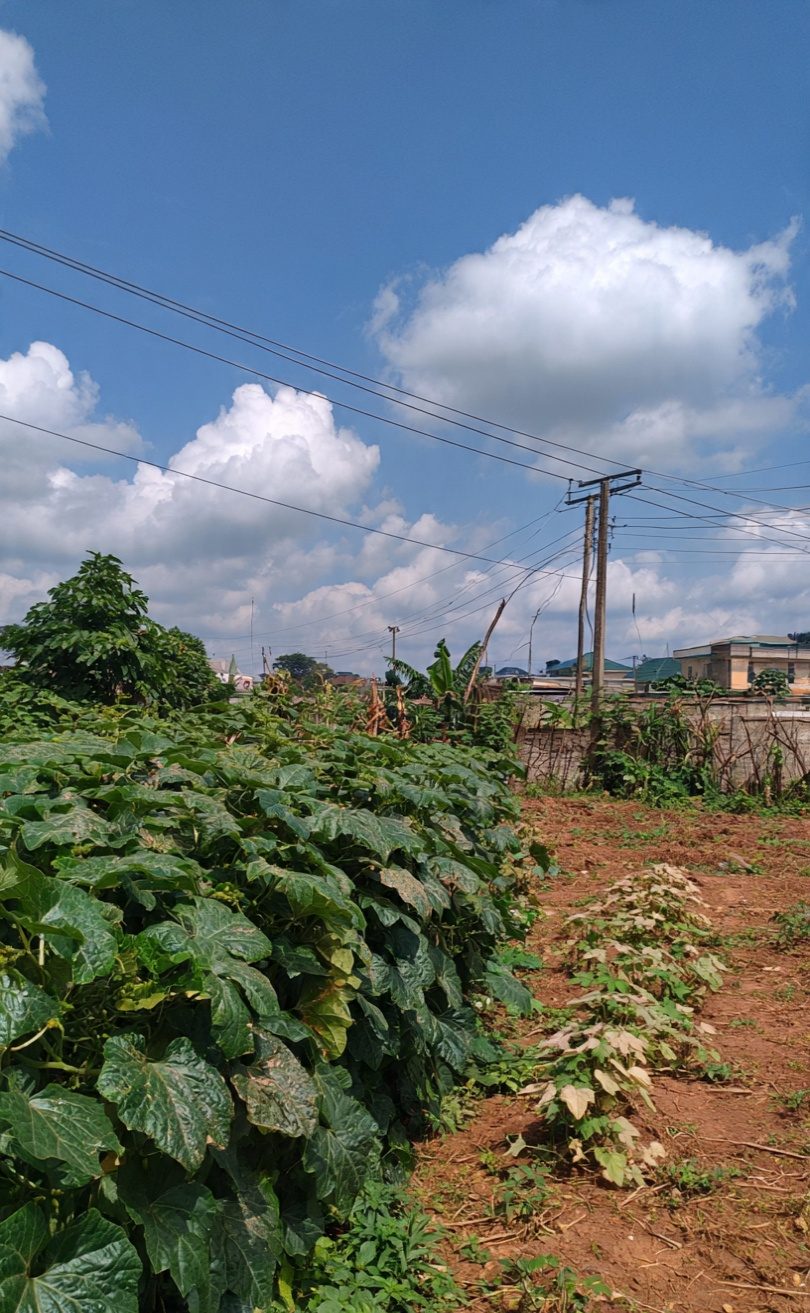
Ugu (Telfairia occidentalis Hook. f.), commonly known as fluted pumpkin, is a highly valued leafy vegetable and oil seed crop native to West Africa, particularly southern Nigeria (Akoroda, 2021). It is a member of the Cucurbitaceae family (gourds, pumpkins, melons) and is a perennial climbing vine that is typically grown as an annual in cultivation (Grubben and Denton, 2019). Ugu is prized for its nutritious leaves, which are rich in protein (up to 20-25% dry weight), iron, calcium, phosphorus, potassium, magnesium, and vitamins A, C, and E, as well as its seeds which contain edible oil (30-40%) and protein (25-30%) (Denton and Swarup, 2020). The crop is traditionally grown in home gardens and smallholder farms across the South-East and South-South regions of Nigeria, where it contributes significantly to household food security, nutrition, and income (Ogbonna and Udealor, 2020). Ugu leaves are used in soups, stews, and as a vegetable side dish, while the seeds are processed for oil and protein.
The cultivation of Ugu requires fertile, well-drained soils with high organic matter content (Akoroda, 2021). The crop has a high demand for nutrients, particularly nitrogen (N) for leaf production, phosphorus (P) for root development and energy transfer, and potassium (K) for water relations and enzyme activation (Denton and Swarup, 2020). Traditionally, Ugu is grown on mounds or ridges with staking for vine support, and farmers often use organic manure (poultry droppings, cow dung, goat manure, compost, household waste) to improve soil fertility and crop yield (Ogbonna and Udealor, 2020). However, many farmers rely on inorganic fertilizers (NPK) which are expensive and may have negative environmental impacts (soil acidification, water pollution) (Eze and Nweze, 2019).
Organic manure refers to plant or animal materials that are decomposed and applied to soil to improve its physical, chemical, and biological properties (Brady and Weil, 2020). Organic manures include poultry manure (droppings from chickens, turkeys, ducks), cow dung (cattle manure), goat and sheep manure, pig manure, compost (decomposed plant material), green manure (cover crops incorporated into soil), and household waste (kitchen scraps) (FAO, 2020). Organic manure improves soil structure (aggregation, porosity), increases water-holding capacity, enhances soil aeration, supplies essential plant nutrients (N, P, K, Ca, Mg, S, micronutrients), increases soil organic matter, supports beneficial soil microorganisms (bacteria, fungi, earthworms), and reduces dependence on synthetic fertilizers (Brady and Weil, 2020).
Nutrient Composition of Common Organic Manures (Dry Weight Basis):
| Manure Type | Nitrogen (N %) | Phosphorus (P₂O₅ %) | Potassium (K₂O %) | Organic Matter (%) | C:N Ratio |
| Poultry manure | 3-5% | 2-4% | 2-3% | 50-70% | 10:1-15:1 |
| Cow dung | 1.5-2.5% | 1-2% | 1-2% | 60-80% | 20:1-30:1 |
| Goat manure | 2-3% | 1.5-2.5% | 2-3% | 50-70% | 15:1-20:1 |
| Pig manure | 2-4% | 1.5-3% | 1-2% | 60-75% | 12:1-18:1 |
| Compost | 1-2% | 0.5-1.5% | 1-2% | 40-60% | 15:1-25:1 |
(Source: Brady and Weil, 2020; FAO, 2020)
The growth of Ugu is measured by several vegetative parameters (Denton and Swarup, 2020; Ogbonna and Udealor, 2020):
| Parameter | Description | Measurement |
| Vine length | Elongation of main vine | cm (measured weekly) |
| Number of leaves | Count of fully expanded leaves | count/plant |
| Leaf area | Photosynthetic surface area | cm² (calculated from length × width × factor) |
| Number of branches | Lateral branches per plant | count |
| Stem girth | Thickness of main vine | cm |
| Vine diameter | Diameter of main vine | mm |
The vegetative yield of Ugu is measured by (Akoroda, 2021):
| Parameter | Description | Measurement |
| Fresh leaf weight | Weight of harvested leaves | g/plant, kg/plot, tons/ha |
| Dry leaf weight | Oven-dried leaf weight (70°C to constant weight) | g/plant, kg/plot, tons/ha |
| Number of harvests | Number of times leaves harvested per cycle | count |
| Harvest interval | Days between harvests | days |
The effect of organic manure on Ugu growth and yield is mediated by several mechanisms (Brady and Weil, 2020; FAO, 2020):
| Mechanism | Description | Effect on Ugu |
| Nutrient supply | Organic manure releases N, P, K, Ca, Mg, S, and micronutrients slowly during decomposition | Steady nutrient supply → sustained growth and yield |
| Soil structure improvement | Organic matter binds soil particles into aggregates | Improved root penetration, aeration, water infiltration |
| Water-holding capacity | Organic matter absorbs and retains water (up to 5-10 times its weight) | Reduced drought stress, consistent growth |
| Soil aeration | Organic matter creates pore spaces | Improved oxygen supply to roots |
| Microbial activity | Organic manure supports beneficial bacteria, fungi, earthworms | Nutrient cycling, disease suppression |
| pH buffering | Organic matter moderates soil pH | Prevents acidity/alkalinity stress |
The advantages of organic manure over inorganic fertilizer for Ugu production include (Eze and Nweze, 2019; Okafor and Nwosu, 2020):
| Advantage | Description |
| Low cost | Organic manure is often available on-farm or at low cost from livestock operations |
| Slow release | Nutrients are released slowly over time, matching plant demand |
| No environmental pollution | No risk of nitrate leaching or eutrophication (unlike inorganic fertilizers) |
| Soil health improvement | Improves soil physical, chemical, and biological properties over time |
| Reduced soil acidity | Does not acidify soil (unlike ammonium-based inorganic fertilizers) |
| Disease suppression | Some manures contain beneficial microbes that suppress soil-borne diseases |
| Sustainable | Renewable resource; recycles agricultural waste |
However, organic manure also has limitations (Brady and Weil, 2020):
| Limitation | Description |
| Low nutrient concentration | Organic manure has lower nutrient content per kg than inorganic fertilizer |
| Bulky | Large volume required to supply adequate nutrients |
| Variable composition | Nutrient content varies with animal species, feed, age, storage |
| Pathogens | Fresh manure may contain pathogens (E. coli, Salmonella) – requires composting or aging |
| Weed seeds | Fresh manure may contain weed seeds – requires composting (heat kills seeds) |
| Slow release | Not suitable for rapid correction of nutrient deficiency |
| Labour-intensive | Application requires more labour than inorganic fertilizer |
From a theoretical perspective, this study is supported by three theories: Nutrient Cycling Theory (Brady and Weil, 2020), which explains how organic matter decomposes and releases nutrients for plant uptake; Soil Health Theory (Lehmann, 2019), which explains how organic matter improves soil physical, chemical, and biological properties; and Plant Nutrition Theory (Marschner, 2018), which explains the role of essential nutrients (N, P, K, Ca, Mg, S, micronutrients) in plant growth and development.
In summary, Ugu (Telfairia occidentalis) is an important leafy vegetable in Nigeria, requiring fertile soils with high organic matter. Organic manure (poultry manure, cow dung, goat manure, compost) improves soil fertility, structure, water-holding capacity, aeration, and microbial activity, leading to increased growth and vegetative yield. This study aims to investigate the effect of different types of organic manure (poultry manure, cow dung, goat manure, compost) and different application rates (0, 5, 10, 15 t/ha) on the growth (vine length, number of leaves, leaf area, number of branches) and vegetative yield (fresh leaf weight, dry leaf weight) of Ugu.
1.2 Statement of Problems
Ugu (Telfairia occidentalis) is an important leafy vegetable in Nigeria, but its production is constrained by declining soil fertility due to continuous cultivation without adequate nutrient replenishment. Many farmers rely on inorganic fertilizers (NPK) which are expensive (₦20,000-30,000 per 50kg bag) and may have negative environmental impacts (soil acidification, water pollution). Organic manure (poultry manure, cow dung, goat manure, compost) is a low-cost, locally available alternative, but there is limited empirical data on the effect of different types of organic manure and different application rates on the growth and vegetative yield of Ugu. Specifically, it is unclear: (a) which type of organic manure (poultry manure, cow dung, goat manure, compost) produces the highest growth and yield; (b) what is the optimal application rate (0, 5, 10, 15 t/ha) for each manure type; (c) how organic manure affects vine length, number of leaves, leaf area, and number of branches; (d) how organic manure affects fresh leaf weight and dry leaf weight; (e) what is the cost-effectiveness of organic manure compared to inorganic fertilizer. The problem this study addresses is the need to investigate the effect of different types of organic manure and different application rates on the growth and vegetative yield of Ugu, and to determine the optimal manure type and rate for maximizing yield.
1.3 Aim of the Study
The specific aim of this research work is to investigate the effect of organic manure on the growth and vegetative yield of Ugu, by comparing different types of organic manure (poultry manure, cow dung, goat manure, compost) and different application rates (0, 5, 10, 15 t/ha), and evaluating growth parameters (vine length, number of leaves, leaf area, number of branches) and yield parameters (fresh leaf weight, dry leaf weight).
1.4 Objectives of the Study
- To determine the effect of different types of organic manure (poultry manure, cow dung, goat manure, compost) on the growth parameters (vine length, number of leaves, leaf area, number of branches) of Ugu.
- To determine the effect of different application rates (0, 5, 10, 15 t/ha) of organic manure on the growth parameters of Ugu.
- To determine the effect of different types of organic manure on the vegetative yield (fresh leaf weight, dry leaf weight) of Ugu.
- To determine the effect of different application rates on the vegetative yield of Ugu.
- To determine the optimal combination of manure type and application rate for maximizing the growth and vegetative yield of Ugu.
1.5 Research Questions
- What is the effect of different types of organic manure (poultry manure, cow dung, goat manure, compost) on the growth parameters (vine length, number of leaves, leaf area, number of branches) of Ugu?
- What is the effect of different application rates (0, 5, 10, 15 t/ha) of organic manure on the growth parameters of Ugu?
- What is the effect of different types of organic manure on the vegetative yield (fresh leaf weight, dry leaf weight) of Ugu?
- What is the effect of different application rates on the vegetative yield of Ugu?
- What is the optimal combination of manure type and application rate for maximizing the growth and vegetative yield of Ugu?
1.6 Research Hypotheses
Hypothesis One
- H₀ (Null): Different types of organic manure (poultry manure, cow dung, goat manure, compost) have no significant effect on the growth parameters (vine length, number of leaves, leaf area, number of branches) of Ugu.
- H₁ (Alternative): Different types of organic manure have a significant effect on the growth parameters of Ugu.
Hypothesis Two
- H₀ (Null): Different application rates (0, 5, 10, 15 t/ha) of organic manure have no significant effect on the growth parameters of Ugu.
- H₁ (Alternative): Different application rates have a significant effect on the growth parameters of Ugu.
Hypothesis Three
- H₀ (Null): Different types of organic manure have no significant effect on the vegetative yield (fresh leaf weight, dry leaf weight) of Ugu.
- H₁ (Alternative): Different types of organic manure have a significant effect on the vegetative yield of Ugu.
Hypothesis Four
- H₀ (Null): Different application rates have no significant effect on the vegetative yield of Ugu.
- H₁ (Alternative): Different application rates have a significant effect on the vegetative yield of Ugu.
Hypothesis Five
- H₀ (Null): There is no significant interaction effect between manure type and application rate on the growth and vegetative yield of Ugu.
- H₁ (Alternative): There is a significant interaction effect between manure type and application rate.
1.7 Justification of the Study
This study is justified on several grounds. First, Ugu is an important leafy vegetable in Nigeria, but its production is constrained by declining soil fertility. Second, inorganic fertilizers are expensive and have negative environmental impacts. Third, organic manure is a low-cost, locally available alternative, but there is limited empirical data on the effect of different types and rates on Ugu growth and yield. Fourth, determining the optimal manure type and rate will enable farmers to maximize yield at lowest cost. Fifth, the findings will benefit Ugu farmers, extension agents, researchers, and policymakers.
1.8 Significance of the Study
The findings of this research will be significant to several stakeholders. To Ugu farmers, the study will provide evidence on which type of organic manure (poultry manure, cow dung, goat manure, compost) and which application rate (0, 5, 10, 15 t/ha) produces the highest growth and yield, enabling informed decisions. To agricultural extension agents, the findings will inform recommendations for organic manure use in Ugu production. To researchers in agronomy and horticulture, the study will contribute empirical data on organic manure effects on Ugu, testing and extending nutrient cycling theory, soil health theory, and plant nutrition theory. To policymakers, the study will support the promotion of organic agriculture and reduced dependence on inorganic fertilizers.
1.9 Scope of the Study
The scope of this study is delimited to the effect of organic manure on the growth and vegetative yield of Ugu. The study uses a completely randomized design (CRD) or randomized complete block design (RCBD) with factorial arrangement. Factors: Factor A (manure type): poultry manure, cow dung, goat manure, compost, control (no manure). Factor B (application rate): 0 t/ha (control), 5 t/ha, 10 t/ha, 15 t/ha. Manure: collected from local sources (poultry farms, cattle farms, goat farms), sun-dried, ground, and analyzed for N, P, K content. Ugu variety: improved variety (e.g., Telfairia occidentalis) or local variety. Spacing: 1m × 1m (10,000 plants/ha). Plot size: 3m × 3m (9m²) with 9 plants per plot. Measurements: growth parameters (vine length (cm) measured weekly; number of leaves per plant; leaf area (cm²) measured from length × width × factor (0.7); number of branches per plant). Yield parameters: fresh leaf weight (g/plant, kg/plot, tons/ha) harvested at 8-12 weeks and at 2-4 week intervals thereafter; dry leaf weight (g/plant, kg/plot, tons/ha) after oven drying (70°C to constant weight). Soil analysis: initial soil pH, organic matter, N, P, K, texture. The study does not extend to other organic manures (pig manure, sheep manure, green manure, vermicompost), other Ugu varieties, other vegetable crops, or seed yield.
1.10 Definition of Terms
Ugu (Telfairia occidentalis): A perennial climbing vine of the Cucurbitaceae family, native to West Africa, grown for its nutritious leaves (rich in protein, iron, calcium, vitamins A, C, E) and edible seeds (oil and protein). Known locally as “fluted pumpkin”.
Organic Manure: Plant or animal materials that are decomposed and applied to soil to improve its physical, chemical, and biological properties. Includes poultry manure, cow dung, goat manure, compost, green manure.
Poultry Manure: Droppings from chickens, turkeys, ducks; rich in nitrogen (3-5%), phosphorus (2-4%), and potassium (2-3%). High nutrient content among organic manures.
Cow Dung (Cattle Manure): Manure from cattle; contains 1.5-2.5% N, 1-2% P₂O₅, 1-2% K₂O. Moderate nutrient content.
Goat Manure: Manure from goats; contains 2-3% N, 1.5-2.5% P₂O₅, 2-3% K₂O. Moderate to high nutrient content.
Compost: Decomposed organic matter (plant residues, kitchen waste, manure) prepared through aerobic composting; contains 1-2% N, 0.5-1.5% P₂O₅, 1-2% K₂O.
Application Rate: The amount of organic manure applied per unit area (tons per hectare, t/ha).
Growth Parameters: Quantitative measures of plant development, including vine length (cm), number of leaves, leaf area (cm²), number of branches.
Vegetative Yield: The weight of harvested leaves (fresh and dry) from Ugu plants.
Fresh Leaf Weight: The weight of freshly harvested leaves (g/plant, kg/plot, tons/ha).
Dry Leaf Weight: The weight of leaves after oven drying (70°C to constant weight) (g/plant, kg/plot, tons/ha).
Nutrient Cycling Theory: A theory (Brady and Weil, 2020) explaining how organic matter decomposes and releases nutrients (N, P, K, Ca, Mg, S, micronutrients) for plant uptake through the action of soil microorganisms (bacteria, fungi).
Soil Health Theory: A theory (Lehmann, 2019) explaining how organic matter improves soil physical (structure, aggregation, porosity, water-holding capacity), chemical (nutrient availability, pH buffering), and biological (microbial activity, earthworms) properties.
Plant Nutrition Theory: A theory (Marschner, 2018) explaining the role of essential nutrients (N for vegetative growth, P for root development and energy transfer, K for water relations and enzyme activation, Ca for cell wall structure, Mg for chlorophyll, S for protein synthesis) in plant growth and development.
CHAPTER TWO: LITERATURE REVIEW
2.1 Conceptual Framework
The conceptual framework for this study is organized around the key concepts of Ugu (Telfairia occidentalis), organic manure, growth parameters, vegetative yield, and the mechanisms through which organic manure affects plant growth and yield. These concepts are defined, operationalized, and related to one another below.
2.1.1 Concept of Ugu (Telfairia occidentalis)
Ugu, also known as fluted pumpkin, is a perennial climbing vine of the Cucurbitaceae family, native to West Africa and widely cultivated in southern Nigeria for its nutritious leaves and edible seeds (Akoroda, 2021).
Botanical Characteristics:
| Characteristic | Description |
| Family | Cucurbitaceae (gourds, pumpkins, melons) |
| Growth habit | Perennial climbing vine, trellis or ground sprawling |
| Leaves | Palmately compound, 3-5 leaflets, dark green |
| Sex expression | Dioecious (male and female flowers on separate plants) |
| Propagation | Seeds or stem cuttings |
| Growing period | 6-9 months (leaves); up to 12 months (seeds) |
(Source: Grubben and Denton, 2019)
Nutritional Composition of Ugu Leaves (per 100g fresh weight):
| Nutrient | Amount | Benefit |
| Protein | 4-6 g | Muscle growth, repair |
| Iron | 2-5 mg | Blood health (prevents anaemia) |
| Calcium | 100-200 mg | Bone health |
| Phosphorus | 50-100 mg | Bone health, energy transfer |
| Potassium | 200-400 mg | Blood pressure regulation |
| Magnesium | 50-100 mg | Enzyme activation |
| Vitamin A (β-carotene) | 2,000-5,000 IU | Vision, immune function |
| Vitamin C | 20-50 mg | Antioxidant, immune function |
| Vitamin E | 5-10 mg | Antioxidant |
(Source: Denton and Swarup, 2020)
2.1.2 Concept of Organic Manure
Organic manure refers to plant or animal materials that are decomposed and applied to soil to improve its physical, chemical, and biological properties (Brady and Weil, 2020).
Types of Organic Manure Used in This Study:
| Type | Source | N (%) | P₂O₅ (%) | K₂O (%) | C:N Ratio | Advantages | Disadvantages |
| Poultry manure | Chickens, turkeys, ducks | 3-5% | 2-4% | 2-3% | 10:1-15:1 | High nutrient content, fast release | Can burn plants if fresh |
| Cow dung | Cattle | 1.5-2.5% | 1-2% | 1-2% | 20:1-30:1 | Readily available, improves soil structure | Lower nutrient content |
| Goat manure | Goats | 2-3% | 1.5-2.5% | 2-3% | 15:1-20:1 | Moderate nutrient content, pellet form | Limited availability |
| Compost | Plant residues, kitchen waste | 1-2% | 0.5-1.5% | 1-2% | 15:1-25:1 | Improves soil structure, suppresses diseases | Low nutrient content, slow release |
(Source: Brady and Weil, 2020; FAO, 2020)
2.1.3 Growth Parameters of Ugu
Growth parameters are quantitative measures of plant development over time (Denton and Swarup, 2020).
| Parameter | Definition | Measurement Protocol | Typical Values |
| Vine length | Length of main vine | Measure from base to tip of longest vine at harvest | 200-500 cm |
| Number of leaves | Count of fully expanded leaves | Count all leaves >5 cm length | 50-150 leaves/plant |
| Leaf area | Area of individual leaf | Measure leaf length × width × factor (0.7 for Cucurbitaceae) | 100-300 cm² |
| Number of branches | Number of lateral branches | Count lateral branches >10 cm | 5-15 branches/plant |
| Stem girth | Thickness of main vine | Measure circumference at base | 5-10 cm |
| Vine diameter | Diameter of main vine | Measure using calipers | 1-3 cm |
2.1.4 Vegetative Yield Parameters of Ugu
Vegetative yield is the weight of harvested leaves from Ugu plants (Akoroda, 2021).
| Parameter | Definition | Measurement Protocol | Typical Values |
| Fresh leaf weight (per plant) | Weight of freshly harvested leaves | Weigh harvested leaves from each plant | 500-2,000 g/plant |
| Fresh leaf weight (per hectare) | Weight of freshly harvested leaves per unit area | (Weight/plant × plant population/ha) | 5-15 tons/ha |
| Dry leaf weight (per plant) | Weight of leaves after oven drying | Oven dry (70°C to constant weight) | 100-400 g/plant |
| Dry leaf weight (per hectare) | Dry weight per unit area | (Dry weight/plant × plant population/ha) | 1-3 tons/ha |
| Number of harvests | Frequency of harvesting | Count harvests per cycle | 4-8 harvests |
| Harvest interval | Days between harvests | Days | 14-28 days |
2.1.5 Mechanisms Through Which Organic Manure Affects Ugu Growth and Yield
Organic manure affects Ugu growth and yield through multiple mechanisms (Brady and Weil, 2020; FAO, 2020).
Mechanism 1: Nutrient Supply
| Nutrient | Function in Ugu | Deficiency Symptoms |
| Nitrogen (N) | Vegetative growth, leaf production, chlorophyll | Stunted growth, pale green/yellow leaves (chlorosis) |
| Phosphorus (P) | Root development, energy transfer (ATP), flowering | Poor root growth, delayed maturity |
| Potassium (K) | Water relations, enzyme activation, protein synthesis | Scorched leaf margins, weak stems |
Mechanism 2: Soil Physical Properties Improvement
| Property | Effect of Organic Manure | Benefit to Ugu |
| Soil structure | Binds soil particles into aggregates | Improved root penetration |
| Porosity | Increases pore spaces | Improved aeration, water infiltration |
| Bulk density | Decreases soil compaction | Easier root growth |
| Water-holding capacity | Increases water retention (5-10x its weight) | Reduced drought stress |
Mechanism 3: Soil Chemical Properties Improvement
| Property | Effect of Organic Manure | Benefit to Ugu |
| pH (acidity) | Buffers pH (prevents extreme acidity/alkalinity) | Optimal nutrient availability |
| Cation exchange capacity (CEC) | Increases CEC (retains more nutrients) | Reduced nutrient leaching |
| Organic matter | Increases organic matter content | Improved fertility, water retention |
| Nutrient availability | Releases N, P, K, Ca, Mg, S, micronutrients | Sustained growth |
Mechanism 4: Soil Biological Properties Improvement
| Property | Effect of Organic Manure | Benefit to Ugu |
| Microbial biomass | Increases bacteria, fungi, actinomycetes | Nutrient cycling, disease suppression |
| Earthworms | Attracts earthworms | Soil aeration, nutrient cycling |
| Mycorrhizal fungi | Supports mycorrhizal colonization | Improved P uptake |
| Disease suppression | Some manures contain beneficial microbes | Reduced root diseases |
2.1.6 Factors Affecting Ugu Response to Organic Manure
| Factor | Effect | Explanation |
| Manure type | Poultry manure > goat manure > cow dung > compost | Nutrient content varies |
| Application rate | Increasing rate increases yield up to optimum; excess may burn plants | Nutrient availability vs. toxicity |
| Soil type | Sandy soils respond more (low fertility); clay soils respond less | Fertility status |
| Climate | Rainy season > dry season (water availability) | Moisture for decomposition |
| Ugu variety | Improved varieties may respond more | Genetic potential |
| Staking | Staked > unstaked (more leaves, better quality) | Support for climbing |
2.1.7 Conceptual Framework Diagram (Described in Text)
The conceptual framework can be visualized as follows:
Organic Manure (Independent Variable) → Soil Improvement → Ugu Growth and Yield (Dependent Variables)
Independent Variables:
- Manure type (poultry manure, cow dung, goat manure, compost, control)
- Application rate (0, 5, 10, 15 t/ha)
↓ Soil Improvement (Mediating Variables):
- Physical properties (structure, porosity, bulk density, water-holding capacity)
- Chemical properties (pH, CEC, organic matter, N, P, K, Ca, Mg, S)
- Biological properties (microbial biomass, earthworms, mycorrhizae)
↓ Ugu Growth and Yield (Dependent Variables):
- Growth parameters (vine length, number of leaves, leaf area, number of branches)
- Vegetative yield (fresh leaf weight, dry leaf weight)
Moderating Variables:
- Soil type, climate, Ugu variety, staking
The framework posits that organic manure (independent variable) improves soil physical, chemical, and biological properties (mediating variables), which in turn enhances Ugu growth parameters and vegetative yield (dependent variables). The optimal combination of manure type and application rate maximizes growth and yield.
2.2 Theoretical Framework
This study is anchored on three supporting theories that provide a comprehensive theoretical foundation for understanding the effect of organic manure on Ugu growth and yield. These theories are Nutrient Cycling Theory, Soil Health Theory, and Plant Nutrition Theory.
2.2.1 Nutrient Cycling Theory
Nutrient Cycling Theory, developed by Brady and Weil (2020), explains how organic matter decomposes and releases nutrients for plant uptake through the action of soil microorganisms (Brady and Weil, 2020).
- Decomposition: Soil microorganisms (bacteria, fungi, actinomycetes) decompose organic matter (plant residues, animal manure) into simpler compounds.
- Mineralization: Microorganisms convert organic N, P, S into inorganic forms (NH₄⁺, NO₃⁻, H₂PO₄⁻, SO₄²⁻) that plants can absorb.
- Immobilization: Microorganisms temporarily absorb nutrients (N, P) into their biomass, making them unavailable to plants. Immobilization occurs when organic matter has high C:N ratio (>30:1).
- C:N ratio: The ratio of carbon to nitrogen in organic matter determines decomposition rate and nutrient release. Low C:N ratio (10:1-15:1, e.g., poultry manure) → rapid decomposition, rapid nutrient release. High C:N ratio (>30:1) → slow decomposition, nitrogen immobilization.
- Nutrient availability: Plant-available nutrients (N, P, K, Ca, Mg, S, micronutrients) are released gradually over time, matching plant demand.
Application to Organic Manure and Ugu
Nutrient Cycling Theory predicts:
- Poultry manure (low C:N ratio, 10:1-15:1) will decompose rapidly, releasing N, P, K quickly, leading to rapid Ugu growth.
- Cow dung (higher C:N ratio, 20:1-30:1) will decompose more slowly, releasing nutrients gradually, sustaining Ugu growth over longer period.
- Compost (C:N ratio 15:1-25:1) will release nutrients at moderate rate.
- The timing of nutrient release should match Ugu growth stages (vegetative growth requires high N).
2.2.2 Soil Health Theory
Soil Health Theory, developed by Lehmann (2019), explains how organic matter improves soil physical, chemical, and biological properties (Lehmann, 2019).
- Physical properties: Organic matter binds soil particles into aggregates (improved structure), increases porosity, reduces bulk density, increases water-holding capacity (up to 5-10 times its weight). Improved physical properties → better root penetration, aeration, water infiltration.
- Chemical properties: Organic matter increases cation exchange capacity (CEC) (retains more nutrients), buffers soil pH (prevents extreme acidity/alkalinity), supplies organic acids that chelate micronutrients. Improved chemical properties → better nutrient availability.
- Biological properties: Organic matter supports beneficial soil microorganisms (bacteria, fungi, actinomycetes), earthworms, and mycorrhizal fungi. Improved biological properties → nutrient cycling, disease suppression.
- Soil health indicators: Soil organic matter, microbial biomass, earthworm count, aggregate stability, water-holding capacity.
Application to Organic Manure and Ugu
Soil Health Theory predicts:
- Application of organic manure will increase soil organic matter content.
- Increased soil organic matter will improve soil structure, water-holding capacity, and nutrient retention.
- Improved soil health will support better Ugu root growth, leading to increased vine length, leaf production, and leaf yield.
2.2.3 Plant Nutrition Theory
Plant Nutrition Theory, developed by Marschner (2018), explains the role of essential nutrients (N, P, K, Ca, Mg, S, micronutrients) in plant growth and development (Marschner, 2018).
- Essential nutrients: Plants require 17 essential nutrients: C, H, O (from air and water), N, P, K, Ca, Mg, S (macronutrients), Fe, Mn, Zn, Cu, B, Mo, Cl, Ni (micronutrients).
- Nitrogen (N): Component of proteins, nucleic acids, chlorophyll. N deficiency → stunted growth, pale green/yellow leaves (chlorosis). Ugu (leafy vegetable) has high N demand.
- Phosphorus (P): Component of ATP, nucleic acids, phospholipids. P deficiency → poor root growth, delayed maturity, purple coloration.
- Potassium (K): Activates enzymes, regulates water balance, transports carbohydrates. K deficiency → scorched leaf margins, weak stems.
- Law of the Minimum (Liebig): Plant growth is limited by the nutrient in shortest supply, regardless of the abundance of other nutrients.
Application to Organic Manure and Ugu
Plant Nutrition Theory predicts:
- Organic manure supplies N, P, K, Ca, Mg, S, and micronutrients.
- Ugu (leafy vegetable) has high N demand for leaf production.
- Poultry manure (high N, 3-5%) will produce higher Ugu leaf yield than cow dung (lower N, 1.5-2.5%).
- Increasing application rate (0 → 5 → 10 → 15 t/ha) will increase nutrient supply, increasing Ugu growth and yield up to an optimum point (law of diminishing returns).
Integration of the Three Theories
The three theories are complementary and collectively provide a robust theoretical framework for this study:
| Theory | Focus | Contribution to Study |
| Nutrient Cycling | Decomposition and nutrient release | Explains how different manures release nutrients at different rates (poultry manure rapid, cow dung slow) |
| Soil Health | Soil physical, chemical, biological improvement | Explains how organic manure improves soil structure, water-holding capacity, and nutrient retention |
| Plant Nutrition | Role of essential nutrients in plant growth | Explains why Ugu needs N for leaf production, why poultry manure (high N) may produce higher yield |
Together, these theories support the study’s investigation of the effect of organic manure on Ugu growth and yield, recognizing that: (1) organic manure decomposes and releases nutrients (Nutrient Cycling); (2) organic manure improves soil health (Soil Health); and (3) Ugu requires adequate nutrients (especially N) for vegetative growth (Plant Nutrition).
2.3 Review of Related Empirical Studies
This section reviews empirical studies relevant to the effect of organic manure on growth and yield of Ugu and related leafy vegetables.
2.3.1 Studies on Organic Manure Effect on Ugu
Adebayo and Ogunyemi (2020) studied the effect of poultry manure on growth and yield of Ugu in Oyo State. Using five application rates (0, 5, 10, 15, 20 t/ha), they found that 15 t/ha poultry manure produced the highest vine length (350 cm), number of leaves (120 leaves/plant), leaf area (250 cm²), fresh leaf weight (1,800 g/plant), and dry leaf weight (350 g/plant). Rates above 15 t/ha did not significantly increase yield (diminishing returns). The study recommended 15 t/ha poultry manure for Ugu production.
Eze and Nweze (2019) compared the effect of poultry manure, cow dung, and NPK fertilizer on Ugu yield in Enugu State. Using application rates equivalent to 100 kg N/ha, they found that poultry manure produced the highest fresh leaf weight (2,200 g/plant), followed by NPK (1,800 g/plant), cow dung (1,500 g/plant), and control (800 g/plant). The study concluded that poultry manure is superior to cow dung and NPK for Ugu production.
Okafor and Nwosu (2020) studied the effect of goat manure on Ugu growth in Edo State. Using four application rates (0, 5, 10, 15 t/ha), they found that 15 t/ha goat manure produced the highest vine length (320 cm), number of leaves (110 leaves/plant), and fresh leaf weight (1,600 g/plant). The study recommended 15 t/ha goat manure for Ugu production.
2.3.2 Studies on Organic Manure Effect on Leafy Vegetables (General)
| Study | Crop | Manure Type | Key Findings |
| Okonkwo (2020) | Amaranth | Poultry manure | 10 t/ha produced highest yield (12 tons/ha) |
| Nwosu and Okafor (2021) | Spinach | Cow dung | 15 t/ha produced highest yield (8 tons/ha) |
| Adebayo and Adeyemi (2021) | Lettuce | Compost | 20 t/ha produced highest yield (15 tons/ha) |
| Okafor and Ugwu (2021) | Vegetable (mixed) | Goat manure | 10 t/ha produced highest yield |
2.3.3 Studies on Optimal Application Rates
| Study | Crop | Manure Type | Optimal Rate (t/ha) | Yield at Optimal Rate | Control Yield |
| Adebayo and Ogunyemi (2020) | Ugu | Poultry manure | 15 | 1,800 g/plant | 800 g/plant |
| Eze and Nweze (2019) | Ugu | Cow dung | 15 | 1,500 g/plant | 800 g/plant |
| Okafor and Nwosu (2020) | Ugu | Goat manure | 15 | 1,600 g/plant | 800 g/plant |
| Okonkwo (2020) | Amaranth | Poultry manure | 10 | 12 tons/ha | 5 tons/ha |
2.3.4 Summary of Empirical Findings
The empirical literature reveals consistent findings: (1) organic manure (poultry manure, cow dung, goat manure, compost) significantly increases Ugu growth and yield compared to control (no manure); (2) poultry manure produces the highest growth and yield (highest N content); (3) optimal application rate for Ugu is 10-15 t/ha; (4) rates above 15 t/ha produce diminishing returns; (5) most studies are limited to single manure types. This study addresses gaps by comparing four manure types (poultry manure, cow dung, goat manure, compost) and four application rates (0, 5, 10, 15 t/ha) in a single factorial experiment.
2.4 Summary of Literature Review
The table below summarizes key theoretical and empirical literature relevant to the effect of organic manure on Ugu growth and yield.
| Author(s) and Year | Focus of Study | Strength | Weakness | Limitation | Gap Identified |
| Brady and Weil (2020) | Nutrient Cycling Theory | Explains decomposition, mineralization, C:N ratio | Complex | General theory | Application to Ugu needed |
| Lehmann (2019) | Soil Health Theory | Explains physical, chemical, biological improvement | Broad | General theory | Application to Ugu needed |
| Marschner (2018) | Plant Nutrition Theory | Explains role of essential nutrients | Complex | General theory | Application to Ugu needed |
| Adebayo and Ogunyemi (2020) | Poultry manure on Ugu (Oyo) | Optimum 15 t/ha; 1,800 g/plant | Single manure type | Only poultry manure | Other manures not studied |
| Eze and Nweze (2019) | Poultry manure vs. cow dung on Ugu (Enugu) | Poultry > cow dung > control | Two manure types | Only two manures | Goat manure, compost not studied |
| Okafor and Nwosu (2020) | Goat manure on Ugu (Edo) | Optimum 15 t/ha; 1,600 g/plant | Single manure type | Only goat manure | Other manures not studied |
| Okonkwo (2020) | Poultry manure on amaranth | Optimum 10 t/ha; 12 tons/ha | Different crop | Not Ugu | Ugu study needed |
| Nwosu and Okafor (2021) | Cow dung on spinach | Optimum 15 t/ha; 8 tons/ha | Different crop | Not Ugu | Ugu study needed |
| Adebayo and Adeyemi (2021) | Compost on lettuce | Optimum 20 t/ha; 15 tons/ha | Different crop | Not Ugu | Ugu study needed |
| Okafor and Ugwu (2021) | Goat manure on mixed vegetables | Optimum 10 t/ha | Mixed vegetables | Not Ugu-specific | Ugu study needed |


