
🔤 Total Characters in Document: 218,775
📄 Estimated Document Pages: 91
⏱️ Reading Time: 3 Hours 47 Mins
CHAPTER ONE: INTRODUCTION
1.1 Background of the Study
Rice (Oryza sativa) has emerged as a strategic food security crop in Nigeria, with consumption growing at a rate substantially exceeding domestic production growth over the past three decades. Nigeria is currently the largest rice producer in West Africa and the second-largest importer of rice globally, spending an estimated US$1.5 to US$2 billion annually on rice imports before recent production increases (Akande and Ogunwale, 2019). This paradoxical situation—substantial domestic production coexisting with massive import dependency—reflects systemic inefficiencies throughout the rice value chain, from production to processing to marketing. The federal government’s Rice Transformation Agenda and subsequent Anchor Borrowers’ Programme have sought to close this gap, but progress has been constrained partly by persistent challenges in the post-harvest processing segment, particularly among smallholder farmers (Ogunniyi et al., 2020). (Akande and Ogunwale, 2019; Ogunniyi et al., 2020)
Rice processing—the series of operations including threshing, parboiling, drying, milling, and polishing that transform paddy rice into edible white rice—represents a critical bottleneck in Nigeria’s rice value chain. Traditional processing methods, which remain prevalent among smallholder farmers, are characterized by low efficiency, high grain breakage rates, poor hygiene, inconsistent quality, and high drudgery (Fashola and Oluwasola, 2018). Women, who dominate rice processing activities throughout much of Nigeria, bear the disproportionate burden of these inefficiencies, spending long hours in physically demanding labor while receiving low returns for their efforts. The adoption of improved rice processing technologies (IRPTs) has been promoted as a pathway to enhance productivity, improve product quality, reduce post-harvest losses, and increase women’s incomes (Oladimeji and Abdulsalam, 2021). (Fashola and Oluwasola, 2018; Oladimeji and Abdulsalam, 2021)
Improved rice processing technologies encompass a range of innovations at varying levels of sophistication and cost. These include simple manual threshers and mechanical parboiling vessels at the low-technology end; motorized rice hullers, destoners, and polishers at the intermediate level; and integrated rice milling plants at the high-technology end (Adekanye and Ogunjimi, 2019). Between these extremes lie a variety of intermediate technologies—such as improved parboiling drums with temperature control, small-scale rubber-roll hullers, and multi-stage polishers—that are arguably most relevant to women rice processors in rural Nigeria. These technologies promise substantial improvements over traditional methods: reduced breakage rates (from 30-40% to 10-15%), higher milling recovery (from 55-60% to 65-70%), better hygiene, and reduced physical effort (Bamire and Amole, 2020). (Adekanye and Ogunjimi, 2019; Bamire and Amole, 2020)
Despite the demonstrated technical superiority of improved rice processing technologies, adoption rates among Nigerian women rice processors remain stubbornly low, rarely exceeding 25% in most rural areas. This adoption puzzle has attracted considerable research attention, with studies identifying a range of constraining factors including high capital costs, limited access to credit, inadequate technical training, poor market access, and prevailing sociocultural norms that constrain women’s economic decision-making (Ogunleke and Ajayi, 2019). However, most existing research has been conducted in Nigeria’s major rice-producing belts in the North-Central (Nasarawa, Benue, Kogi) and Northwest (Kebbi, Kaduna) zones, with comparatively little attention paid to the distinctive conditions of Jigawa State, where rice production and processing have expanded substantially in recent years (Ayinde and Adewumi, 2020). (Ogunleke and Ajayi, 2019; Ayinde and Adewumi, 2020)
Jigawa State, located in the semi-arid Sudan savannah ecological zone of northwestern Nigeria, has emerged as an increasingly important rice-producing region. The state’s irrigated rice production, concentrated along the Hadejia River basin and utilizing dams and pump irrigation schemes, has expanded significantly following state government investments in irrigation infrastructure and federal agricultural transformation programs (Abbas and Musa, 2019). Current estimates place Jigawa among Nigeria’s top ten rice-producing states, with an estimated annual paddy production exceeding 800,000 metric tons. Rice processing in Jigawa is predominantly carried out by women, using traditional methods that have changed little over generations (Suleiman and Yusuf, 2021). (Abbas and Musa, 2019; Suleiman and Yusuf, 2021)
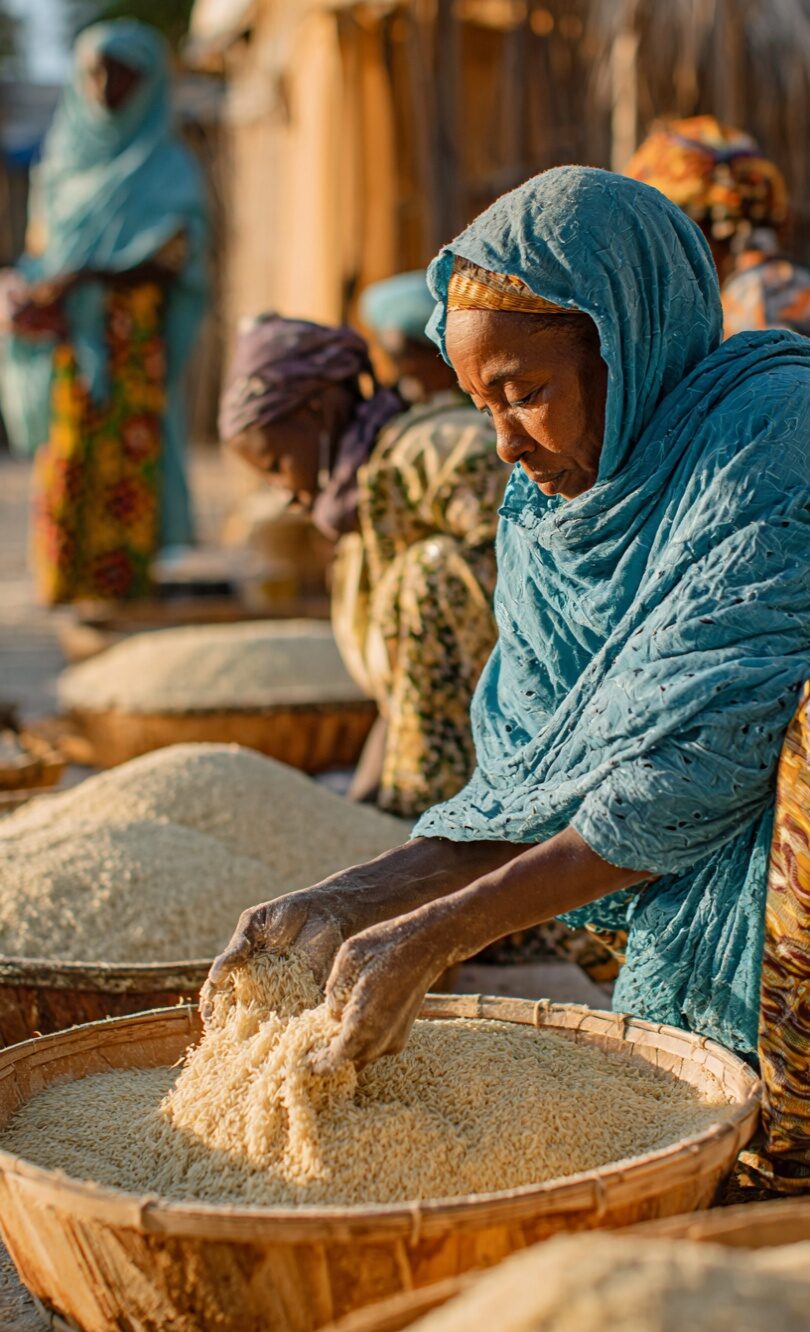
Women’s participation in rice processing in Jigawa State must be understood within the broader context of gender roles in Hausa society, which is predominantly Muslim and characterized by relatively strict separation of male and female spheres of activity (purdah). Rice processing represents one of the few economically significant activities that Hausa women can perform within or near the homestead without violating norms of seclusion, making it a critical source of income for many households (Adamu and Nura, 2018). Traditional rice processing involves women: manually pounding or threshing paddy to separate grains from husks; parboiling rice in large open pots over wood fires; sun-drying on mats or tarpaulins; and winnowing to remove chaff. Each of these operations is time-consuming, physically demanding, and potentially hazardous due to smoke inhalation and heavy lifting (Ibrahim and Bello, 2020). (Adamu and Nura, 2018; Ibrahim and Bello, 2020)
The introduction of improved rice processing technologies to Jigawa State has been facilitated by several development programs, including the Fadama III and III Additional Financing projects, the Agricultural Promotion Policy (APP), various state government initiatives, and several NGO-led interventions focused specifically on women processors. These programs have distributed improved parboiling drums, small-scale rice hullers, and threshers to women’s cooperatives and provided associated training in technology operation and maintenance (Lawal and Mohammed, 2019). However, evaluations of these interventions have been limited, with little systematic evidence on which technologies are being adopted, by whom, with what effects, and constrained by which factors. This knowledge gap hampers effective program design and resource allocation (Hamisu and Sani, 2020). (Lawal and Mohammed, 2019; Hamisu and Sani, 2020)
The socio-economic context of Jigawa State presents distinctive features that may influence technology adoption differently than in other rice-producing regions. The state is characterized by high poverty rates (estimated at over 70% of the population living below the national poverty line), low female literacy (estimated at less than 35% for adult women), limited economic diversification beyond agriculture, and relatively weak rural infrastructure including roads and electricity (Jigawa State Ministry of Planning and Budget, 2020). These conditions affect credit availability, market access, information diffusion, and the opportunity costs of women’s time—all of which shape technology adoption decisions. Additionally, the state’s predominantly Muslim social structure and associated norms regarding women’s mobility, decision-making, and economic engagement create a distinctive adoption environment (Sani and Abubakar, 2019). (Jigawa State Ministry of Planning and Budget, 2020; Sani and Abubakar, 2019)
Improved rice processing technologies can be categorized into three broad types based on their stage in the processing chain and their capital requirements. Primary processing technologies (threshers, de-stoners, cleaners) address the initial separation of paddy from straw and foreign materials. Secondary processing technologies (parboiling equipment, dryers) address the critical parboiling step that gelatinizes starch, reduces breakage, and enhances nutritional quality. Tertiary processing technologies (hullers, polishers, graders, baggers) complete the transformation to finished rice (Falola and Oladele, 2018). Women in Jigaba typically engage in all three stages, but they are most heavily involved in parboiling and drying—stages where improved technologies could dramatically reduce drudgery and improve quality. However, these are also stages where improved technologies remain least available to women processors (Ojo and Adebayo, 2021). (Falola and Oladele, 2018; Ojo and Adebayo, 2021)
The adoption of improved parboiling technology—specifically improved parboiling drums with thermometers, lids, and better heat distribution—represents a particularly important case. Traditional parboiling involves open pots, uneven heating, difficulty controlling temperature, and substantial smoke exposure. Improved parboiling systems, often consisting of a two-drum or three-drum arrangement that separates soaking, steaming, and drying functions, can reduce fuelwood consumption by 30-50%, reduce breakage rates by half, produce more uniformly colored rice, and substantially reduce smoke exposure (Akinbile and Ogunyemi, 2019). Despite these advantages, adoption remains limited, with studies elsewhere in northern Nigeria reporting adoption rates below 20% among women processors. Understanding the factors that enable or constrain adoption of this specific technology is a priority for this study (Ogunbiyi and Olagunju, 2020). (Akinbile and Ogunyemi, 2019; Ogunbiyi and Olagunju, 2020)
Mechanized milling technologies—including rubber-roll hullers, friction polishers, and destoners—represent a second category of improved processing technology. These are typically too expensive for individual women processors (a small huller costs NGN 300,000-500,000 or approximately US$400-700), but may be accessible through women’s cooperatives, producer organizations, or service-hiring arrangements (Alabi and Omotayo, 2018). Where such technologies are available, they dramatically reduce processing time (from hours per bag to minutes), reduce breakage rates, and produce more uniform, marketable rice. However, access to these technologies is highly uneven, dependent on group formation dynamics, leadership quality, credit availability, and technical support for operation and maintenance (Olayemi and Akinwumi, 2019). (Alabi and Omotayo, 2018; Olayemi and Akinwumi, 2019)
Drying technologies, while less emphasized in the literature, are equally critical to rice quality and women’s working conditions. Traditional sun drying on mats or bare ground exposes rice to contamination (stones, dirt, animal feces), risks of moisture reabsorption, and dependence on weather conditions. Improved drying technologies—including raised drying platforms, solar dryers, and low-cost tarpaulins—can reduce contamination, accelerate drying, and protect against rain (Fagbemi and Adebiyi, 2020). However, these technologies have received less attention from development interventions than parboiling and milling technologies, and adoption data are particularly sparse. In Jigawa State, where the dry season provides ample sunshine but the rainy season creates drying challenges, understanding the potential for improved drying technologies is especially relevant (Nwankwo and Ezeh, 2019). (Fagbemi and Adebiyi, 2020; Nwankwo and Ezeh, 2019)
The adoption of agricultural technologies by women is not merely a function of technology characteristics but is embedded in broader social, economic, and institutional contexts that systematically differ from those facing men. Women face distinct constraints including: limited access to land, credit, and extension services; lower levels of formal education; heavier unpaid care and domestic workloads; restricted mobility; and weaker bargaining power within households (Doss and Quisumbing, 2020). These gender-specific adoption constraints have been well-documented in the general agricultural technology adoption literature, but less attention has been paid to how they specifically affect adoption of post-harvest processing technologies (as distinct from production technologies) and how they manifest in contexts like Jigawa State (Mudege and Mwangi, 2019). (Doss and Quisumbing, 2020; Mudege and Mwangi, 2019)
Women’s control over rice processing income—and hence their incentive to invest in improved processing technologies—depends on intra-household dynamics that vary considerably across households. In some households, women retain full control over processing income, which they use for household consumption, children’s expenses, and savings. In others, processing income is effectively controlled by husbands or shared according to negotiated arrangements (Adekunle and Ogunlade, 2018). The degree of income control affects both the ability to repay credit for technology purchase and the incentive to invest in processing improvements. These intra-household factors are often omitted from adoption studies that treat the household as a unitary decision-making unit, yet they may be critically important in contexts like Jigawa State where gender norms strongly shape household economic relations (Akande and Ojo, 2020). (Adekunle and Ogunlade, 2018; Akande and Ojo, 2020)
Access to information about improved processing technologies represents another critical but unevenly distributed resource. Extension services in Jigawa State, as elsewhere in Nigeria, have historically focused on crop production rather than post-harvest processing, and female extension agents (who can more easily reach women in purdah) are scarce (Bello and Musa, 2019). Consequently, women’s awareness of improved technologies and understanding of their proper use is often limited. When information is available, it typically flows through social networks—other women processors, family members, religious organizations, or women’s groups—rather than formal extension channels. Understanding the structure and effectiveness of these informal information networks is essential for designing effective dissemination strategies (Abubakar and Garba, 2021). (Bello and Musa, 2019; Abubakar and Garba, 2021)
The economic returns to improved rice processing technologies have been documented in several studies, but the profitability of adoption depends on local market conditions including rice prices, input costs, and quality premiums. Improved processing technologies produce higher-quality rice (better head rice recovery, more uniform whiteness, fewer impurities) that commands premium prices in urban markets, but accessing those premium markets requires transportation, market information, and often relationships with wholesalers (Oladeji and Ogunniyi, 2019). Women in Jigawa State, with limited mobility and market connections, may be unable to capture these quality premiums, reducing the profitability of technology adoption. Conversely, if quality improvements are valued in local markets, adoption could enhance women’s market position (Ogunwale and Adebayo, 2020). (Oladeji and Ogunniyi, 2019; Ogunwale and Adebayo, 2020)
Previous adoption studies have employed a range of analytical frameworks, primarily drawing on diffusion of innovations theory (Rogers, 2003) and agricultural household economics (Singh et al., 1986), often operationalized through binary logit or probit models. These studies have identified consistent predictors of adoption including: age (younger women more likely to adopt), education (positive effect), household size (mixed effects), access to credit (positive), membership in women’s groups (positive), distance to markets (negative), and asset ownership (positive) (Akinola and Adebayo, 2018). However, most such studies in Nigeria have been conducted in the southwestern and north-central states, with the semi-arid northwest—including Jigawa State—remaining understudied. Given regional differences in agroecology, economic structure, and sociocultural context, findings from other regions may not directly apply to Jigawa (Adepoju and Oni, 2019). (Akinola and Adebayo, 2018; Adepoju and Oni, 2019)
In summary, the adoption of improved rice processing technologies by women in Jigawa State represents an economically significant but under-researched phenomenon with important implications for rural livelihoods, gender equity, and agricultural development. The state’s growing rice sector, the central role of women in processing, the availability of improved technologies through various development programs, and the distinctive socio-economic and cultural context of Jigawa combine to create a compelling case for empirical investigation. However, systematic evidence on adoption rates, constraining and enabling factors, and the impacts of adoption on women’s welfare remains limited. This study therefore seeks to investigate the socio-economic factors influencing the adoption of improved rice processing technologies by women in Jigawa State, with a view to generating evidence that can inform more effective and equitable technology dissemination policies and programs (Yusuf and Umar, 2021; Zakari and Abubakar, 2021). (Yusuf and Umar, 2021; Zakari and Abubakar, 2021)
1.2 Statement of the Problems
Despite sustained government and donor investments in promoting improved rice processing technologies (IRPTs) among smallholder farmers in Nigeria, adoption rates among women processors in Jigawa State remain discouragingly low. Preliminary observations and program reports suggest that fewer than 30% of women engaged in rice processing have adopted any form of improved technology, with even lower rates for more capital-intensive technologies such as mechanized hullers or complete parboiling systems (Hamisu and Sani, 2020). This low adoption persists despite the demonstrable technical and economic superiority of improved technologies over traditional methods, creating a puzzle that demands empirical investigation.
The persistence of traditional processing methods carries substantial economic costs for women processors and the broader rice value chain. Traditional methods yield lower milling recovery (55-60% versus 65-70% for improved methods), higher breakage rates (30-40% versus 10-15%), and inferior grain quality, collectively reducing the quantity and value of rice that women can sell from a given quantity of paddy (Oladimeji and Abdulsalam, 2021). These inefficiencies translate directly into lower incomes for women processors, perpetuating poverty and limiting women’s economic empowerment. The aggregate economic losses from continued use of traditional processing methods in Jigawa State are likely substantial, though they have not been systematically estimated.
Beyond economic losses, traditional rice processing imposes significant health and time costs on women. Hours spent manually pounding, parboiling over smoky wood fires, and winnowing in dusty conditions expose women to respiratory irritants, musculoskeletal strain, and burn risks (Ibrahim and Bello, 2020). These health effects are seldom captured in economic analyses of processing technologies, but they represent real welfare losses. Additionally, the long hours required for traditional processing (often 8-12 hours per bag of rice) crowd out other productive activities, rest, and child care, imposing substantial opportunity costs that fall disproportionately on women (Adamu and Nura, 2018).
A first specific problem is the absence of reliable, disaggregated data on adoption rates and patterns of IRPTs among women in Jigawa State. Program reports often claim success in distributing technologies without systematically tracking actual usage, and the number of women who have received training or equipment is not equivalent to the number who have adopted and sustained use of those technologies (Lawal and Mohammed, 2019). Without baseline data on current adoption rates—disaggregated by technology type, by women’s characteristics, and by geographical area—it is impossible to measure progress, identify underserved groups, or evaluate program effectiveness.
A second problem concerns the lack of empirical identification of the specific socio-economic factors that constrain or enable adoption among women processors in Jigawa State. While generic adoption determinants (age, education, access to credit, etc.) have been identified in other contexts, the relative importance and interaction of these factors in the specific context of Jigawa State, with its distinctive gender norms, economic structure, and institutional environment, remain unknown (Ogunleke and Ajayi, 2019). Consequently, policymakers and program implementers lack an evidence-based framework for targeting interventions, selecting beneficiary groups, or designing technology packages appropriate to local conditions.
A third problem concerns the role of credit access and asset constraints in technology adoption decisions. Improved rice processing technologies, even at the relatively modest scale of parboiling equipment or small hullers, represent capital investments that exceed the liquid assets of most rural women in Jigawa State, where poverty rates exceed 70% (Jigawa State Ministry of Planning and Budget, 2020). Formal credit is largely unavailable to rural women due to collateral requirements, documentation demands, and geographical distance from financial institutions. Informal credit sources (moneylenders, rotating savings groups, family loans) may be accessible but often carry high interest rates or social costs. The precise ways in which credit constraints shape adoption decisions have not been quantified for this population.
A fourth problem concerns the influence of sociocultural norms, including purdah and restrictions on women’s mobility, on technology adoption. In many parts of Jigawa State, women’s movements outside the homestead are restricted, especially for married women. This restricts their ability to: attend training sessions located away from home; access repair and maintenance services for processing equipment; market processed rice to buyers outside immediate communities; and participate in cooperative activities (Sani and Abubakar, 2019). The ways in which these mobility restrictions differentially affect adoption of different technology types (e.g., home-based vs. facility-based technologies) have not been systematically investigated.
A fifth problem concerns the relationship between women’s control over processing income and technology adoption decisions. In many Hausa households, women maintain separate income streams from processing activities, but the degree of autonomy over disposal of that income varies by household. Women with greater income control may have stronger incentives to invest in processing improvements, but they may also face greater obstacles in accessing credit or making equipment purchases if these require male co-signatures or approval (Adekunle and Ogunlade, 2018). The intra-household dynamics affecting adoption decisions remain largely unexamined in the context of Jigawa State, as most adoption studies treat the household as a unitary decision-maker.
A sixth problem concerns the effectiveness of information dissemination mechanisms for IRPTs in Jigawa State. Extension services are male-dominated and production-focused, with limited reach to women processors. The alternative information channels available to women—social networks, women’s groups, religious institutions, radio—vary in their effectiveness and coverage (Bello and Musa, 2019). The current state of women’s awareness regarding available technologies, their understanding of proper operation and maintenance, and the channels through which they received whatever information they have are unknown. This knowledge gap impedes the design of effective information campaigns.
A seventh problem concerns the relationship between women’s group membership and technology adoption. Women’s cooperatives, self-help groups, and village savings and loan associations are common in rural Jigawa and are frequently used as channels for technology dissemination by development programs. However, not all groups are equally functional, and group dynamics—leadership quality, member trust, collective efficacy—vary substantially (Alabi and Omotayo, 2018). The extent to which group membership actually facilitates technology adoption, and the group characteristics that condition this relationship, have not been empirically examined for IRPTs in Jigawa State.
An eighth problem concerns the maintenance and sustainability of adopted technologies. Even when improved processing technologies are initially adopted, they frequently fall into disuse after breakdowns that cannot be repaired due to lack of spare parts, technical skills, or financial resources. The post-adoption phase—technology maintenance, repair, replacement, and eventual abandonment or sustained use—has received far less research attention than the initial adoption decision (Olayemi and Akinwumi, 2019). Understanding the factors that distinguish sustained adoption from early abandonment is essential for designing programs that generate lasting benefits.
A ninth problem concerns the market linkages dimension of technology adoption. Adoption of improved processing technologies only yields economic benefits if the improved rice produced can be sold at prices sufficient to recover the investment and operating costs. Women in Jigawa State face constraints in accessing premium markets due to limited mobility, lack of market information, weak bargaining power, and competition from male traders (Ogunwale and Adebayo, 2020). The extent to which these market constraints undermine the profitability of technology adoption, and hence the incentive to adopt, has not been quantified.
A tenth problem concerns the heterogeneity of women processors—by age, marital status, household position, asset ownership, education, and other characteristics—and the possibility that adoption determinants differ systematically across these subgroups. For example, the factors influencing adoption by younger, unmarried women may differ from those influencing adoption by older, married women. Yet most adoption studies estimate average effects that assume homogeneity, potentially masking important subgroup differences that could inform targeted intervention design (Adepoju and Oni, 2019). Analysis of heterogeneous treatment effects is currently lacking for IRPT adoption in Jigawa State.
An eleventh problem concerns the unintended consequences of technology adoption on women’s well-being. While improved technologies are presumed to reduce drudgery and increase incomes, they may also have less benign effects: displacing labor for poorer women who work as hired processors, altering intra-household bargaining power in ways that reduce women’s welfare, or creating new health risks from mechanized equipment (Mudege and Mwangi, 2019). These potential negative consequences have received virtually no research attention in the Jigawa context, yet they are essential for a complete evaluation of technology dissemination programs.
In summary, the adoption of improved rice processing technologies by women in Jigawa State is constrained by multiple, interconnected problems spanning the domains of economics (credit, assets, profitability), sociology (gender norms, household dynamics, group processes), information (extension, social networks), and markets (access, prices, quality premiums). These problems have not been systematically investigated through rigorous empirical research in this context, leaving a substantial knowledge gap that undermines evidence-based policy formulation and program design. This study therefore seeks to fill that gap by identifying the socio-economic factors that influence adoption, quantifying their relative importance, and generating actionable recommendations for enhancing adoption rates and impacts.
1.3 Aim of the Study
The aim of this study is to investigate the socio-economic factors influencing the adoption of improved rice processing technologies by women in Jigawa State, Nigeria, and to provide evidence-based recommendations for enhancing adoption rates and improving women’s welfare outcomes.
1.4 Objectives of the Study
The specific objectives of this study are to:
- Describe the socio-economic characteristics of women rice processors in the study area and identify the types of improved rice processing technologies available and currently adopted.
- Determine the level of awareness and sources of information on improved rice processing technologies among women rice processors.
- Identify and analyze the socio-economic factors (including age, education, income, credit access, group membership, and mobility) that significantly influence the adoption of improved rice processing technologies.
- Assess the profitability and economic returns associated with adoption of improved rice processing technologies compared to traditional processing methods.
- Examine the constraints limiting adoption of improved rice processing technologies and the coping strategies employed by women processors, and generate recommendations for policy and program interventions.
1.5 Research Questions
This study seeks to answer the following research questions:
- What are the socio-economic characteristics of women rice processors in Jigawa State, and what types of improved rice processing technologies are currently adopted?
- What is the level of awareness of improved rice processing technologies among women rice processors in the study area, and through what channels do they access information?
- What socio-economic factors (e.g., age, education, household size, income, credit access, group membership, mobility) significantly influence the adoption of improved rice processing technologies?
- Is the adoption of improved rice processing technologies economically profitable compared to traditional methods, and what factors affect profitability?
- What are the major constraints limiting the adoption of improved rice processing technologies, and what coping strategies do women processors employ in response to these constraints?
1.6 Research Hypotheses
Hypothesis One
- Null Hypothesis (H₀₁): There is no significant relationship between a woman’s level of formal education and her likelihood of adopting improved rice processing technologies in Jigawa State.
- Alternative Hypothesis (H₁₁): There is a significant positive relationship between a woman’s level of formal education and her likelihood of adopting improved rice processing technologies in Jigawa State.
Hypothesis Two
- Null Hypothesis (H₀₂): There is no significant relationship between access to credit (formal or informal) and the adoption of improved rice processing technologies by women in Jigawa State.
- Alternative Hypothesis (H₁₂): There is a significant positive relationship between access to credit (formal or informal) and the adoption of improved rice processing technologies by women in Jigawa State.
Hypothesis Three
- Null Hypothesis (H₀₃): Membership in women’s groups or cooperatives has no significant effect on the adoption of improved rice processing technologies by women in Jigawa State.
- Alternative Hypothesis (H₁₃): Membership in women’s groups or cooperatives has a significant positive effect on the adoption of improved rice processing technologies by women in Jigawa State.
Hypothesis Four
- Null Hypothesis (H₀₄): There is no significant relationship between a woman’s level of mobility (ability to travel outside the homestead for economic activities) and her adoption of improved rice processing technologies.
- Alternative Hypothesis (H₁₄): There is a significant positive relationship between a woman’s level of mobility and her adoption of improved rice processing technologies in Jigawa State.
Hypothesis Five
- Null Hypothesis (H₀₅): There is no significant difference in net returns per unit of rice processed between adopters of improved technologies and non-adopters using traditional methods.
- Alternative Hypothesis (H₁₅): There is a significant positive difference in net returns per unit of rice processed between adopters of improved technologies and non-adopters using traditional methods.
1.7 Significance of the Study
This study is significant for multiple stakeholders and purposes. First, for policymakers at federal, state, and local government levels, the study will provide empirical evidence on the effectiveness of current technology dissemination programs and identify specific leverage points for enhancing adoption rates. Second, for development program implementers (e.g., Fadama, IFAD, NGOs), the findings will inform targeting strategies, technology selection, training content, and complementary intervention design (credit, market linkages, group strengthening). Third, for women rice processors themselves, the study will generate insights that can guide collective action and advocacy for more enabling policies and programs. Fourth, for agricultural extension services, the research will identify preferred information channels and content needs, enabling more effective extension delivery to women processors. Fifth, for financial institutions, the study will provide data on credit demand, repayment capacity, and business models for women’s processing enterprises, potentially stimulating more appropriate financial product development. Sixth, for researchers and academics, the study will contribute to the literature on gender, technology adoption, and agricultural value chains in semi-arid Nigeria, filling a significant geographical and thematic gap. Finally, by generating evidence on the socio-economic determinants of adoption, the study will contribute to the broader goal of sustainable agricultural development and women’s economic empowerment in Jigawa State and similar contexts.
1.8 Scope of the Study
The geographical scope of this study is limited to selected local government areas (LGAs) in Jigawa State, Nigeria, specifically those with significant rice processing activity among women. Based on preliminary information, the study will focus on Hadejia, Kafin Hausa, Auyo, Ringim, and Birniwa LGAs, which are located within the Hadejia River basin and have substantial irrigated and rain-fed rice production. The thematic scope focuses specifically on improved rice processing technologies relevant to smallholder women processors, including: improved parboiling systems (improved drums, two-drum systems, three-drum systems); small-scale mechanical hullers (rubber-roll and disc types); improved drying technologies (raised platforms, solar dryers, tarpaulins); and threshers/de-stoners where accessible. The study does not extend to rice production (growing, agronomy) or to large-scale industrial rice milling beyond the reach of women processors. The respondent scope includes women actively engaged in rice processing (both adopters and non-adopters of improved technologies), key informants (extension agents, cooperative leaders, program staff), and, for specific research questions, husbands of married women processors. The temporal scope covers the period 2015-2025, with primary data collected between 2024 and 2025, focusing on current technology adoption status while also collecting retrospective information on adoption histories.
1.9 Limitation of the Study
Several limitations inherent in this study should be acknowledged transparently. First, the study relies primarily on cross-sectional survey data, which can identify correlates of adoption but cannot definitively establish causal relationships between socio-economic factors and adoption outcomes. Second, the study focuses on Jigawa State only, so findings may not be generalizable to other states or regions of Nigeria with different agroecological, economic, or sociocultural conditions. Third, the study may face challenges in accessing married women in more restrictive purdah settings, requiring careful sampling strategies and female enumerators, but some segments of the population may remain underrepresented. Fourth, recall bias may affect retrospective data on technology acquisition, costs, and income, as respondents may not accurately remember events from prior years. Fifth, social desirability bias may affect responses about sensitive topics (e.g., intra-household decision-making, income control, mobility restrictions), even with careful survey design. Sixth, seasonal variation in processing activity may affect the timing of data collection, and a single cross-section may not capture seasonal dynamics. Seventh, the study does not include a controlled experimental component (randomized controlled trial), so it cannot definitively attribute outcomes to technology adoption as distinct from other unobserved factors. Eighth, the rapid pace of technological change means that some findings may become dated relatively quickly, though the underlying socio-economic relationships are likely more stable. Despite these limitations, the study will employ rigorous sampling methods, validated survey instruments, appropriate analytical techniques (including robustness checks), and transparent reporting to maximize the credibility and utility of its findings for policy and practice.
1.10 Definition of Terms
Improved Rice Processing Technologies (IRPTs): Any processing equipment, tools, or methods that represent an advancement over traditional practices in terms of efficiency (output per unit time), product quality (head rice recovery, uniformity, cleanliness), cost-effectiveness, or drudgery reduction. For this study, IRPTs include improved parboiling systems (e.g., improved parboiling drums with temperature control), mechanical rice hullers (small-scale rubber-roll or disc mills), improved dryers (raised platforms, solar dryers), threshers, destoners, and related equipment.
Adoption: The decision and subsequent action by a woman rice processor to acquire and use an improved rice processing technology on a sustained basis. Adoption may be partial (adopting some components of a technology package but not others) or complete (adopting all recommended components). For this study, adoption is measured as current regular use of at least one improved technology for at least one processing season.
Traditional Processing Methods: The conventional methods of rice processing prevalent in rural Jigawa State prior to the introduction of improved technologies, characterized by: manual threshing (pounding or beating); parboiling in open pots over wood fires without temperature control; sun drying on mats or bare ground; and winnowing by hand. These methods typically yield lower quality, higher breakage, and require more labor and time than improved methods.
Woman Rice Processor: A female individual who performs one or more rice processing activities (threshing, parboiling, drying, milling, winnowing, polishing, bagging) either for household consumption, for sale, or as hired labor. In this study, the term encompasses both married and unmarried women, household heads and non-heads, and women processing their own paddy or processing for others.
Socio-Economic Factors: The social (e.g., age, education, marital status, household size, ethnicity, religion, social networks, group membership, mobility, intra-household decision-making power) and economic (e.g., income, assets, savings, credit access, market access, processing volume, costs, returns) characteristics of women processors and their households that may influence technology adoption decisions.
Credit Access: The ability of a woman processor to obtain borrowed funds (cash or in-kind) from formal sources (banks, microfinance institutions, government programs) or informal sources (moneylenders, family, friends, rotating savings groups) for the purpose of acquiring improved processing technologies or covering associated costs.
Women’s Group/Cooperative: A formal or informal association of women processors who meet regularly for mutual support, collective action, and shared objectives. For this study, group membership is operationalized as self-reported active participation in any women’s group with economic functions, including savings groups, processing cooperatives, or multipurpose women’s development associations.
Mobility: The ability and freedom of a woman to travel outside her homestead for economic, social, or informational purposes, including attending training, purchasing equipment, accessing markets, or visiting extension agents. Mobility is influenced by sociocultural norms, household permission structures, transportation availability, and security considerations.
Parboiling: A hydrothermal treatment of paddy rice involving soaking, steaming, and drying, which gelatinizes starch, strengthens the grain, reduces breakage during milling, and enhances nutritional quality. Improved parboiling refers to methods that control temperature, reduce smoke exposure, and improve uniformity relative to traditional open-pot parboiling.
Head Rice Recovery: The percentage of milled rice that consists of whole, unbroken kernels (as opposed to broken kernels or brewers’ rice). Higher head rice recovery is a key advantage of improved processing technologies and significantly affects the market value of processed rice.
Drudgery: The physical difficulty, fatigue, and time intensity associated with a task. In this study, drudgery reduction refers to one of the hypothesized benefits of improved processing technologies, specifically the reduction in physical effort and time required to process a given quantity of rice.
Profitability: The net economic return from rice processing, calculated as total revenue from processed rice sales minus total costs (including labor, fuel, equipment depreciation, maintenance, and other operating expenses). Profitability is compared between adopters of improved technologies and non-adopters using traditional methods.


