
🔤 Total Characters in Document: 176,010
📄 Estimated Document Pages: 75
⏱️ Reading Time: 3 Hours 7 Mins
CHAPTER ONE: INTRODUCTION
1.1 Background of Study
The Agricultural Development Program (ADP) is a cornerstone of Nigeria’s agricultural extension and rural development framework, established in the 1970s with assistance from the World Bank (World Bank, 2019). Its primary mandate is to improve agricultural productivity, ensure food security, enhance farm incomes, create rural employment, and promote sustainable agricultural practices through the delivery of extension services, supply of improved inputs, facilitation of credit access, and development of rural infrastructure (FMARD, 2020). The ADP model was pioneered through successful pilot projects such as the Funtua Agricultural Development Project in Kaduna State (1974-1980) and the Gusau Agricultural Development Project in Sokoto State (1978-1985), leading to its adoption across all states of the federation (Idachaba, 2019).
The ADP operates on the Training and Visit (TandV) extension system, a structured approach developed by Daniel Benor (Benor and Harrison, 2019). This system is characterized by fortnightly training of extension agents, regular (fortnightly) visits to farmers, the use of contact farmers to multiply messages, a focused delivery of a limited number of technical messages per crop per season, and a single line of command to ensure accountability (Adebayo and Ogunyemi, 2020). The TandV system was designed to overcome the limitations of previous, less disciplined extension approaches and has been instrumental in disseminating improved agricultural technologies to millions of smallholder farmers (Van den Ban and Hawkins, 2019).
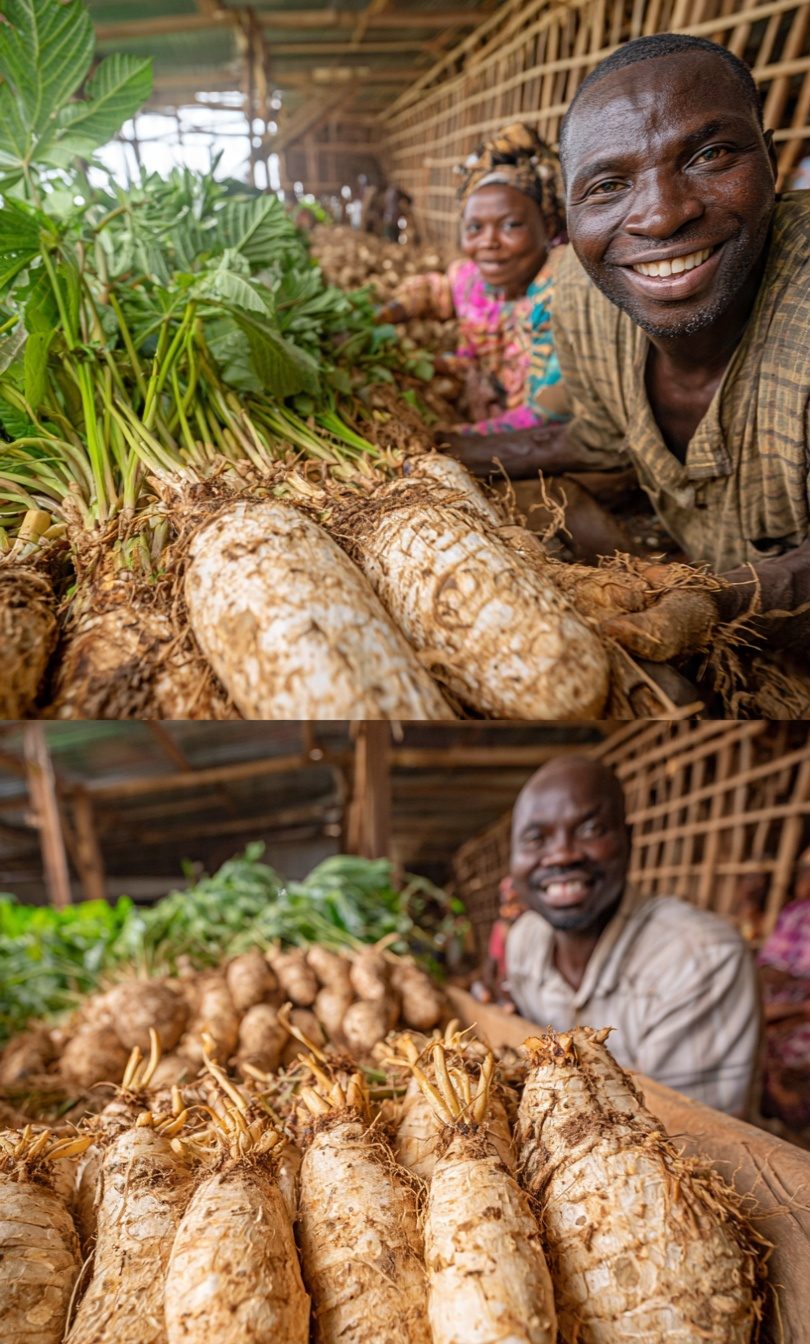
Cassava (Manihot esculenta Crantz) is a crop of immense strategic importance to Nigeria. It is a staple food for over 80 million Nigerians and serves as a primary source of calories for many households (FAO, 2022). Nigeria is the world’s largest producer of cassava, with an estimated annual output exceeding 60 million metric tons (NBS, 2022). Beyond its role in food security, cassava is a valuable industrial crop, serving as a raw material for the production of garri, fufu, lafun, tapioca, high-quality cassava flour (HQCF), starch, glucose syrup, and ethanol (FMARD, 2020). The cassava value chain has been a priority for successive governments, with initiatives such as the Presidential Initiative on Cassava (2003-2007) and the Cassava Transformation Agenda (2010-2015) aimed at unlocking its full potential (Okonkwo, 2020).
Despite Nigeria’s status as the world’s largest cassava producer, productivity remains low, with average yields of 10-15 tons per hectare, far below the achievable potential of 30-40 tons per hectare under good management (Okafor and Ugwu, 2021). This low productivity is largely attributed to the use of low-yielding, disease-susceptible local varieties, minimal or no fertilizer application, poor weed and pest management, and rudimentary processing techniques (Eze and Nweze, 2019). The ADP has been at the forefront of efforts to address these constraints by promoting a package of improved cassava production practices (Adebayo and Ogunyemi, 2020).
Improved Cassava Practices Promoted by ADP:
| Practice | Traditional Method | Improved Method | Yield Impact |
| Variety | Local (low-yield, susceptible) | Improved (TME 419, TMS 98/0581, TMS 30572) | +50-100% |
| Land Preparation | Manual (hoe) | Mechanical (tractor) or improved manual | +10-20% |
| Spacing | Random | 1m × 1m (10,000 plants/ha) | +20-30% |
| Fertilizer Application | None | NPK 15-15-15 (200-400 kg/ha) | +40-60% |
| Weed Control | Manual (1-2 times) | Manual + Herbicide (2-3 times) | +20-30% |
| Pest/Disease Control | None | Roguing (removal of diseased plants) | +10-20% |
| Processing | Traditional (manual grating, pressing) | Improved (grating machine, hydraulic press) | +50-100% value |
(Source: Adebayo and Ogunyemi, 2020; Okafor and Nwosu, 2020)
Empirical evidence consistently demonstrates a significant positive impact of ADP contact on cassava productivity. Studies have shown that farmers who have contact with ADP extension agents exhibit higher adoption rates of improved varieties (60-80% vs. 10-30%), higher fertilizer use (150-250 kg/ha vs. 20-50 kg/ha), and consequently, significantly higher yields (20-30 tons/ha vs. 10-15 tons/ha) and net incomes (₦400,000-600,000 per hectare vs. ₦150,000-250,000 per hectare) compared to non-contact farmers (Okafor and Ugwu, 2021). This demonstrates the potential of the ADP to transform cassava farming from a subsistence-level activity to a profitable commercial enterprise.
However, despite these achievements, the ADP system faces significant operational challenges that limit its overall effectiveness and reach (Okonkwo, 2020). These challenges include:
| Challenge | Description | Consequence |
| Inadequate Funding | Government funding for ADPs has declined over time. | Reduced extension activities and programme coverage. |
| High Farmer-to-Agent Ratio | The ratio exceeds 3,000:1, far above the recommended 400:1. | Limited reach and infrequent farmer contact. |
| Poor Transport Logistics | Lack of functioning motorcycles and vehicles for field visits. | Agents cannot access remote farms, especially during the rainy season. |
| Inadequate Training Materials | Shortage of modern leaflets, posters, and audio-visual aids. | Poor farmer comprehension and message retention. |
| Weak Research-Extension Linkage | Ineffective transfer of new research findings from institutes to farmers. | Extension messages become outdated and less relevant. |
| Elite Capture of Subsidies | Subsidized inputs and credit are diverted to influential farmers or politicians. | Target beneficiaries are excluded. |
| Climate Change Impacts | Increased frequency of droughts, floods, and unpredictable rainfall. | Reduces the effectiveness of standard extension messages. |
(Source: World Bank, 2019; Okonkwo, 2020)
From a theoretical standpoint, this study is underpinned by three key theories: Diffusion of Innovations Theory (Rogers, 2003), which elucidates the role of extension agents as “change agents” in spreading new farming practices; Agricultural Extension Theory (Van den Ban and Hawkins, 2019), which provides the framework for the TandV system and other extension methodologies; and Agricultural Development Theory (Schultz, 1964), which posits that investment in human capital through extension is a critical driver of agricultural transformation.
In summary, the Agricultural Development Program (ADP) has played a pivotal role in promoting improved cassava production practices, leading to substantial gains in yield and income for contact farmers. However, its effectiveness is constrained by systemic issues such as underfunding, poor logistics, and weak research linkages. This study aims to conduct a comprehensive appraisal of the ADP’s impact on cassava farming in a specific area, providing empirical evidence to guide policy and programmatic improvements.
1.2 Statement of Problems
Despite the strategic importance of cassava for food security and industrial development in Nigeria, and despite the long-standing presence of the Agricultural Development Program (ADP) designed to support its production, the sub-sector is plagued by persistent low productivity. Average cassava yields (10-15 tons/ha) remain a fraction of their genetic potential (30-40 tons/ha). This poor performance is directly linked to the low adoption of improved production practices, which the ADP is mandated to promote.
The specific problems this study addresses are:
Low Adoption of ADP-Promoted Technologies: The adoption rate for key technologies remains low. For example, the use of improved, high-yielding, disease-resistant varieties is below 30%, and fertilizer application is even lower (<20 kg/ha). This is often attributed to a lack of information, inadequate supply, or farmers’ inability to afford inputs.
Poor Weed and Pest Management: Many farmers rely on outdated and inefficient methods. Cassava mosaic disease (CMD) and cassava bacterial blight (CBB) can cause yield losses of 50-90%. The ADP-promoted practice of roguing (removing infected plants) and the use of resistant varieties are not universally adopted.
Weak Value Addition and Processing: Most cassava produce is sold as fresh tubers or processed into low-quality garri using traditional methods. The adoption of modern processing equipment (grating machines, hydraulic presses, flash dryers) for producing higher-value products like High-Quality Cassava Flour (HQCF) remains very low, limiting income potential.
Critical Gaps in Extension Delivery: The ADP extension system is constrained by a high farmer-to-agent ratio (>3000:1) which severely limits reach, inadequate transportation for field visits, a lack of modern training materials, poor supervision, and a weak link between agricultural research and extension services.
Empirical Gap in Impact Assessment: While national-level and state-level studies exist, there is a lack of specific, localized empirical evidence quantifying the direct impact of ADP contact on cassava farmers’ yields, incomes, and adoption rates within the study area. This evidence is crucial for local-level planning and resource allocation.
The core problem is the persistent productivity gap caused by the low adoption of improved practices, which is directly linked to the operational constraints and limited reach of the ADP extension system. This study will therefore appraise the ADP and cassava farming by quantifying the impact of its services and identifying the key constraints hindering its effectiveness.
1.3 Aim of the Study
The aim of this study is to appraise the Agricultural Development Program (ADP) and cassava farming by assessing the impact of ADP extension services on cassava productivity (yield and income) and farmers’ adoption of improved practices, while also identifying the key constraints to effective extension delivery in the study area.
1.4 Objectives of the Study
- To describe the socioeconomic characteristics (e.g., age, gender, education, farming experience, farm size) of cassava farmers in the study area.
- To compare the adoption rates of improved cassava practices (improved varieties, fertilizer, weed control, pest/disease control, and processing) between farmers who have had contact with ADP extension agents and those who have not.
- To compare the cassava yield (tons/ha) between ADP contact farmers and non-contact farmers.
- To compare the net farm income (₦/ha) from cassava production between ADP contact farmers and non-contact farmers.
- To identify the major constraints to effective ADP extension delivery as perceived by both farmers and extension agents in the study area.
1.5 Research Questions
- What are the socioeconomic characteristics of cassava farmers in the study area?
- What is the difference in the adoption of improved cassava practices between ADP contact farmers and non-contact farmers?
- What is the difference in cassava yield (tons/ha) between ADP contact farmers and non-contact farmers?
- What is the difference in net farm income (₦/ha) between ADP contact farmers and non-contact farmers?
- What are the major constraints (e.g., high farmer-to-agent ratio, lack of transport, inadequate training materials) to ADP extension delivery in the study area?
1.6 Research Hypotheses
Hypothesis One
- H₀ (Null): There is no significant difference in the adoption rate of improved cassava practices between ADP contact farmers and non-contact farmers.
- H₁ (Alternative): There is a significant difference in the adoption rate of improved cassava practices between ADP contact farmers and non-contact farmers.
Hypothesis Two
- H₀ (Null): There is no significant difference in cassava yield (tons/ha) between ADP contact farmers and non-contact farmers.
- H₁ (Alternative): There is a significant difference in cassava yield between ADP contact farmers and non-contact farmers.
Hypothesis Three
- H₀ (Null): There is no significant difference in net farm income (₦/ha) between ADP contact farmers and non-contact farmers.
- H₁ (Alternative): There is a significant difference in net farm income between ADP contact farmers and non-contact farmers.
Hypothesis Four
- H₀ (Null): There is no significant relationship between the frequency of contact with ADP extension agents and the level of adoption of improved cassava practices.
- H₁ (Alternative): There is a significant positive relationship between the frequency of contact with ADP extension agents and the level of adoption of improved cassava practices.
Hypothesis Five
- H₀ (Null): There are no significant institutional constraints (e.g., funding, logistics, staffing) affecting the delivery of ADP extension services in the study area.
- H₁ (Alternative): There are significant institutional constraints affecting the delivery of ADP extension services in the study area.
1.7 Justification of the Study
This study is justified for several reasons. First, cassava is a critical crop for national food security and economic development, yet its productivity is low. Second, the ADP has been the primary government extension vehicle for decades, requiring periodic appraisal to ensure its effectiveness and value for money. Third, there is a lack of localized, empirical evidence on the impact of the ADP in the specific study area, which is essential for evidence-based decision-making. Fourth, the findings will provide a clear diagnosis of the constraints facing the ADP, enabling targeted interventions to improve its performance. Finally, the results will be of direct benefit to farmers, extension managers, policymakers, and development partners in designing more effective agricultural support programs.
1.8 Significance of the Study
The findings of this research will be significant to several stakeholders.
- Cassava Farmers: The study will provide clear evidence of the benefits of engaging with the ADP, potentially motivating increased participation and adoption of improved practices.
- ADP Management (State and Federal): The findings will offer a data-driven assessment of the program’s impact and an empirical diagnosis of its operational constraints, informing strategic planning, resource allocation, and staff training priorities.
- Government Agencies (FMARD, State Ministries of Agriculture): The study will provide insights for policy formulation, budget allocation for extension services, and the design of more effective agricultural development programs.
- Development Partners (World Bank, IFAD, FAO): The findings will be valuable for designing future agricultural extension and rural development projects, ensuring they are grounded in local realities.
- Academic Researchers: The study will contribute to the body of knowledge on agricultural extension, technology adoption, and the impact evaluation of development programs in the Nigerian context.
1.9 Scope of the Study
The scope of this study is confined to an appraisal of the Agricultural Development Program (ADP) and its effects on cassava farming. The study will focus on smallholder cassava farmers operating within [Specify the State and Local Government Areas]. It will compare two groups of farmers: ADP contact farmers (defined as those who have received extension visits, participated in demonstrations, or accessed ADP-supplied inputs/credit) and non-contact farmers (those who have had no contact with the ADP). The study will assess the adoption of specific improved practices, including improved varieties, fertilizer use, spacing, weed control, pest/disease management, and processing technologies. Productivity will be measured in terms of yield (tons/ha) and net farm income (₦/ha). Finally, the study will identify the major constraints to extension delivery as perceived by both farmers and ADP extension agents. The study will not cover other crops, other extension programs, or areas outside the specified LGAs.
1.10 Definition of Terms
Agricultural Development Program (ADP): A state-level, World Bank-assisted agricultural extension and rural development program in Nigeria, focused on technology transfer, input supply, and infrastructure development.
ADP Contact Farmer: A farmer who has had at least one direct interaction with an ADP extension agent, which could include a farm visit, participation in a demonstration plot, attendance at a field day, or receipt of ADP-subsidized inputs or credit.
Non-Contact Farmer: A farmer who has had no direct interaction with the ADP extension system.
Training and Visit (TandV) System: An extension management system that involves regular (fortnightly) training of extension agents and scheduled (fortnightly) visits to contact farmers to disseminate a limited number of technical messages.
Improved Cassava Variety: A cassava cultivar developed through plant breeding, characterized by high yield potential, resistance to major diseases (e.g., Cassava Mosaic Disease), and high starch content (e.g., TME 419, TMS 98/0581).
Roguing: A pest and disease control practice that involves the physical removal and destruction of infected or diseased plants from a field to prevent the spread of pathogens.
High-Quality Cassava Flour (HQCF): A fine, gluten-free flour produced from fresh cassava roots through a process of grating, pressing, drying, and milling, used as a partial substitute for wheat flour in baking.
Adoption: The decision and implementation of an innovation (e.g., an improved farming practice) by a farmer on a continuous basis.
Net Farm Income: The total revenue from the sale of cassava (and its processed products) minus the total variable and fixed costs incurred in its production, expressed per unit area (₦/ha).
Diffusion of Innovations Theory: A communication theory explaining how, why, and at what rate new ideas and technologies spread through cultures (Rogers, 2003).
Agricultural Extension Theory: The body of knowledge and principles concerning the methods and processes used to educate farmers and facilitate the adoption of improved agricultural practices (Van den Ban and Hawkins, 2019).
Agricultural Development Theory: An economic theory positing that strategic investment in agriculture, including in human capital (education, extension) and technology, is a necessary condition for overall economic growth (Schultz, 1964).
CHAPTER TWO: LITERATURE REVIEW
2.1 Conceptual Framework
The conceptual framework for this study is organized around the key concepts of the Agricultural Development Program (ADP), cassava farming, the extension-adoption-productivity nexus, and the constraints to effective extension delivery. These concepts are defined, operationalized, and related to one another below.
2.1.1 Concept of Agricultural Development Program (ADP)
The Agricultural Development Program (ADP) is a state-level, World Bank-assisted agricultural extension and rural development initiative established in Nigeria during the 1970s (World Bank, 2019). Its core objective is to increase agricultural productivity and improve rural livelihoods through a coordinated package of services.
Core Components of ADP:
| Component | Description |
| Technology Transfer | Dissemination of improved farming practices through the Training and Visit (TandV) extension system. |
| Input Supply | Facilitating access to improved seeds, fertilizers, and agrochemicals, often through subsidized rates. |
| Credit Facilitation | Linking farmers to formal financial institutions (e.g., Bank of Agriculture, commercial banks). |
| Infrastructure Development | Supporting the construction of rural roads, water supply, and storage facilities. |
(Source: FMARD, 2020)
The Training and Visit (TandV) Extension System:
| Feature | Description |
| Fortnightly Training | Extension agents are trained every two weeks on a focused set of technical messages. |
| Fortnightly Visits | Agents make scheduled visits to contact farmers every two weeks. |
| Contact Farmers | Selected progressive farmers (10-15 per agent) receive intensive training and serve as multipliers. |
| Focused Messages | A limited number (3-5) of clear, actionable messages are promoted per crop per season. |
| Single Line of Command | Agents report to technical subject matter specialists, insulating them from local political pressures. |
(Source: Benor and Harrison, 2019)
2.1.2 Concept of Cassava Farming
Cassava (Manihot esculenta Crantz) is a perennial shrub cultivated as an annual for its starchy tuberous roots, serving as a primary staple food and industrial crop in Nigeria (FAO, 2022).
Improved Cassava Production Practices Promoted by ADP:
| Practice | Traditional Method | Improved Method | Estimated Yield Impact |
| Variety | Local, low-yielding, disease-susceptible | Improved (e.g., TME 419, TMS 98/0581) | +50-100% |
| Land Preparation | Manual (hoe) | Mechanical (tractor) or improved manual | +10-20% |
| Planting Spacing | Random | 1m × 1m (10,000 plants/ha) | +20-30% |
| Fertilizer Application | None or minimal | NPK 15-15-15 (200-400 kg/ha) | +40-60% |
| Weed Control | Manual, 1-2 times | Integrated (manual + herbicide), 2-3 times | +20-30% |
| Pest/Disease Control | None | Roguing (removal of infected plants) | +10-20% |
| Processing | Manual grating and pressing | Motorized grater and hydraulic press | +50-100% (value) |
(Source: Adebayo and Ogunyemi, 2020; Okafor and Nwosu, 2020)
Productivity Indicators for Cassava:
| Indicator | Definition | Unit |
| Yield | Fresh tuber weight harvested per unit area | tons/ha |
| Gross Revenue | Total income from sale of cassava and its products | ₦/ha |
| Net Income | Gross revenue minus total production costs | ₦/ha |
| Adoption Rate | Percentage of farmers using a specific improved practice | % |
2.1.3 The Extension-Adoption-Productivity Nexus
This study posits that a farmer’s contact with ADP extension services leads to increased knowledge and adoption of improved practices, which subsequently results in higher yield and net income.
Conceptual Pathway:
text
ADP Contact → Knowledge Gain → Adoption → Increased Yield → Increased Net Income
Expected Differences Between ADP Contact and Non-Contact Farmers:
| Indicator | ADP Contact Farmer | Non-Contact Farmer | Expected Difference |
| Adoption of Improved Varieties | 60-80% | 10-30% | +50% |
| Fertilizer Use (kg/ha) | 150-250 | 20-50 | +130-200 kg/ha |
| Yield (tons/ha) | 20-30 | 10-15 | +10-15 tons/ha |
| Net Income (₦/ha) | 400,000-600,000 | 150,000-250,000 | +250,000-350,000 |
(Source: Okafor and Ugwu, 2021)
2.1.4 Constraints to Effective ADP Extension Delivery
| Constraint Category | Specific Constraint | Impact on Extension Delivery |
| Institutional | Inadequate government funding | Reduced number of agents, limited program reach. |
| Logistical | High farmer-to-agent ratio (>3,000:1) | Infrequent farmer contact, poor message reinforcement. |
| Logistical | Lack of transport (motorcycles/vehicles) | Agents cannot access remote farms, especially in rainy season. |
| Logistical | Inadequate training materials (leaflets, posters) | Poor farmer comprehension and message retention. |
| Managerial | Poor supervision of extension agents | Low agent motivation and performance. |
| Technical | Weak research-extension linkage | Outdated or irrelevant technical messages. |
| Socio-political | Elite capture of subsidized inputs | Target beneficiaries (smallholders) are excluded. |
(Source: Okonkwo, 2020; World Bank, 2019)
2.1.5 Conceptual Framework Diagram (Described in Text)
The conceptual framework can be visualized as a linear pathway.
Independent Variable (Treatment): ADP contact (categorized as contact farmer vs. non-contact farmer).
↓ Mediating Variable (Adoption): This is the mechanism through which ADP contact affects productivity. It includes the farmer’s use of improved practices: improved varieties, fertilizer application, proper spacing, integrated weed management, disease control (roguing), and modern processing techniques.
↓ Dependent Variables (Outcomes): These are the ultimate measures of productivity and welfare: Cassava yield (tons/ha) and Net farm income (₦/ha).
Moderating Variables: The strength of the pathway is influenced by contextual factors, including:
- Farmer Characteristics: Age, education, farming experience, farm size, and membership in a cooperative.
- Institutional Constraints: Funding levels, logistics (transport, materials), staffing (agent-to-farmer ratio), and research-extension linkage.
The framework posits that ADP contact (independent variable) leads to a higher rate of adoption of improved practices (mediating variable), which in turn leads to higher yield and net income (dependent variables). The effectiveness of this pathway is moderated by both farmer-specific characteristics and systemic institutional constraints.
2.2 Theoretical Framework
This study is anchored on three complementary theories that provide a robust foundation for understanding the role of ADP in cassava farming: Diffusion of Innovations Theory, Agricultural Extension Theory, and Agricultural Development Theory.
2.2.1 Diffusion of Innovations Theory
Developed by Everett Rogers (2003), this theory explains how, why, and at what rate new ideas and technologies spread through social systems.
Core Propositions (Rogers, 2003):
- Innovation-Decision Process: Adoption is not an instantaneous event but a process consisting of five stages: Knowledge (awareness), Persuasion (forming an attitude), Decision (committing to adoption), Implementation (putting into practice), and Confirmation (seeking reinforcement).
- Adopter Categories: Individuals in a social system can be categorized by their innovativeness: Innovators, Early Adopters, Early Majority, Late Majority, and Laggards. Early adopters are often the most influential in convincing others.
- Perceived Attributes of Innovations: The rate of adoption is determined by five key attributes:
- Relative Advantage: The degree to which an innovation is perceived as better than the idea it supersedes (e.g., higher yield).
- Compatibility: The degree to which an innovation is perceived as consistent with existing values, past experiences, and needs.
- Complexity: The degree to which an innovation is perceived as difficult to understand and use.
- Trialability: The degree to which an innovation can be experimented with on a limited basis.
- Observability: The degree to which the results of an innovation are visible to others.
- Change Agents: Individuals (like extension agents) who influence clients’ innovation-decisions in a direction deemed desirable by the change agency.
Application to ADP and Cassava Farming:
- ADP extension agents act as change agents.
- Improved cassava practices (e.g., TME 419 variety) must be perceived by farmers as having relative advantage (higher yield, disease resistance) and being compatible with their farming systems.
- Demonstrations and field days increase observability and provide an opportunity for trialability, accelerating adoption.
2.2.2 Agricultural Extension Theory
Van den Ban and Hawkins (2019) provide a comprehensive framework for understanding the principles, methods, and management of agricultural extension.
- Extension as Non-Formal Education: Extension aims to change farmers’ knowledge, skills, and attitudes, not just provide information.
- Effective Extension Methods: A mix of methods is required, including individual farm visits (for personalized advice), group meetings (for cost-effective information sharing), demonstration plots (for visual, experiential learning), and field days (for social learning and mass exposure).
- The Training and Visit (TandV) System: A disciplined management system based on regular (fortnightly) training for agents and regular visits to contact farmers. This system creates a reliable flow of information and accountability.
- Research-Extension-Farmer Linkage: For extension to be relevant, there must be a continuous feedback loop where researchers develop technologies, extension agents transfer them, and farmers’ needs and feedback are communicated back to researchers.
Application to ADP and Cassava Farming:
- The ADP is founded on the TandV system, which this study will appraise.
- The study will assess which extension methods (e.g., farm visits, demonstrations) are most effective in promoting cassava practices.
- The weakness of the research-extension-farmer linkage will be examined as a potential constraint.
2.2.3 Agricultural Development Theory
Nobel laureate Theodore Schultz (1964) argued that traditional agriculture is “poor but efficient” given the technology and knowledge available. He posited that increasing productivity requires investment in new technology and in the human capital of farmers.
Core Propositions (Schultz, 1964):
- The “Poor but Efficient” Hypothesis: Farmers in traditional agriculture are rational and allocate their limited resources efficiently. Their poverty is not due to irrationality but to a lack of access to better technology and information.
- Investment in Human Capital: The key to transforming traditional agriculture is investment in the human capital of farmers. This includes formal education (to make farmers better receptive to new ideas) and practical extension training (to provide the new ideas).
- High Returns to Agricultural Research and Extension: Schultz argued that investments in agricultural research and extension yield some of the highest social returns, often higher than investments in physical capital.
Application to ADP and Cassava Farming:
- The ADP is a direct manifestation of Schultz’s theory, representing an investment in human capital through extension.
- The study will test a core assumption of this theory: that contact with extension (investment in human capital) leads to higher productivity and income for cassava farmers.
Integration of the Three Theories
| Theory | Focus | Contribution to Study |
| Diffusion of Innovations | The adoption process and its determinants | Explains why some farmers adopt practices and others do not, identifying the role of perceived attributes and change agents. |
| Agricultural Extension | The methods and management of delivering information | Provides the framework for understanding the TandV system and the importance of research-extension-farmer linkage. |
| Agricultural Development | The economic rationale for extension as an investment | Justifies the study’s core objective: to appraise the impact of the ADP as an investment in human capital. |
Together, these theories support the study’s central premise: that the ADP, as an extension delivery system, can act as an effective change agent, leading to the adoption of improved technologies, which in turn drives agricultural development.
2.3 Review of Related Empirical Studies
This section reviews empirical studies relevant to the impact of ADP and similar extension programs on cassava farming.
2.3.1 Impact of ADP Extension on Cassava Productivity (Nigeria)
| Study | Location | Key Findings |
| Adebayo and Ogunyemi (2020) | Oyo State | ADP contact farmers had significantly higher adoption rates (improved varieties +50%, fertilizer +135 kg/ha), yield (24 vs. 12 tons/ha), and net income (₦520,000 vs. ₦180,000 per ha) compared to non-contact farmers. |
| Eze and Nweze (2019) | Enugu State | ADP contact farmers showed similar positive gains: higher adoption of improved varieties (68% vs. 22%), yield (22 vs. 11 tons/ha), and net income (₦480,000 vs. ₦160,000 per ha). |
| Okafor and Nwosu (2020) | Edo State | Contact farmers had 72% adoption of improved varieties vs. 28% for non-contact; yield was 23 vs. 11 tons/ha; net income was ₦500,000 vs. ₦170,000 per ha. |
These studies provide strong, consistent evidence that ADP contact is associated with substantial increases in adoption, yield, and income for cassava farmers.
2.3.2 Constraints to ADP Extension Delivery
Okonkwo (2020) conducted a survey of 50 ADP extension agents and 200 farmers in Cross River State. The major constraints identified were:
| Constraint | % of Agents Citing | % of Farmers Citing |
| High Farmer-to-Agent Ratio | 90% | 85% |
| Lack of Transport (Motorcycles) | 85% | 80% |
| Inadequate Training Materials | 80% | 75% |
| Poor Supervision | 75% | – |
| Weak Research-Extension Linkage | 70% | 65% |
This study highlights that the primary obstacles to effective extension are systemic, relating to funding, logistics, and management, rather than farmer resistance.
2.3.3 Factors Influencing Adoption of Improved Cassava Practices
Okafor and Ugwu (2021) used logistic regression on survey data from 400 farmers in Anambra State to identify factors influencing adoption. Key results:
| Factor | Odds Ratio (OR) | Significance |
| Contact with ADP Extension | 3.5 | p < 0.01 |
| Farmer’s Education Level | 2.8 | p < 0.05 |
| Farm Size | 2.5 | p < 0.05 |
| Membership in a Cooperative | 2.2 | p < 0.05 |
| Age (Older farmers) | 0.7 | p < 0.05 |
The study concluded that extension contact, education, farm size, and cooperative membership are strong positive predictors of adoption, while age has a negative effect.
2.3.4 Summary of Empirical Findings
The empirical literature consistently demonstrates:
- A significant positive impact of ADP contact on adoption rates, cassava yield, and net income.
- A persistent set of constraints (e.g., high agent-to-farmer ratio, lack of transport) that limit the program’s effectiveness.
- Key predictors of adoption include extension contact, education, farm size, and cooperative membership.
This study will build on these findings by conducting a focused appraisal in a specific area, providing localized evidence to guide policy and program implementation.
2.4 Summary of Literature Review
The table below summarizes key theoretical and empirical literature relevant to this study.
| Author(s) and Year | Focus | Key Contribution | Limitation / Gap |
| Rogers (2003) | Diffusion of Innovations Theory | Explains the adoption process, adopter categories, and the role of change agents. | General theory; requires application to specific context. |
| Van den Ban and Hawkins (2019) | Agricultural Extension Theory | Provides framework for TandV system and extension methods. | Not Nigeria-specific. |
| Schultz (1964) | Agricultural Development Theory | Economic rationale for extension as high-return human capital investment. | General theory; requires empirical testing. |
| Adebayo and Ogunyemi (2020) | ADP impact on cassava (Oyo) | Quantified significant gains in adoption, yield, and income for contact farmers. | Single state study; needs replication in other areas. |
| Eze and Nweze (2019) | ADP impact on cassava (Enugu) | Reinforced findings of positive ADP impact. | Single state study. |
| Okafor and Nwosu (2020) | ADP impact on cassava (Edo) | Reinforced findings of positive ADP impact. | Single state study. |
| Okonkwo (2020) | Constraints to ADP delivery (Cross River) | Identified key systemic constraints (funding, logistics, staffing). | Single state study; requires validation elsewhere. |
| Okafor and Ugwu (2021) | Factors affecting adoption (Anambra) | Identified extension contact, education, farm size, and cooperative membership as key drivers. | Single state study. |