🔤 Total Characters in Document: 130,315
📄 Estimated Document Pages: 52
⏱️ Reading Time: 2 Hours 10 Mins
CHAPTER ONE: INTRODUCTION
1.1 Background of Study
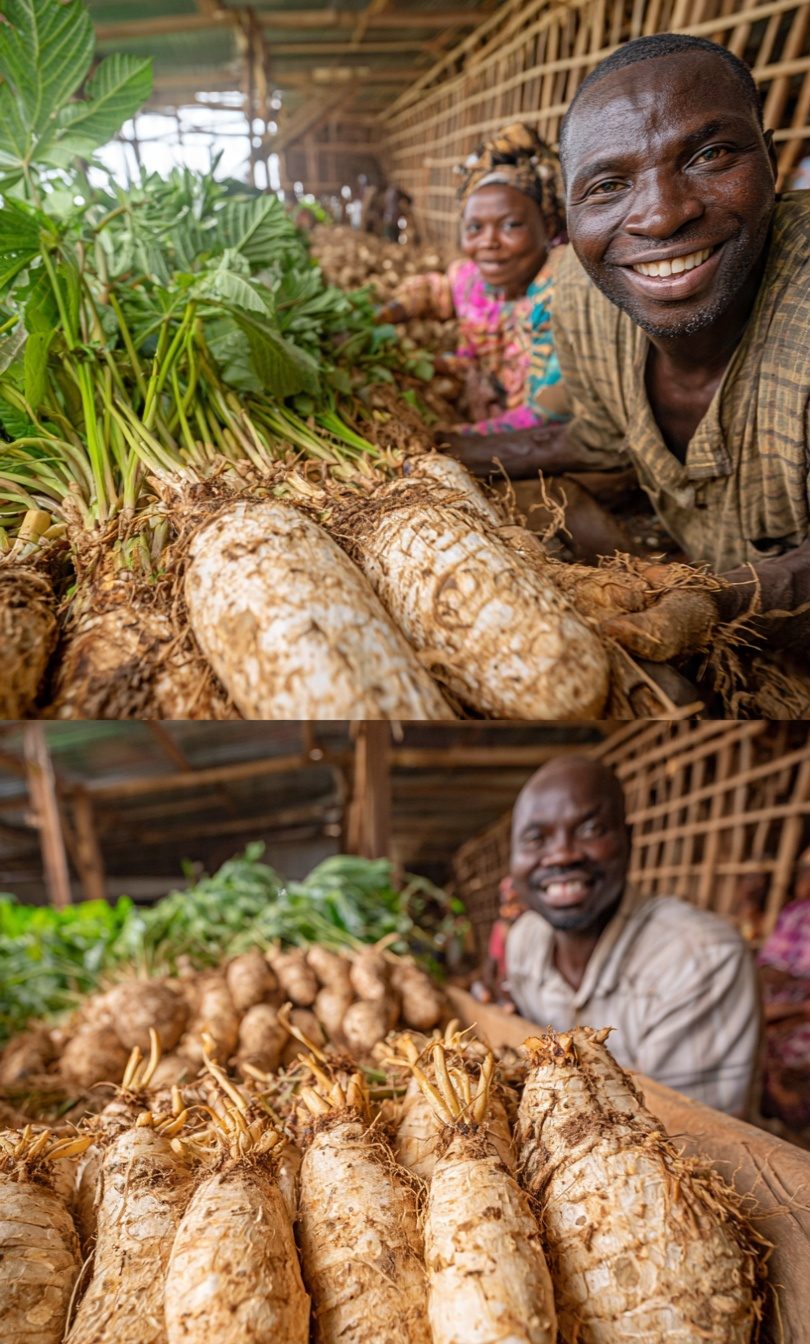
Yam (Dioscorea spp.) is one of the most important staple food crops in Nigeria, playing a critical role in food security, employment generation, income provision, and cultural heritage (FAO, 2022). Nigeria is the world’s largest producer of yams, accounting for over 70% of global production, with an estimated annual output of over 50 million metric tons (NBS, 2022). The major yam-producing states in Nigeria include Benue, Nasarawa, Plateau, Taraba, Kaduna, Niger, Oyo, Ondo, Ebonyi, Enugu, Abia, Imo, Anambra, Cross River, and Akwa Ibom (FMARD, 2021). Yam is cultivated by millions of smallholder farmers, typically on small plots of 0.5-2.0 hectares, using family labour and traditional methods (Adebayo and Ogunyemi, 2020).
The importance of yam in Nigeria cannot be overstated (CBN, 2022). Yam contributes significantly to agricultural GDP (estimated 10-15% of agricultural GDP), provides staple food for over 50 million Nigerians (consumed as boiled yam, pounded yam, fried yam, roasted yam, yam porridge, yam flour), generates income for millions of farming households, creates employment along the value chain (production, storage, processing, marketing), and holds significant cultural value (used in festivals, ceremonies, dowries, and as a symbol of wealth and social status) (Okafor and Nwosu, 2020). The yam value chain has been a priority for the Nigerian government, with policies such as the Root and Tuber Expansion Programme (RTEP), the Yam Improvement Programme, and the National Agricultural Technology and Innovation Plan (NATIP) (Okonkwo, 2020).
Yam production involves several agronomic practices that significantly affect yield and quality (Eze and Nweze, 2019). Land preparation: Clearing, ploughing, harrowing, and ridging (mounding). Planting: Whole tubers or cut setts (seed yams) planted at spacing of 1m × 1m (10,000 plants/ha) or 1m × 0.5m (20,000 plants/ha). Staking: Bamboo stakes or wooden stakes to support vines (staking increases yield by 50-100%). Fertilizer application: NPK 15-15-15 (200-400 kg/ha) and organic manure (poultry, cow dung). Weeding: Manual (hoe) or chemical (herbicides). Pest and disease control: Nematodes, yam beetles, leaf spot, anthracnose, yam mosaic virus. Harvesting: Manual (digging with hoe or cutlass) 7-9 months after planting. Storage: Yam barns, underground pits, or modern storage facilities.
Major Yam Species Cultivated in Nigeria:
| Species | Common Name | Characteristics | Growing Period | Yield Potential (tons/ha) |
| Dioscorea rotundata | White yam | Most preferred, high quality, good storage | 8-10 months | 15-25 |
| Dioscorea alata | Water yam | Higher yield, less preferred taste | 8-10 months | 20-30 |
| Dioscorea cayenensis | Yellow yam | Yellow flesh, good quality | 9-11 months | 15-20 |
| Dioscorea dumetorum | Bitter yam | Bitter when raw, good storage, drought tolerant | 9-12 months | 10-15 |
| Dioscorea esculenta | Lesser yam | Small tubers, early maturing | 6-8 months | 8-12 |
(Source: Orkwor, Asiedu, and Ekanayake, 2019)
The problems of yam production are numerous and interconnected (Adebayo and Ogunyemi, 2020; Eze and Nweze, 2019; Okafor and Nwosu, 2020). These problems can be categorized into several dimensions:
Dimension 1: Land Problems
| Specific Problem | Description | Impact |
| Soil fertility decline | Continuous cultivation depletes nutrients | Low yields; need for fertilizers |
| Land tenure insecurity | Customary land, no formal title | Discourages investment (soil conservation, staking) |
| Land scarcity | Population pressure reduces available land | Shorter fallow periods |
| Soil erosion | Topsoil loss from slopes | Reduced fertility, reduced yields |
Dimension 2: Planting Material (Seed Yam) Problems
| Specific Problem | Description | Impact |
| High cost of seed yams | Seed yams expensive (₦200-500/kg) | High production cost |
| Poor quality seed yams | Diseased, damaged, or small setts | Poor emergence, low yield |
| Scarcity of improved varieties | Limited access to disease-resistant, high-yielding varieties | Low yields |
| High seed rate | 2,000-3,000 kg/ha of seed yams | High input cost |
| Storage losses of seed yams | Seed yams rot during storage (20-40% loss) | Reduced planting material |
Dimension 3: Technical Problems
| Specific Problem | Description | Impact |
| Low adoption of improved practices | Many farmers use traditional methods | Low yields (10-15 vs. 20-30 tons/ha) |
| Poor staking practices | No staking or poor staking reduces yield | 30-50% yield reduction |
| Inadequate fertilizer use | Low fertilizer use (<20 kg/ha) | Nutrient depletion, low yields |
| Poor weed management | Weeds compete with yam | 30-50% yield loss |
| Poor pest and disease management | Nematodes, beetles, leaf spot, anthracnose, mosaic virus | 30-70% yield loss |
| Weak extension services | Farmer:agent ratio >3,000:1 | Low technology adoption |
Dimension 4: Labour Problems
| Specific Problem | Description | Impact |
| High labour requirement | Land preparation, planting, staking, weeding, harvesting require 200-300 person-days/ha | High labour cost |
| Labour scarcity | Youth migrate to cities; rural labour shortage | Delayed operations, reduced area |
| High labour cost | Daily wage ₦1,500-3,000 | High production cost |
| Gender division of labour | Women often do weeding and harvesting; men do land preparation and staking | Variable |
Dimension 5: Staking Problems
| Specific Problem | Description | Impact |
| High cost of stakes | Bamboo stakes (₦100-200 each); 10,000-20,000 stakes/ha | High production cost (₦1-4 million/ha) |
| Scarcity of stakes | Deforestation reduces availability of bamboo, wood | Farmers use no stakes or poor stakes |
| Environmental impact | Cutting trees for stakes contributes to deforestation | Unsustainable |
Dimension 6: Pest and Disease Problems
| Pest/Disease | Causal Agent | Damage | Yield Loss |
| Yam nematode | Scutellonema bradys, Meloidogyne spp. | Root galling, tuber cracking, dry rot | 30-50% |
| Yam beetle | Heteroligus meles | Damage to tubers in soil | 20-40% |
| Leaf spot | Phyllosticta dioscoreae | Leaf lesions, defoliation | 10-30% |
| Anthracnose | Colletotrichum gloeosporioides | Stem and leaf dieback | 20-50% |
| Yam mosaic virus | Virus (YMV) | Leaf mottling, stunting, reduced yield | 30-70% |
Dimension 7: Harvesting Problems
| Specific Problem | Description | Impact |
| Labour-intensive harvesting | Manual digging with hoe or cutlass | High labour cost, root damage |
| Harvest losses | 10-20% of tubers damaged or left in soil | Reduced marketable yield |
| Timeliness | Harvesting must be done at maturity (7-9 months) | Delayed harvest reduces quality |
Dimension 8: Storage Problems
| Specific Problem | Description | Impact |
| High post-harvest losses | 20-40% of stored yams rot (nematodes, fungi, bacteria) | Reduced marketable yield |
| Traditional storage | Yam barns (open structures) have limited capacity, high losses | Low storage efficiency |
| Poor storage facilities | No modern storage (cold storage, controlled atmosphere) | Cannot store for premium prices |
| Sprouting | Yams sprout during storage (4-6 months after harvest) | Reduced quality, weight loss |
Dimension 9: Marketing Problems
| Specific Problem | Description | Impact |
| Price volatility | Prices lowest at harvest (August-November), higher later (March-July) | Farmers forced to sell at low prices |
| Middlemen exploitation | Intermediaries offer low prices, use false scales, delay payment | Low farm-gate prices |
| High transport costs | Poor roads, fuel costs | High marketing costs |
| Poor storage forces distress sales | Farmers cannot store; must sell immediately | Low prices |
| Lack of market information | No knowledge of prices elsewhere | Cannot negotiate |
Dimension 10: Financial Problems
| Specific Problem | Description | Impact |
| High production cost | Seed yams (₦400,000-1,500,000/ha), stakes (₦1-4 million/ha), labour (₦300,000-600,000/ha) | High capital requirement |
| Limited credit access | <20% of farmers access formal credit | Cannot purchase inputs |
| High interest rates | 20-35% formal; 50-200% informal | Borrowing unprofitable |
| Lack of collateral | Customary land, no formal title | Excluded from formal credit |
Dimension 11: Environmental Problems
| Specific Problem | Description | Impact |
| Climate change | Changing rainfall patterns, higher temperatures | Unpredictable planting, crop failure, reduced yields |
| Drought | Extended dry periods | Crop failure |
| Flooding | Heavy rains, river overflow | Crops submerged, soil erosion |
| Soil erosion | Topsoil loss from slopes | Reduced fertility, reduced yields |
Dimension 12: Institutional Problems
| Specific Problem | Description | Impact |
| Weak extension services | Farmer:agent ratio >3,000:1 | Low technology adoption |
| Poor research-farmer linkage | Improved varieties not reaching farmers | Low adoption |
| Inconsistent government policies | Subsidies, tariffs change frequently | Uncertainty |
| Poor policy implementation | Bureaucracy, corruption | Programmes fail |
The prospects of yam production are significant (Okonkwo, 2020; World Bank, 2021). These prospects include:
| Prospect | Description | Potential Impact |
| Improved varieties | Disease-resistant, high-yielding, early-maturing varieties (e.g., TDr 89/02665, TDr 95/18544) | 30-50% yield increase |
| Improved seed yam technology | Minisett technique (small setts), vine cuttings, aeroponics | Reduced seed cost, increased availability |
| Staking alternatives | Live stakes (Gliricidia, Leucaena), trellising, no-staking varieties | Reduced staking cost, environmental sustainability |
| Mechanization | Planters, harvesters, improved storage | Reduced labour, reduced losses |
| Processing and value addition | Yam flour (elubo), yam starch, yam chips, yam crisps, yam fries | Increased value (100-300% price increase) |
| Export opportunities | Dried yam chips, yam flour for diaspora markets | Foreign exchange earnings |
| Improved storage | Modern storage facilities (cold storage, controlled atmosphere) | Reduced losses (20-40% → 5-10%), sell at premium prices |
| Market linkages | Farmer cooperatives, contract farming, e-marketing | Higher prices, reduced middlemen exploitation |
| Credit access | Cooperative credit, microfinance banks, ABP, ACGS | Increased input use, higher yields |
| Extension and training | Farmer field schools, demonstration plots, digital extension | Improved practices, higher yields |
| Climate-smart agriculture | Drought-tolerant varieties, conservation agriculture, agroforestry | Climate resilience |
From a theoretical perspective, this study is supported by three theories: Subsistence Agriculture Theory (Schultz, 1964), which explains the characteristics of small scale farming systems and the logic of farmer decision-making under conditions of risk, uncertainty, and limited resources; Agricultural Development Theory (Ruttan and Hayami, 1984; Timmer, 2019), which explains how agricultural systems evolve and the role of technology, institutions, and policy in driving productivity growth; and Constraints-Opportunities Theory (Ansoff, 1965; adapted for small scale agriculture), which posits that the performance of small scale farmers is determined by the balance between constraints (problems) and opportunities (prospects).
In summary, yam is a critically important crop for Nigeria’s food security, employment, and economic development, but yam production faces numerous problems: land constraints, seed yam problems, technical problems, labour problems, staking problems, pest and disease problems, harvesting problems, storage problems, marketing problems, financial problems, environmental problems, and institutional problems. These problems reduce productivity, profitability, and sustainability. However, there are significant prospects: improved varieties, improved seed yam technology, staking alternatives, mechanization, processing and value addition, export opportunities, improved storage, market linkages, credit access, extension and training, and climate-smart agriculture. This study aims to identify and analyze the problems and prospects of yam production, assess their severity and potential, and propose evidence-based recommendations for addressing the problems and leveraging the prospects.
1.2 Statement of Problems
Despite Nigeria’s position as the world’s largest yam producer (over 70% of global production), yam production faces numerous problems that constrain productivity, profitability, and sustainability. Yam yields in Nigeria (10-15 tons/ha) are far below potential (20-30 tons/ha). The specific problems addressed by this study include:
Land problems: Soil fertility decline, land tenure insecurity, land scarcity, soil erosion.
Planting material (seed yam) problems: High cost of seed yams (₦400,000-1,500,000/ha), poor quality seed yams, scarcity of improved varieties, high seed rate (2,000-3,000 kg/ha), storage losses of seed yams (20-40%).
Technical problems: Low adoption of improved practices, poor staking practices, inadequate fertilizer use (<20 kg/ha), poor weed management, poor pest and disease management, weak extension services (farmer:agent ratio >3,000:1).
Labour problems: High labour requirement (200-300 person-days/ha), labour scarcity (youth migration), high labour cost (₦1,500-3,000/day).
Staking problems: High cost of stakes (₦1-4 million/ha), scarcity of stakes, environmental impact (deforestation).
Pest and disease problems: Yam nematode (30-50% loss), yam beetle (20-40% loss), leaf spot (10-30% loss), anthracnose (20-50% loss), yam mosaic virus (30-70% loss).
Harvesting problems: Labour-intensive harvesting, harvest losses (10-20%).
Storage problems: High post-harvest losses (20-40%), traditional storage (yam barns) have limited capacity and high losses, poor storage facilities, sprouting.
Marketing problems: Price volatility, middlemen exploitation, high transport costs, poor storage forces distress sales, lack of market information.
Financial problems: High production cost (₦1.5-3 million/ha), limited credit access (<20% of farmers), high interest rates (20-35% formal, 50-200% informal), lack of collateral.
Environmental problems: Climate change, drought, flooding, soil erosion.
Institutional problems: Weak extension services, poor research-farmer linkage, inconsistent government policies, poor policy implementation.
However, there are significant prospects for improving yam production. The problem this study addresses is the need to systematically identify, analyze, and prioritize the problems and prospects of yam production, assess their severity and potential, and propose evidence-based recommendations for addressing the problems and leveraging the prospects.
1.3 Aim of the Study
The specific aim of this research work is to examine the problems and prospects of yam production in selected agricultural areas, with a view to identifying the major constraints (land, seed yam, technical, labour, staking, pest/disease, harvesting, storage, marketing, financial, environmental, institutional), assessing the severity of each problem, identifying the prospects (improved varieties, improved seed yam technology, staking alternatives, mechanization, processing, export, improved storage, market linkages, credit access, extension, climate-smart agriculture), and proposing evidence-based recommendations for addressing the problems and leveraging the prospects.
1.4 Objectives of the Study
- To describe the socioeconomic characteristics (age, gender, education, farming experience, farm size, cooperative membership) of yam farmers in the study area.
- To identify the major problems of yam production across twelve dimensions: land, seed yam, technical, labour, staking, pest/disease, harvesting, storage, marketing, financial, environmental, and institutional.
- To assess the perceived severity of each problem from the perspective of yam farmers.
- To identify the prospects (opportunities) for yam production: improved varieties, improved seed yam technology, staking alternatives, mechanization, processing and value addition, export opportunities, improved storage, market linkages, credit access, extension and training, climate-smart agriculture.
- To propose evidence-based recommendations for addressing the most binding problems and leveraging the most promising prospects.
1.5 Research Questions
- What are the socioeconomic characteristics (age, gender, education, farming experience, farm size, cooperative membership) of yam farmers in the study area?
- What are the major problems of yam production across twelve dimensions (land, seed yam, technical, labour, staking, pest/disease, harvesting, storage, marketing, financial, environmental, institutional)?
- How do yam farmers perceive the severity of each problem (ranking of most binding constraints)?
- What are the prospects (opportunities) for yam production (improved varieties, improved seed yam technology, staking alternatives, mechanization, processing and value addition, export opportunities, improved storage, market linkages, credit access, extension and training, climate-smart agriculture)?
- What evidence-based recommendations can be proposed for addressing the most binding problems and leveraging the most promising prospects?
1.6 Research Hypotheses
Hypothesis One
- H₀ (Null): There are no significant problems (land, seed yam, technical, labour, staking, pest/disease, harvesting, storage, marketing, financial, environmental, institutional) facing yam production.
- H₁ (Alternative): There are significant problems facing yam production.
Hypothesis Two
- H₀ (Null): Yam farmers do not perceive significant differences in the severity of different problem types (land vs. seed yam vs. staking vs. pest/disease vs. storage vs. marketing).
- H₁ (Alternative): Yam farmers perceive significant differences in the severity of different problem types.
Hypothesis Three
- H₀ (Null): There are no significant prospects (improved varieties, improved seed yam technology, staking alternatives, mechanization, processing, export, improved storage, market linkages, credit access, extension, climate-smart agriculture) for yam production.
- H₁ (Alternative): There are significant prospects for yam production.
Hypothesis Four
- H₀ (Null): There is no significant relationship between farmer characteristics (age, education, farming experience, farm size, cooperative membership) and the severity of problems experienced.
- H₁ (Alternative): There is a significant relationship between farmer characteristics and the severity of problems experienced.
Hypothesis Five
- H₀ (Null): There are no significant evidence-based recommendations that can be proposed for addressing the problems and leveraging the prospects of yam production.
- H₁ (Alternative): There are significant evidence-based recommendations that can be proposed for addressing the problems and leveraging the prospects.
1.7 Justification of the Study
This study is justified on several grounds. First, despite Nigeria’s position as the world’s largest yam producer, yam productivity is low (10-15 tons/ha vs. potential 20-30 tons/ha). There is limited empirical data systematically documenting the problems and prospects of yam production. Second, understanding which problems are most severe (e.g., is staking cost more binding than pest/disease? Is storage loss more severe than marketing?) is essential for prioritizing limited government and development partner resources. Third, understanding which prospects have the greatest potential (e.g., improved seed yam technology vs. processing vs. improved storage) can guide investment decisions. Fourth, the findings will inform agricultural policy (FMARD, State Ministries of Agriculture), extension services, research institutes (NRCRI, IITA), development partners, and yam farmers. Fifth, the study will provide baseline data for monitoring and evaluation of yam development programmes.
1.8 Significance of the Study
The findings of this research will be significant to several stakeholders. To yam farmers, the study will provide evidence on the most binding constraints, enabling advocacy for policy changes and programme improvements. To the Federal Ministry of Agriculture and Rural Development (FMARD) and State Ministries of Agriculture, the findings will inform agricultural policy (yam value chain development), budget allocation, and programme design (which problems to address first). To research institutes (National Root Crops Research Institute, Umudike; International Institute of Tropical Agriculture) , the study will identify priority research areas based on farmer needs (e.g., improved varieties, pest/disease management, storage technology, processing equipment). To extension services, the findings will inform training priorities (which practices to promote). To development partners (World Bank, IFAD, FAO, DFID, USAID) , the findings will inform project design and investment priorities for yam development programmes. To academic researchers, the study will contribute empirical data on yam production economics, testing and extending subsistence agriculture theory, agricultural development theory, and constraints-opportunities theory.
1.9 Scope of the Study
The scope of this study is delimited to the problems and prospects of yam production in selected agricultural areas (specific state(s) or local government areas to be specified). The study focuses on smallholder yam farmers (land holding typically 0.5-2.0 hectares). The study examines problems across twelve dimensions: land problems (soil fertility decline, tenure insecurity, land scarcity, erosion), seed yam problems (high cost, poor quality, scarcity of improved varieties, high seed rate, storage losses), technical problems (low adoption of improved practices, poor staking, inadequate fertilizer, poor weed management, poor pest/disease management, weak extension), labour problems (high requirement, scarcity, high cost), staking problems (high cost, scarcity, environmental impact), pest and disease problems (nematode, beetle, leaf spot, anthracnose, mosaic virus), harvesting problems (labour-intensive, harvest losses), storage problems (high losses, traditional storage, sprouting), marketing problems (price volatility, middlemen, high transport costs, distress sales, lack of market information), financial problems (high production cost, limited credit, high interest rates, lack of collateral), environmental problems (climate change, drought, flooding, erosion), and institutional problems (weak extension, poor research linkage, inconsistent policies, poor implementation). The study examines prospects: improved varieties, improved seed yam technology (minisett, vine cuttings, aeroponics), staking alternatives (live stakes, trellising, no-staking varieties), mechanization (planters, harvesters, improved storage), processing and value addition (yam flour, starch, chips, crisps), export opportunities, improved storage (cold storage, controlled atmosphere), market linkages (cooperatives, contract farming, e-marketing), credit access (cooperative credit, MFBs, ABP, ACGS), extension and training (farmer field schools, demonstration plots, digital extension), and climate-smart agriculture (drought-tolerant varieties, conservation agriculture, agroforestry). The study includes primary data collection (farmer surveys, key informant interviews) and secondary data (agricultural statistics, policy documents). The study covers the period 2019-2024. The study does not extend to large-scale yam farmers (>2 hectares), to other root and tuber crops (cassava, sweet potato, cocoyam), or to yam processing beyond simple value addition.
1.10 Definition of Terms
Yam (Dioscorea spp.): A tuberous root crop of the family Dioscoreaceae, widely cultivated as a staple food in West Africa, particularly Nigeria. Major species: Dioscorea rotundata (white yam), Dioscorea alata (water yam), Dioscorea cayenensis (yellow yam).
Seed Yam (Yam Sett): A whole small yam tuber or a cut piece of a larger yam tuber used as planting material. Seed yams constitute 30-50% of production cost.
Minisett Technique: A seed yam multiplication technique where medium-sized yams (200-500g) are cut into small setts (25-50g), treated with fungicide/insecticide, and planted to produce multiple seed yams.
Staking: The practice of providing physical support (bamboo stakes, wooden stakes, live stakes, trellises) for yam vines to climb. Staking increases yield by 50-100% but adds significant cost.
Yam Nematode (Scutellonema bradys): A parasitic nematode that causes dry rot of yam tubers in the field and in storage, causing 30-50% yield loss.
Yam Beetle (Heteroligus meles): A soil insect pest that damages yam tubers in the field, causing 20-40% yield loss.
Yam Mosaic Virus (YMV): A viral disease of yam transmitted by aphids, causing leaf mottling, stunting, and 30-70% yield loss.
Yam Barn: A traditional yam storage structure consisting of a wooden frame where yams are tied or stacked, open to air circulation.
Post-Harvest Loss (Yam): The loss of yam tubers due to rotting (nematodes, fungi, bacteria), sprouting, mechanical damage, or weight loss during storage, estimated at 20-40% under traditional storage.
High-Quality Yam Flour (Elubo): Yam flour produced by peeling, slicing, drying, and milling yam tubers. Used to prepare amala (a traditional Nigerian dish).
Subsistence Agriculture Theory: A theory (Schultz, 1964) explaining the characteristics of small scale farming systems and the logic of farmer decision-making under conditions of risk, uncertainty, and limited resources.
Agricultural Development Theory: A theory (Ruttan and Hayami, 1984; Timmer, 2019) explaining how agricultural systems evolve and the role of technology, institutions, and policy in driving productivity growth.
Constraints-Opportunities Theory: A theory (Ansoff, 1965; adapted for small scale agriculture) positing that the performance of small scale farmers is determined by the balance between constraints (problems) and opportunities (prospects).