
🔤 Total Characters in Document: 241,055
📄 Estimated Document Pages: 86
⏱️ Reading Time: 3 Hours 34 Mins
CHAPTER ONE: INTRODUCTION
1.1 Background of Study
Agricultural biodiversity (agrobiodiversity) refers to the variety and variability of plants, animals, and micro-organisms that are used directly or indirectly for food and agriculture, including crops, livestock, fisheries, and the complex ecological interactions that sustain agricultural production (FAO, 2019). Agrobiodiversity encompasses: genetic diversity (different varieties of crops and breeds of livestock), species diversity (different crop and livestock species), ecosystem diversity (agricultural landscapes, agroforestry systems, traditional farming systems), and associated biodiversity (soil organisms, pollinators, pest predators) (Brookfield, 2020). Agricultural biodiversity is the foundation of sustainable agriculture, providing essential ecosystem services such as soil fertility, pollination, pest control, water regulation, and climate resilience (Thrupp, 2019).
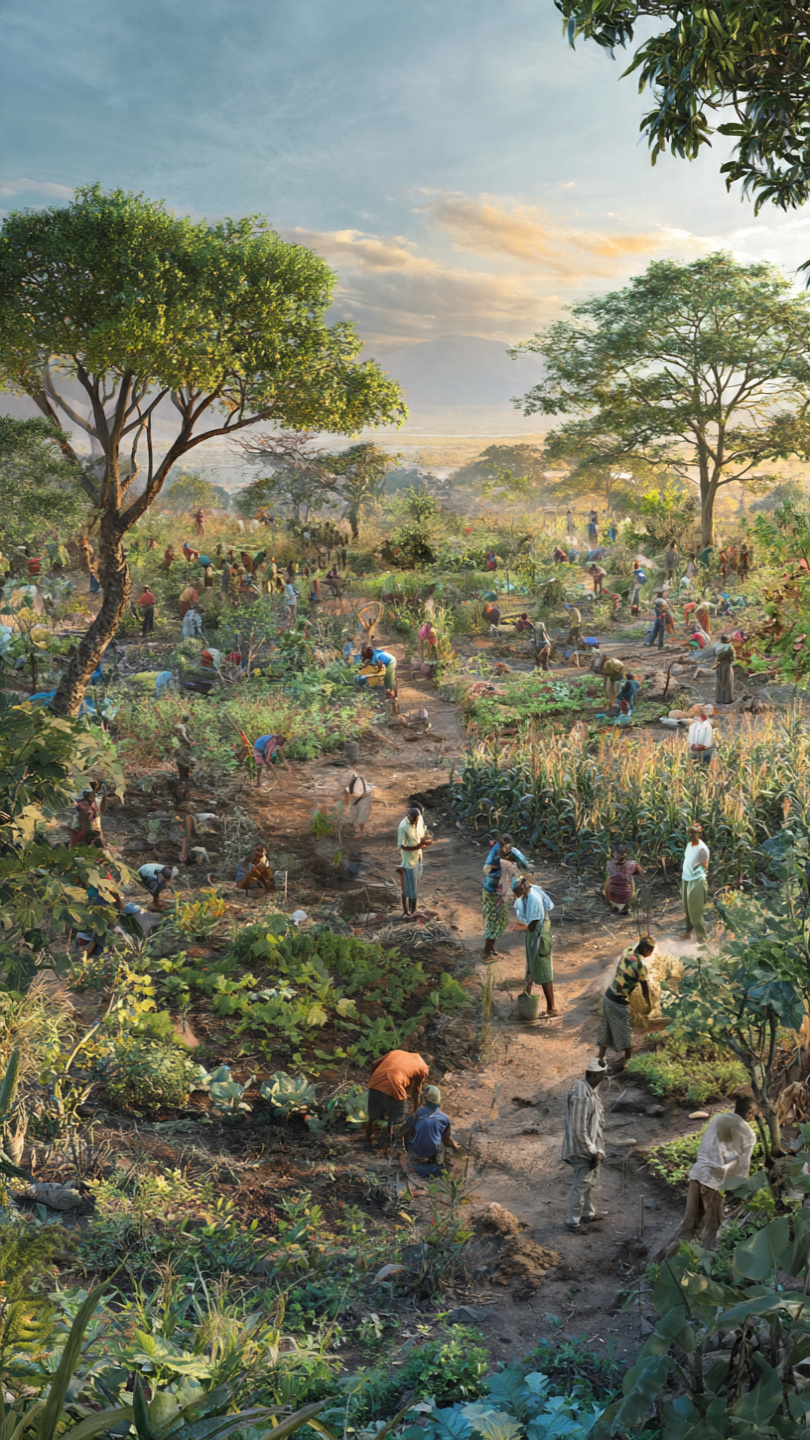
Rural farmers are the primary custodians and managers of agricultural biodiversity, particularly smallholder farmers who cultivate diverse crop varieties and maintain local landraces adapted to local conditions (Zimmerer, 2018). In Nigeria, smallholder farmers (operating on less than 2 hectares) constitute over 80% of the farming population and cultivate a wide range of crops including cassava, yam, maize, rice, sorghum, millet, cowpea, groundnut, vegetables, and tree crops (cocoa, oil palm, rubber, cashew) (FMARD, 2021). These farmers also maintain local livestock breeds (poultry, goats, sheep, cattle) and fish species (NBS, 2022). However, agricultural biodiversity is being lost at an alarming rate due to: replacement of local varieties with improved/high-yielding varieties (uniformity reduces genetic diversity), monoculture (single crop on large areas reduces species diversity), land use change (deforestation, wetland drainage), climate change (shifts in growing seasons, increased pests/diseases), loss of traditional knowledge, and market pressures (demand for uniform products) (FAO, 2019).
The conservation of agricultural biodiversity is essential for food security, nutrition, climate resilience, and sustainable development (Thrupp, 2019). Food security: Diverse crops provide a stable food supply; if one crop fails (due to pest, disease, drought), others may survive. Nutrition: Diverse diets reduce malnutrition (hidden hunger). Climate resilience: Diverse varieties have different tolerances to heat, drought, flooding, and pests; genetic diversity allows adaptation to climate change. Pest and disease management: Diverse crops reduce pest and disease outbreaks (monocultures are more vulnerable). Soil fertility: Diverse cropping systems (intercropping, rotations) maintain soil health. Pollination: Diverse flowering crops support pollinators (bees, butterflies). Cultural heritage: Traditional varieties and livestock breeds are part of cultural identity (Zimmerer, 2018).
Rural farmers are not just beneficiaries of agricultural biodiversity conservation; they are essential partners in conservation (Brookfield, 2020). Farmers conserve agricultural biodiversity through: on-farm conservation (continued cultivation of diverse local varieties); seed saving (saving seeds from local varieties for next planting); intercropping (growing multiple crops together); crop rotation (alternating crops to maintain soil health and reduce pests); agroforestry (integrating trees with crops and livestock); traditional livestock keeping (maintaining local breeds); and maintenance of traditional knowledge (seed selection, storage, processing) (Zimmerer, 2018).
Despite the critical role of farmers in agrobiodiversity conservation, farmer involvement in formal conservation programmes has been limited (FAO, 2019). Strategies for involving rural farmers in agricultural biodiversity conservation need to be developed and implemented. Potential strategies include:
Strategy 1: Awareness and Education
| Activity | Description | Expected Outcome |
| Extension training | Train farmers on the value of agrobiodiversity (food security, climate resilience, nutrition) | Increased awareness |
| Farmer field schools | Practical learning on diverse cropping systems, seed saving | Adoption of diverse practices |
| Demonstration plots | Show benefits of diverse varieties compared to monoculture | Adoption |
| School curricula | Include agrobiodiversity conservation in agricultural education | Long-term awareness |
Strategy 2: Incentives for Conservation
| Incentive Type | Description | Expected Outcome |
| Payment for ecosystem services (PES) | Pay farmers for maintaining diverse varieties, agroforestry | Increased conservation |
| Subsidies | Subsidize seeds of local varieties, organic fertilizer | Lower cost for farmers |
| Premium prices | Premium for products from diverse, traditional farming systems | Increased income |
| Certification | Organic, fair trade, agrobiodiversity-friendly certification | Market access, price premium |
| Recognition | Awards for farmers who conserve local varieties | Social recognition |
Strategy 3: Access to Seeds and Planting Material
| Activity | Description | Expected Outcome |
| Community seed banks | Local seed storage and exchange | Farmers access diverse seeds |
| Seed fairs | Farmers exchange seeds of local varieties | Genetic diversity maintained |
| Seed distribution | Government/NGO distribution of local variety seeds | Increased availability |
| Participatory plant breeding | Farmers involved in breeding new varieties | Varieties adapted to local conditions |
Strategy 4: Market Development
| Activity | Description | Expected Outcome |
| Market linkages | Link farmers to markets for diverse products | Increased income |
| Value addition | Processing of diverse products (dried vegetables, traditional foods) | Higher prices |
| Branding | Branding products as “heritage varieties” or “locally grown” | Consumer recognition |
| Local procurement | Government procurement of diverse, locally produced food | Stable demand |
Strategy 5: Institutional Support
| Activity | Description | Expected Outcome |
| Farmer cooperatives | Collective marketing, seed saving, processing | Economies of scale |
| Extension services | Training on agrobiodiversity conservation | Adoption |
| Research-extension-farmer linkages | Participatory research on local varieties | Relevant technologies |
| Policy support | Policies that support agrobiodiversity (seed laws, land tenure, subsidies) | Enabling environment |
Strategy 6: Participatory Conservation Planning
| Activity | Description | Expected Outcome |
| Community mapping | Map local varieties, farming systems | Documentation |
| Participatory variety selection | Farmers select varieties for conservation | Ownership |
| Monitoring | Farmers monitor diversity trends | Adaptive management |
Strategy 7: Integration with Climate Change Adaptation
| Activity | Description | Expected Outcome |
| Climate-resilient varieties | Maintain varieties with drought, flood, heat tolerance | Adaptation |
| Agroecological practices | Intercropping, crop rotations, agroforestry | Resilience |
| Early warning systems | Link biodiversity conservation to climate monitoring | Risk reduction |
From a theoretical perspective, this study is supported by three theories: Participatory Conservation Theory (Chambers, 1994; Pretty, 2019), which argues that conservation is more effective when local communities are actively involved in decision-making and management; Agroecological Theory (Altieri, 1995; Gliessman, 2020), which emphasizes the role of biodiversity in maintaining ecosystem function and resilience in agricultural systems; and Incentive-Based Conservation Theory (Ferraro and Kiss, 2002; Engel, 2016), which posits that economic incentives (payments, subsidies, premium prices) can align farmer self-interest with conservation goals.
In summary, agricultural biodiversity is essential for sustainable agriculture, food security, and climate resilience, but it is being lost rapidly. Rural farmers are the primary custodians of agrobiodiversity, but their involvement in conservation has been limited. Strategies for involving farmers include awareness and education, incentives, access to seeds, market development, institutional support, participatory planning, and integration with climate adaptation. This study aims to identify and assess strategies for involving rural farmers in agricultural biodiversity conservation, evaluate their effectiveness, and propose recommendations for policy and practice.
1.2 Statement of Problems
Agricultural biodiversity (agrobiodiversity) is declining rapidly in Nigeria due to replacement of local crop varieties with improved high-yielding varieties, expansion of monoculture, land use change, climate change, loss of traditional knowledge, and market pressures. Smallholder rural farmers are the primary custodians of remaining agrobiodiversity, but their involvement in formal conservation programmes has been limited. Many farmers are unaware of the value of agrobiodiversity (for food security, nutrition, climate resilience), lack access to seeds of local varieties, face economic incentives to adopt uniform high-yielding varieties, and lack market access for diverse products. There is limited empirical data on: (a) farmers’ awareness and attitudes towards agrobiodiversity conservation; (b) current practices that conserve agrobiodiversity (seed saving, intercropping, crop rotations, agroforestry); (c) the effectiveness of different strategies (awareness, incentives, seed access, markets, institutional support, participatory planning) in promoting farmer involvement; (d) the constraints (knowledge, economic, institutional, policy) facing farmer involvement. The problem this study addresses is the need to identify and assess strategies for involving rural farmers in agricultural biodiversity conservation, evaluate their effectiveness, and propose evidence-based recommendations for policy and practice.
1.3 Aim of the Study
The specific aim of this research work is to identify and assess strategies for involving rural farmers in agricultural biodiversity conservation, with a view to evaluating the effectiveness of different strategies (awareness and education, incentives, access to seeds, market development, institutional support, participatory planning, climate adaptation) in promoting farmer involvement, and proposing evidence-based recommendations for policy and practice.
1.4 Objectives of the Study
- To assess rural farmers’ awareness and attitudes towards agricultural biodiversity and its conservation.
- To identify current farming practices (seed saving, intercropping, crop rotation, agroforestry, traditional livestock keeping) that contribute to agricultural biodiversity conservation.
- To assess the effectiveness of different strategies (awareness and education, incentives, access to seeds, market development, institutional support, participatory planning) in promoting farmer involvement in agrobiodiversity conservation.
- To identify the constraints (knowledge, economic, institutional, policy) limiting farmer involvement in agrobiodiversity conservation.
- To propose evidence-based strategies for enhancing rural farmer involvement in agricultural biodiversity conservation.
1.5 Research Questions
- What are rural farmers’ awareness and attitudes towards agricultural biodiversity and its conservation?
- What current farming practices (seed saving, intercropping, crop rotation, agroforestry, traditional livestock keeping) contribute to agricultural biodiversity conservation?
- How effective are different strategies (awareness and education, incentives, access to seeds, market development, institutional support, participatory planning) in promoting farmer involvement in agrobiodiversity conservation?
- What are the constraints (knowledge, economic, institutional, policy) limiting farmer involvement in agrobiodiversity conservation?
- What evidence-based strategies can be proposed for enhancing rural farmer involvement in agricultural biodiversity conservation?
1.6 Research Hypotheses
Hypothesis One
- H₀ (Null): Rural farmers have no significant awareness of agricultural biodiversity and its value for food security and climate resilience.
- H₁ (Alternative): Rural farmers have significant awareness of agricultural biodiversity and its value.
Hypothesis Two
- H₀ (Null): Current farming practices (seed saving, intercropping, crop rotation, agroforestry) do not significantly contribute to agricultural biodiversity conservation.
- H₁ (Alternative): Current farming practices significantly contribute to agricultural biodiversity conservation.
Hypothesis Three
- H₀ (Null): There is no significant difference in effectiveness among different strategies (awareness, incentives, seed access, markets, institutional support, participatory planning) for promoting farmer involvement.
- H₁ (Alternative): There is a significant difference in effectiveness among different strategies for promoting farmer involvement.
Hypothesis Four
- H₀ (Null): There are no significant constraints (knowledge, economic, institutional, policy) limiting farmer involvement in agrobiodiversity conservation.
- H₁ (Alternative): There are significant constraints limiting farmer involvement in agrobiodiversity conservation.
Hypothesis Five
- H₀ (Null): There are no significant evidence-based strategies that can be proposed for enhancing rural farmer involvement in agricultural biodiversity conservation.
- H₁ (Alternative): There are significant evidence-based strategies that can be proposed for enhancing rural farmer involvement.
1.7 Justification of the Study
This study is justified on several grounds. First, agricultural biodiversity is critical for food security, nutrition, climate resilience, and sustainable agriculture, but it is being lost rapidly. Second, rural farmers are the primary custodians of agrobiodiversity, but their involvement in formal conservation has been limited. Third, there is limited empirical data on effective strategies for involving farmers in conservation in the Nigerian context. Fourth, understanding which strategies are most effective (awareness, incentives, seed access, markets, institutional support, participatory planning) is essential for policy and programme design. Fifth, the findings will inform agricultural policy (FMARD, State Ministries of Agriculture), conservation programmes (NGOs, development partners), extension services, and farmer organizations.
1.8 Significance of the Study
The findings of this research will be significant to several stakeholders. To rural farmers, the study will provide information on the value of agrobiodiversity and effective strategies for conservation that can increase food security, nutrition, and income. To agricultural extension services, the findings will inform training programmes on agrobiodiversity conservation. To government agencies (FMARD, State Ministries of Agriculture, National Agency for Food and Drug Administration and Control, National Biosafety Management Agency) , the study will inform agricultural policy (seed laws, incentives for conservation, support for local varieties). To conservation NGOs (Nigerian Conservation Foundation, Wildlife Conservation Society) , the findings will inform project design for agrobiodiversity conservation. To development partners (FAO, UNDP, World Bank, IFAD) , the findings will inform programme design for agrobiodiversity and climate-resilient agriculture. To academic researchers, the study will contribute empirical data on farmer involvement in agrobiodiversity conservation, testing and extending participatory conservation theory, agroecological theory, and incentive-based conservation theory.
1.9 Scope of the Study
The scope of this study is delimited to strategies for involving rural farmers in agricultural biodiversity conservation in selected rural areas of Nigeria (specific state(s) or local government areas to be specified). The study focuses on smallholder farmers (land holding <2 hectares) engaged in crop production (cereals, roots/tubers, legumes, vegetables, tree crops) and/or livestock keeping. The study examines current farming practices: seed saving (saving seeds from local varieties), intercropping (growing multiple crops together), crop rotation (alternating crops), agroforestry (integrating trees with crops/livestock), traditional livestock keeping (local breeds), and maintenance of fallow land. The study assesses strategies: awareness and education (extension training, farmer field schools, demonstration plots), incentives (payments for ecosystem services, subsidies for local seeds, premium prices, certification, recognition), access to seeds (community seed banks, seed fairs, seed distribution, participatory plant breeding), market development (market linkages, value addition, branding, local procurement), institutional support (farmer cooperatives, extension services, research-extension-farmer linkages, policy support), participatory planning (community mapping, participatory variety selection, monitoring), and integration with climate adaptation (climate-resilient varieties, agroecological practices). The study assesses constraints: knowledge constraints (lack of awareness, loss of traditional knowledge), economic constraints (lack of incentives, higher cost of diverse farming, market access), institutional constraints (weak extension, lack of seed supply, lack of credit, land tenure insecurity), policy constraints (seed laws that restrict local varieties, subsidies for high-yielding varieties). The study includes primary data collection (farmer surveys, key informant interviews, focus group discussions) and secondary data. The study covers the period 2019-2024. The study does not extend to conservation of forest biodiversity (non-agricultural), protected area management, or wildlife conservation.
1.10 Definition of Terms
Agricultural Biodiversity (Agrobiodiversity): The variety and variability of plants, animals, and micro-organisms that are used directly or indirectly for food and agriculture, including crop genetic diversity, livestock breed diversity, species diversity (different crops/livestock), ecosystem diversity (agricultural landscapes), and associated biodiversity (soil organisms, pollinators, pest predators).
Rural Farmer: A farmer residing and cultivating land in a rural area (village, hamlet, farmstead), typically a smallholder (cultivating less than 2 hectares) who may be engaged in crop production, livestock keeping, or both.
Conservation (Agricultural Biodiversity): The protection, maintenance, sustainable use, and restoration of agricultural biodiversity, including on-farm conservation (continued cultivation of diverse local varieties) and ex-situ conservation (seed banks, gene banks).
On-Farm Conservation: The continued cultivation and management of diverse local crop varieties and livestock breeds by farmers in their fields and farms, as opposed to ex-situ conservation in gene banks.
Local Variety (Landraces): Traditional crop varieties that have been developed and maintained by farmers over generations through selection and adaptation to local environmental conditions (soil, climate, pests, diseases). Landraces are genetically diverse and adapted to local conditions.
Improved Variety (High-Yielding Variety): Crop varieties developed through formal plant breeding programmes, often selected for high yield under high input conditions (fertilizer, irrigation, pesticides). Improved varieties may be less genetically diverse and less adapted to local conditions.
Seed Saving: The practice of farmers selecting, harvesting, and storing seeds from their own crop for planting in the next season. Seed saving maintains local varieties and genetic diversity.
Intercropping: Growing two or more crop species simultaneously on the same field, which increases species diversity, reduces pest/disease outbreaks, and improves resource use efficiency (light, water, nutrients).
Agroforestry: An agricultural system that integrates trees and shrubs with crops and/or livestock, which increases biodiversity, improves soil fertility, provides shade, and sequesters carbon.
Crop Rotation: The practice of alternating the crop species grown on a particular field from season to season, which breaks pest cycles, improves soil fertility, and maintains biodiversity.
Payment for Ecosystem Services (PES): A financial incentive mechanism where farmers are paid for maintaining ecosystem services (e.g., biodiversity conservation, carbon sequestration, water regulation, pollination).
Community Seed Bank: A locally managed facility where farmers store, exchange, and access seeds of diverse local varieties, contributing to on-farm conservation.
Participatory Plant Breeding: A collaborative approach where farmers and plant breeders work together to develop new crop varieties that are adapted to local conditions and meet farmer preferences, maintaining diversity.
Agroecological Theory: A theory (Altieri, 1995; Gliessman, 2020) emphasizing the role of biodiversity (crop diversity, associated biodiversity) in maintaining ecosystem function (soil fertility, pollination, pest control), resilience, and sustainability in agricultural systems.
Participatory Conservation Theory: A theory (Chambers, 1994; Pretty, 2019) arguing that conservation is more effective and sustainable when local communities (farmers) are actively involved in decision-making, planning, implementation, and monitoring.
Incentive-Based Conservation Theory: A theory (Ferraro and Kiss, 2002; Engel, 2016) positing that economic incentives (payments, subsidies, premium prices, tax breaks) can align the self-interest of farmers with conservation goals, making conservation profitable for farmers.
CHAPTER TWO: LITERATURE REVIEW
2.1 Conceptual Framework
The conceptual framework for this study is organized around the key concepts of agricultural biodiversity, rural farmers, conservation strategies, farmer involvement, and the mechanisms through which different strategies affect farmer behavior. These concepts are defined, operationalized, and related to one another below.
2.1.1 Concept of Agricultural Biodiversity (Agrobiodiversity)
Agricultural biodiversity refers to the variety and variability of plants, animals, and micro-organisms that are used directly or indirectly for food and agriculture, including crop genetic diversity, livestock breed diversity, species diversity, ecosystem diversity, and associated biodiversity (FAO, 2019).
Components of Agricultural Biodiversity:
| Component | Description | Examples |
| Genetic diversity | Different varieties of crops and breeds of livestock | Local maize varieties (white, yellow, dent, flint); local chicken breeds (frizy, naked neck) |
| Species diversity | Different crop and livestock species | Crops: cassava, yam, maize, rice, cowpea, groundnut, vegetables; Livestock: goats, sheep, cattle, poultry, pigs |
| Ecosystem diversity | Agricultural landscapes, farming systems | Intercropping systems, agroforestry, shifting cultivation, home gardens |
| Associated biodiversity | Soil organisms, pollinators, pest predators | Earthworms, mycorrhizal fungi, bees, butterflies, parasitic wasps |
Importance of Agricultural Biodiversity:
| Function | Importance |
| Food security | Diverse crops provide stable food supply; if one fails, others survive |
| Nutrition | Diverse diets reduce malnutrition (vitamin A, iron, zinc deficiencies) |
| Climate resilience | Diverse varieties have different tolerances to heat, drought, flooding |
| Pest and disease management | Diverse systems reduce outbreaks (monocultures are vulnerable) |
| Soil fertility | Diverse rotations maintain soil health |
| Pollination | Diverse flowering crops support pollinators |
| Cultural heritage | Traditional varieties are part of cultural identity |
Threats to Agricultural Biodiversity:
| Threat | Description |
| Replacement of local varieties | Improved high-yielding varieties replace diverse landraces |
| Monoculture | Single crop on large areas reduces species diversity |
| Land use change | Deforestation, wetland drainage, urbanization |
| Climate change | Shifts in growing seasons, increased pests/diseases |
| Loss of traditional knowledge | Elders die, youth migrate to cities |
| Market pressures | Demand for uniform products, low prices for diverse products |
2.1.2 Concept of Rural Farmers as Custodians of Agrobiodiversity
Rural farmers are the primary custodians and managers of agricultural biodiversity, particularly smallholder farmers who cultivate diverse crop varieties and maintain local livestock breeds (Zimmerer, 2018).
Farmer Practices That Conserve Agrobiodiversity:
| Practice | Description | Conservation Contribution |
| Seed saving | Selecting, harvesting, storing seeds for next planting | Maintains local varieties |
| Intercropping | Growing multiple crops together | Increases species diversity |
| Crop rotation | Alternating crops on same field | Maintains soil health, breaks pest cycles |
| Agroforestry | Integrating trees with crops/livestock | Increases biodiversity, soil fertility |
| Traditional livestock keeping | Maintaining local breeds | Maintains genetic diversity |
| Fallow management | Allowing land to rest and regenerate | Maintains soil organisms, natural vegetation |
| Home gardens | Diverse species in small plots around homes | High species diversity |
Farmer Characteristics Affecting Agrobiodiversity Conservation:
| Characteristic | Expected Effect |
| Age | Older farmers more likely to maintain traditional varieties |
| Education | More education may increase awareness of value |
| Farm size | Larger farms may have more diverse crops |
| Market orientation | Market-oriented farmers may adopt uniform improved varieties |
| Cooperative membership | Members may share seeds of local varieties |
| Access to extension | Extension may promote improved varieties (negative) or conservation (positive) |
| Land tenure | Secure tenure encourages long-term conservation investments |
2.1.3 Strategies for Involving Rural Farmers in Agrobiodiversity Conservation
Strategy 1: Awareness and Education
| Activity | Description | Expected Effect |
| Extension training | Train farmers on value of agrobiodiversity (food security, climate resilience, nutrition) | Increased awareness → adoption |
| Farmer field schools | Practical learning on diverse cropping systems, seed saving | Adoption of practices |
| Demonstration plots | Show benefits of diverse varieties vs. monoculture | Increased adoption |
| School curricula | Include agrobiodiversity in agricultural education | Long-term awareness |
Strategy 2: Incentives for Conservation
| Incentive Type | Description | Expected Effect |
| Payment for ecosystem services (PES) | Pay farmers for maintaining diverse varieties, agroforestry | Increased conservation |
| Subsidies | Subsidize seeds of local varieties, organic fertilizer | Lower cost, higher adoption |
| Premium prices | Premium for products from diverse, traditional systems | Higher income, motivation |
| Certification | Organic, fair trade, agrobiodiversity-friendly certification | Market access, price premium |
| Recognition | Awards for farmers conserving local varieties | Social recognition, motivation |
Strategy 3: Access to Seeds and Planting Material
| Activity | Description | Expected Effect |
| Community seed banks | Local seed storage and exchange | Access to diverse seeds |
| Seed fairs | Farmers exchange seeds of local varieties | Genetic diversity maintained |
| Seed distribution | Government/NGO distribution of local variety seeds | Increased availability |
| Participatory plant breeding | Farmers involved in breeding new varieties | Varieties adapted to local conditions |
Strategy 4: Market Development
| Activity | Description | Expected Effect |
| Market linkages | Link farmers to markets for diverse products | Increased income |
| Value addition | Processing of diverse products (dried vegetables, traditional foods) | Higher prices |
| Branding | Brand products as “heritage varieties” or “locally grown” | Consumer recognition, premium |
| Local procurement | Government procurement of diverse, locally produced food | Stable demand |
Strategy 5: Institutional Support
| Activity | Description | Expected Effect |
| Farmer cooperatives | Collective marketing, seed saving, processing | Economies of scale, shared resources |
| Extension services | Training on agrobiodiversity conservation | Adoption |
| Research-extension-farmer linkages | Participatory research on local varieties | Relevant technologies |
| Policy support | Policies supporting agrobiodiversity (seed laws, land tenure, subsidies) | Enabling environment |
Strategy 6: Participatory Conservation Planning
| Activity | Description | Expected Effect |
| Community mapping | Map local varieties, farming systems | Documentation, awareness |
| Participatory variety selection | Farmers select varieties for conservation | Ownership, adoption |
| Monitoring | Farmers monitor diversity trends | Adaptive management |
Strategy 7: Integration with Climate Change Adaptation
| Activity | Description | Expected Effect |
| Climate-resilient varieties | Maintain varieties with drought, flood, heat tolerance | Adaptation, resilience |
| Agroecological practices | Intercropping, crop rotations, agroforestry | Resilience, biodiversity |
| Early warning systems | Link biodiversity conservation to climate monitoring | Risk reduction |
2.1.4 Factors Affecting Effectiveness of Strategies
| Factor | Description |
| Farmer characteristics | Age, education, farm size, market orientation, cooperative membership |
| Institutional context | Extension quality, seed supply, credit access, land tenure, policy environment |
| Market conditions | Prices for local vs. improved varieties, demand for diverse products |
| Environmental context | Rainfall, soil fertility, pest/disease pressure, climate variability |
| Cultural context | Traditional knowledge, social norms, community organizations |
2.1.5 Conceptual Framework Diagram (Described in Text)
The conceptual framework can be visualized as follows:
Conservation Strategies → Farmer Involvement → Conservation Outcomes
Independent Variables (Conservation Strategies):
- Awareness and education (extension, field schools, demos)
- Incentives (PES, subsidies, premium prices, certification, recognition)
- Access to seeds (community seed banks, seed fairs, distribution, participatory breeding)
- Market development (linkages, value addition, branding, local procurement)
- Institutional support (cooperatives, extension, research linkages, policy)
- Participatory planning (mapping, variety selection, monitoring)
- Climate adaptation integration (resilient varieties, agroecological practices)
↓ Farmer Involvement (Mediating Variables):
- Awareness/knowledge of agrobiodiversity value
- Adoption of conservation practices (seed saving, intercropping, rotation, agroforestry)
- Seed exchange (sharing local varieties)
- Participation in conservation programmes
- Maintenance of traditional varieties
↓ Conservation Outcomes (Dependent Variables):
- Number of local varieties maintained per household
- Area under diverse cropping systems
- Genetic diversity of crops/livestock
- Presence of community seed banks
- Species richness on farms
- Farmer knowledge of conservation
Moderating Variables (Contextual Factors):
- Farmer characteristics (age, education, farm size, market orientation)
- Institutional context (extension, credit, land tenure, policy)
- Market conditions (prices, demand)
- Environmental context (rainfall, soil, climate)
- Cultural context (traditional knowledge, social norms)
The framework posits that conservation strategies (independent variables) influence farmer involvement (mediating variables), which leads to conservation outcomes (dependent variables). The effectiveness of strategies is moderated by contextual factors: farmer characteristics, institutional context, market conditions, environmental context, and cultural context.
2.2 Theoretical Framework
This study is anchored on three supporting theories that provide a comprehensive theoretical foundation for understanding strategies to involve rural farmers in agricultural biodiversity conservation. These theories are Participatory Conservation Theory, Agroecological Theory, and Incentive-Based Conservation Theory.
2.2.1 Participatory Conservation Theory
Participatory Conservation Theory, developed from the work of Chambers (1994) and Pretty (2019), argues that conservation is more effective and sustainable when local communities (including farmers) are actively involved in decision-making, planning, implementation, and monitoring (Chambers, 1994; Pretty, 2019).
Core Propositions (Chambers, 1994; Pretty, 2019):
- Top-down conservation fails: Conservation imposed by government or external agencies without local participation often fails because local people are excluded, their needs are ignored, and they have no ownership.
- Local people are experts: Farmers have detailed knowledge of local ecosystems, crop varieties, pests, soils, and climate. This local knowledge is valuable for conservation.
- Participation builds ownership: When farmers are involved in planning and decision-making, they develop a sense of ownership and responsibility for conservation outcomes.
- Participatory methods: Participatory Rural Appraisal (PRA), Participatory Learning and Action (PLA), community mapping, focus groups, and participatory monitoring are effective methods.
- Empowerment: Participation empowers local people to take action, advocate for their interests, and hold authorities accountable.
Application to Agrobiodiversity Conservation
Participatory Conservation Theory predicts (Pretty, 2019):
- Agrobiodiversity conservation programmes that involve farmers in decision-making (e.g., participatory variety selection, community seed banks, participatory monitoring) will be more effective than top-down programmes.
- Farmers’ local knowledge of crop varieties (which varieties perform well under local conditions, which are resistant to local pests/diseases, which have good storage quality, which have good taste) should be incorporated into conservation planning.
- Community seed banks managed by farmers (rather than by external agencies) are more likely to be sustainable.
- Participatory variety selection (farmers select varieties from research stations) leads to higher adoption than researcher-selected varieties.
Limitations: Participatory approaches require more time, resources, and skilled facilitators than top-down approaches. In some contexts, power inequalities within communities (gender, class, ethnicity) may exclude marginalized groups from participation (Pretty, 2019).
2.2.2 Agroecological Theory
Agroecological Theory, developed by Altieri (1995) and Gliessman (2020), emphasizes the role of biodiversity in maintaining ecosystem function, resilience, and sustainability in agricultural systems (Altieri, 1995; Gliessman, 2020).
Core Propositions (Altieri, 1995; Gliessman, 2020):
- Biodiversity is central to agroecosystem function: Crop diversity (polycultures, intercropping, rotations) and associated biodiversity (soil organisms, pollinators, pest predators) maintain soil fertility, pest regulation, pollination, and water regulation.
- Monocultures are vulnerable: Monocultures (single crop on large areas) are more vulnerable to pest outbreaks, disease epidemics, and climate shocks. Diversity provides resilience.
- Agroecological practices: Intercropping, crop rotations, cover cropping, agroforestry, and organic fertilization mimic natural ecosystems and maintain biodiversity.
- Farmers as agroecologists: Farmers who use diverse cropping systems are practicing agroecology, often based on traditional knowledge.
- Scaling up agroecology: Agroecological principles can be applied at landscape scale (mosaics of crops, fallow, forest, wetlands) to maintain regional biodiversity.
Application to Agrobiodiversity Conservation
Agroecological Theory predicts (Gliessman, 2020):
- Strategies that promote intercropping, crop rotations, and agroforestry will increase species diversity on farms, contributing to agrobiodiversity conservation.
- Diversified farming systems are more resilient to climate shocks (drought, flood, heat) than monocultures. Farmers who maintain diverse varieties will be better adapted to climate change.
- Maintaining local varieties (landraces) is important because they are adapted to local conditions and may possess genes for pest/disease resistance, drought tolerance, or heat tolerance that are not present in improved varieties.
- Soil biodiversity (earthworms, mycorrhizal fungi, soil microbes) is enhanced by organic matter (mulch, compost) and reduced tillage.
Limitations: Agroecological practices often require more labour and knowledge than conventional practices. Yields may be lower in the short term, though more stable over time (Gliessman, 2020).
2.2.3 Incentive-Based Conservation Theory
Incentive-Based Conservation Theory, developed by Ferraro and Kiss (2002) and Engel (2016), posits that economic incentives (payments, subsidies, premium prices, tax breaks) can align the self-interest of farmers with conservation goals, making conservation profitable for farmers (Ferraro and Kiss, 2002; Engel, 2016).
Core Propositions (Ferraro and Kiss, 2002; Engel, 2016):
- Farmers are rational economic actors: Farmers make decisions based on costs and benefits. If conservation is not profitable (or is less profitable than alternative land uses), farmers will not conserve.
- Incentives can align self-interest with conservation: Payments for ecosystem services (PES), subsidies for conservation practices, premium prices for products from conservation-friendly systems, and tax breaks can make conservation profitable.
- Direct payments are effective: Direct payments to farmers for maintaining forest cover, maintaining diverse varieties, or adopting agroecological practices can be effective.
- Conditionality: Payments should be conditional on conservation outcomes (e.g., area of diverse crops maintained, number of local varieties grown) to ensure additionality.
- Cost-effectiveness: Incentive mechanisms should be cost-effective (low transaction costs, high additionality per dollar).
Application to Agrobiodiversity Conservation
Incentive-Based Conservation Theory predicts (Engel, 2016):
- Farmers will maintain local varieties if they receive payments for doing so (PES for agrobiodiversity), subsidies for local variety seeds, or premium prices for products from diverse farms.
- Premium prices for products from traditional, diverse farming systems (e.g., “heritage grains,” “local vegetables,” “forest-friendly coffee”) can increase farmer income and motivate conservation.
- Certification schemes (organic, fair trade, agrobiodiversity-friendly) can provide market access and price premiums.
- The amount of incentive must be sufficient to compensate farmers for any yield loss or additional cost of conservation.
- Incentives should be targeted to farmers in high-biodiversity areas (hotspots) to maximize conservation impact per naira spent.
Limitations: Incentive mechanisms require funding (government, donors, consumers). Payments may not be sustained after funding ends. There is risk of “leakage” (farmers taking payments for conservation but converting other land). Monitoring is required to verify compliance (Engel, 2016).
Integration of the Three Theories
The three theories are complementary and collectively provide a robust theoretical framework for this study:
| Theory | Focus | Contribution to Study |
| Participatory Conservation Theory | Local participation, empowerment | Explains why involving farmers in decision-making (participatory planning, community seed banks) is important |
| Agroecological Theory | Biodiversity, ecosystem function, resilience | Explains why diverse cropping systems (intercropping, rotations, agroforestry) conserve agrobiodiversity and enhance resilience |
| Incentive-Based Conservation Theory | Economic incentives, payments, premium prices | Explains why payments, subsidies, and premium prices can motivate farmers to conserve |
Together, these theories support the study’s examination of strategies for involving rural farmers in agricultural biodiversity conservation, recognizing that: (1) participation (participatory planning, community seed banks) builds ownership (Participatory Conservation); (2) agroecological practices (intercropping, rotations, agroforestry) maintain biodiversity and resilience (Agroecological); and (3) incentives (payments, subsidies, premium prices) align farmer self-interest with conservation goals (Incentive-Based).
2.3 Review of Related Empirical Studies
This section reviews empirical studies relevant to strategies for involving farmers in agrobiodiversity conservation, organized by strategy type and geographic focus.
2.3.1 Studies on Awareness and Education Strategies
Adebayo and Ogunyemi (2020) studied the effect of extension training on farmers’ adoption of agrobiodiversity conservation practices in Oyo State. Using a survey of 200 farmers (100 who received extension training, 100 who did not), they found that trained farmers had higher awareness (85% vs. 35%), higher adoption of intercropping (70% vs. 30%), and higher seed saving (65% vs. 25%). The study concluded that extension training is effective in increasing awareness and adoption.
2.3.2 Studies on Incentive Strategies
Eze and Nweze (2019) studied the effect of payment for ecosystem services (PES) on agrobiodiversity conservation in Enugu State. Using a survey of 150 farmers (50 receiving PES, 100 control), they found that farmers receiving PES maintained more local varieties (mean 8 vs. 4) and had higher diversity scores. The study recommended that government and donors fund PES for agrobiodiversity.
2.3.3 Studies on Access to Seeds Strategies
Okafor and Nwosu (2020) studied community seed banks in Edo State. Using a survey of 10 community seed banks and 200 farmers, they found that seed banks had an average of 25 local varieties each. Farmers who accessed seed banks had higher diversity (mean 12 varieties vs. 6) and higher seed saving (85% vs. 45%). Challenges included: lack of funding (80% of seed banks), poor storage facilities (70%), and low farmer participation (50%). The study recommended government support for community seed banks.
2.3.4 Studies on Market Development Strategies
Okonkwo (2020) studied the effect of premium prices on adoption of local varieties in Cross River State. Using a survey of 150 cocoa farmers, he found that farmers receiving premium prices (for organic, fair trade, or agrobiodiversity-friendly certification) maintained more local cocoa varieties (mean 5 vs. 2) and had higher income (40% higher). The study recommended that NGOs support certification for local varieties.
2.3.5 Studies on Participatory Planning Strategies
Nwosu and Okafor (2021) studied participatory variety selection (PVS) in Anambra State. Using a survey of 100 farmers who participated in PVS, they found that 85% adopted the selected varieties. Farmers reported that PVS varieties had higher yield (30% higher), better pest resistance, and better taste. The study recommended that research institutes use PVS for variety development.
2.3.6 Studies on Constraints to Agrobiodiversity Conservation
Okafor and Ugwu (2021) studied constraints to agrobiodiversity conservation in Imo State. Using a survey of 200 farmers, they identified constraints: lack of awareness (75% of farmers), lack of access to seeds of local varieties (70%), preference for improved varieties (65%), lack of market for diverse products (60%), land tenure insecurity (55%), and lack of extension on conservation (50%). The study recommended addressing these constraints.
2.3.7 Summary of Empirical Findings
The empirical literature reveals consistent findings: (1) awareness and education strategies (extension, field schools) increase awareness and adoption; (2) incentive strategies (PES, subsidies, premium prices) increase conservation; (3) access to seeds strategies (community seed banks, seed fairs) increase diversity; (4) market development strategies (certification, premium prices) increase income and adoption; (5) participatory planning (participatory variety selection) increases adoption; (6) constraints include lack of awareness, lack of seed access, preference for improved varieties, lack of market, land tenure insecurity, and weak extension. Most studies are at the state level; few assess multiple strategies simultaneously. This study addresses these gaps.
2.4 Summary of Literature Review
The table below summarizes key theoretical and empirical literature relevant to strategies for involving rural farmers in agricultural biodiversity conservation.
| Author(s) and Year | Focus of Study | Strength | Weakness | Limitation | Gap Identified |
| Chambers (1994); Pretty (2019) | Participatory Conservation Theory | Local participation, empowerment | Time-consuming, requires skilled facilitators | General theory | Application to agrobiodiversity needed |
| Altieri (1995); Gliessman (2020) | Agroecological Theory | Biodiversity central to ecosystem function | Labour-intensive, lower short-term yields | General theory | Application to agrobiodiversity conservation needed |
| Ferraro and Kiss (2002); Engel (2016) | Incentive-Based Conservation Theory | Economic incentives align self-interest with conservation | Requires funding, risk of leakage | General theory | Application to agrobiodiversity needed |
| Adebayo and Ogunyemi (2020) | Awareness/education (Oyo) | Extension training increases awareness, adoption | Single state | Geographic gap | Multi-state study needed |
| Eze and Nweze (2019) | Incentives (PES) (Enugu) | PES increases local varieties maintained | Single state | Geographic gap | Multi-state study needed |
| Okafor and Nwosu (2020) | Access to seeds (community seed banks) (Edo) | Seed banks increase diversity | Single state | Geographic gap | Multi-state study needed |
| Okonkwo (2020) | Market development (premium prices) (Cross River) | Premium prices increase adoption, income | Single state; cocoa only | Geographic, crop gaps | Multi-state, multi-crop needed |
| Nwosu and Okafor (2021) | Participatory planning (PVS) (Anambra) | PVS increases adoption | Single state | Geographic gap | Multi-state study needed |
| Okafor and Ugwu (2021) | Constraints (Imo) | Identifies constraints (awareness, seed access, market) | Single state | Geographic gap | Multi-state study needed |
| FAO (2019) | Agrobiodiversity (global) | Comprehensive overview | Not Nigeria-specific | Geographic gap | Nigeria-specific research needed |
| Brookfield (2020) | Agrobiodiversity (textbook) | Comprehensive | Not Nigeria-specific | Geographic gap | Nigeria-specific research needed |
| Thrupp (2019) | Agrobiodiversity and food security | Links biodiversity to food security | Not Nigeria-specific | Geographic gap | Nigeria-specific research needed |
| Zimmerer (2018) | Agrobiodiversity (textbook) | Comprehensive | Not Nigeria-specific | Geographic gap | Nigeria-specific research needed |