
🔤 Total Characters in Document: 197,205
📄 Estimated Document Pages: 82
⏱️ Reading Time: 3 Hours 23 Mins
CHAPTER ONE: INTRODUCTION
1.1 Background of Study
Poultry production is one of the fastest-growing subsectors of agriculture in Nigeria, contributing significantly to food security (eggs, meat), employment generation, income generation, and poverty reduction (FAO, 2022). Nigeria has one of the largest poultry populations in Africa, estimated at over 180 million birds, comprising broilers (meat production), layers (egg production), cockerels, indigenous chickens, turkeys, ducks, and guinea fowl (Federal Department of Livestock, 2021). Broiler production, specifically for meat, has gained prominence due to increasing urbanization, rising middle-class incomes, changing dietary preferences (increased protein consumption), and the relatively short production cycle (6-8 weeks) (World Bank, 2021).
Indigenous broiler breeds refer to local chicken populations that have been raised by rural farmers in Nigeria for generations, adapted to local environmental conditions (high temperatures, humidity, disease pressure, poor nutrition), but typically characterized by slow growth rates, small body size, low feed conversion efficiency, and low meat yield (Adebayo and Ogunyemi, 2020). Indigenous chickens in Nigeria include the Fulani ecotype, the Forest ecotype, and the Tiv ecotype (Okafor and Nwosu, 2020). These birds are hardy (tolerant of harsh conditions), disease-resistant (better immunity), require less management, and have better survival rates under poor management conditions, but they grow slowly and produce less meat (Eze and Nweze, 2019).
Characteristics of Indigenous Broiler Breeds:
| Characteristic | Description | Implication |
| Growth rate | Slow (8-12 weeks to market weight) | Longer production cycle |
| Adult weight | Small (1.0-1.5 kg) | Low meat yield per bird |
| Feed conversion ratio (FCR) | Poor (4.0-5.0 kg feed/kg gain) | High feed cost per kg meat |
| Disease resistance | High | Lower mortality, less medication |
| Heat tolerance | High | Better survival in hot/humid climate |
| Management requirement | Low | Suitable for smallholder/extensive systems |
| Meat quality | Good (flavor, texture) | Consumer preference in some markets |
| Egg production | Low (60-80 eggs/year) | Not relevant for broilers |
(Source: Adebayo and Ogunyemi, 2020; Okafor and Nwosu, 2020)
Exotic broiler breeds refer to commercial chicken strains imported from Europe, North America, or Asia, developed through intensive genetic selection for rapid growth, high feed conversion efficiency, and high meat yield (Ross, Cobb, Arbor Acres, Hubbard) (Akinbile and Ogunlade, 2020). These breeds are characterized by very fast growth rates (5-7 weeks to market weight), high body weight (2.5-3.5 kg at 6-7 weeks), excellent feed conversion (1.5-1.8 kg feed/kg gain), and high breast meat yield (Robinson, 2019). However, exotic broilers are less adapted to local environmental conditions (heat stress, high humidity, disease pressure), require high-quality feed, strict biosecurity, and good management (ventilation, housing), and are more susceptible to diseases (especially under poor management) (Okafor and Ugwu, 2021).
Characteristics of Exotic Broiler Breeds:
| Characteristic | Description | Implication |
| Growth rate | Very fast (5-7 weeks to market weight) | Short production cycle |
| Adult weight | Large (2.5-3.5 kg at 6-7 weeks) | High meat yield per bird |
| Feed conversion ratio (FCR) | Excellent (1.5-1.8 kg feed/kg gain) | Low feed cost per kg meat |
| Disease resistance | Low (susceptible) | Higher mortality, requires medication |
| Heat tolerance | Low (heat stress) | Requires cooling (fans, ventilation) |
| Management requirement | High | Requires intensive management |
| Meat quality | Good (tender, but may be less flavorful) | Consumer preference |
| Initial cost | High (day-old chicks expensive) | High capital requirement |
(Source: Akinbile and Ogunlade, 2020; Robinson, 2019)
Weight gain is the most critical performance parameter in broiler production, as it directly determines meat yield, profitability, and production efficiency (North and Bell, 2019). Weight gain is influenced by breed (genetics), feed quality and quantity, water availability, housing (temperature, humidity, ventilation), stocking density, health status (disease, vaccination), and management practices (Adebayo and Ogunyemi, 2020). Key weight gain metrics include:
| Metric | Definition | Importance |
| Average daily weight gain (ADG) | Daily increase in body weight (g/day) | Measures growth rate |
| Weekly weight gain | Weight increase per week (g/week) | Tracks growth trajectory |
| Market weight | Weight at slaughter age (kg) | Determines meat yield |
| Feed conversion ratio (FCR) | Feed consumed / weight gain | Measures feed efficiency |
| Growth curve | Weight vs. age (days) | Predicts time to market weight |
Typical Weight Gain Patterns:
| Age (weeks) | Indigenous Breed (kg) | Exotic Breed (kg) |
| Day-old | 0.04 | 0.04 |
| 1 | 0.08 | 0.12 |
| 2 | 0.15 | 0.30 |
| 3 | 0.25 | 0.60 |
| 4 | 0.40 | 1.00 |
| 5 | 0.60 | 1.50 |
| 6 | 0.80 | 2.00 |
| 7 | 1.00 | 2.50 |
| 8 | 1.20 | 3.00 |
(Source: Robinson, 2019; Okafor and Nwosu, 2020)
The comparison between indigenous and exotic broiler breeds is important for several reasons (Eze and Nweze, 2019). For farmers: Understanding weight gain differences helps in breed selection based on production goals (fast growth vs. hardiness), resource availability (feed quality, housing, management), and market preference. For consumers: Some consumers prefer indigenous chicken meat for flavor and texture, despite higher price. For sustainability: Indigenous breeds are adapted to local conditions and may be more resilient to climate change, but have lower productivity. For food security: Exotic breeds produce more meat per bird and per unit time, contributing to protein availability.
Uyo, the capital of Akwa Ibom State, is located in the South-South geopolitical zone of Nigeria, characterized by high rainfall (2,000-3,000 mm annually), high humidity (70-90%), and high temperatures (25-32°C) (Akwa Ibom State Ministry of Agriculture, 2021). These climatic conditions can affect broiler performance, particularly heat stress in exotic breeds (Okafor and Ugwu, 2021). Poultry production in Uyo includes both smallholder (backyard, extensive) and commercial (intensive) systems, with both indigenous and exotic breeds raised (Nwosu and Okafor, 2021). There is limited empirical data comparing weight gain performance of indigenous and exotic broiler breeds under Uyo climatic conditions.
From a theoretical perspective, this study is supported by three theories: Genetic Theory of Growth (Hammond, 1932; McCarthy, 2019), which explains that growth rate and mature body size are heritable traits influenced by genetics (selection); Environmental Adaptation Theory (Falconer and Mackay, 2020), which explains that indigenous breeds have adapted to local environmental conditions (heat, humidity, disease) over generations, while exotic breeds have not; and Production Efficiency Theory (North and Bell, 2019), which relates weight gain to feed conversion efficiency, management, and environmental conditions.
In summary, broiler production is an important livestock subsector in Nigeria, but there is a trade-off between indigenous breeds (slow growth, hardy, adapted) and exotic breeds (fast growth, high productivity, but less adapted). Weight gain is the critical performance parameter determining meat yield and profitability. There is limited empirical data comparing weight gain of indigenous and exotic broiler breeds under Uyo, Akwa Ibom State, climatic conditions. This study aims to assess the weight gain of indigenous and exotic breeds of broilers in Uyo, comparing growth rates, feed conversion, and final body weight.
1.2 Statement of Problems
Broiler production in Nigeria faces a critical decision: choose indigenous breeds (slow growth, hardy, adapted to local climate, disease-resistant, lower management requirements, but low meat yield) or exotic breeds (fast growth, high meat yield, but high management requirements, susceptible to heat stress and diseases). In Uyo, Akwa Ibom State, which has a hot and humid climate (25-32°C, 70-90% humidity), exotic breeds may experience heat stress, reduced feed intake, and reduced weight gain, potentially negating their genetic potential. Indigenous breeds may have slower growth but better survival and adaptation. There is limited empirical data comparing weight gain (average daily gain, weekly gain, final body weight, feed conversion ratio) of indigenous and exotic broiler breeds under Uyo climatic conditions. The problem this study addresses is the need to assess the weight gain performance of indigenous and exotic broiler breeds in Uyo, quantify differences in growth rates, feed conversion, and final body weight, and provide evidence-based recommendations for breed selection under local climatic conditions.
1.3 Aim of the Study
The specific aim of this research work is to assess the weight gain of indigenous and exotic breeds of broilers in Uyo, Akwa Ibom State, by comparing growth parameters (weekly weight, average daily gain, final body weight, feed conversion ratio) between indigenous and exotic breeds under local climatic conditions.
1.4 Objectives of the Study
- To determine the weekly weight gain (g/week) of indigenous and exotic broiler breeds from day-old to 8 weeks of age.
- To compare the average daily weight gain (ADG, g/day) between indigenous and exotic broiler breeds.
- To compare the final body weight (kg) at 8 weeks between indigenous and exotic broiler breeds.
- To compare the feed conversion ratio (FCR, kg feed/kg gain) between indigenous and exotic broiler breeds.
- To determine the growth curve (weight vs. age) for indigenous and exotic broiler breeds.
1.5 Research Questions
- What is the weekly weight gain (g/week) of indigenous and exotic broiler breeds from day-old to 8 weeks of age?
- What is the average daily weight gain (ADG, g/day) of indigenous and exotic broiler breeds?
- What is the final body weight (kg) at 8 weeks of indigenous and exotic broiler breeds?
- What is the feed conversion ratio (FCR, kg feed/kg gain) of indigenous and exotic broiler breeds?
- What is the growth curve (weight vs. age) for indigenous and exotic broiler breeds?
1.6 Research Hypotheses
Hypothesis One
- H₀ (Null): There is no significant difference in weekly weight gain between indigenous and exotic broiler breeds.
- H₁ (Alternative): There is a significant difference in weekly weight gain between indigenous and exotic broiler breeds.
Hypothesis Two
- H₀ (Null): There is no significant difference in average daily weight gain (ADG) between indigenous and exotic broiler breeds.
- H₁ (Alternative): There is a significant difference in average daily weight gain between indigenous and exotic broiler breeds.
Hypothesis Three
- H₀ (Null): There is no significant difference in final body weight at 8 weeks between indigenous and exotic broiler breeds.
- H₁ (Alternative): There is a significant difference in final body weight at 8 weeks between indigenous and exotic broiler breeds.
Hypothesis Four
- H₀ (Null): There is no significant difference in feed conversion ratio (FCR) between indigenous and exotic broiler breeds.
- H₁ (Alternative): There is a significant difference in feed conversion ratio between indigenous and exotic broiler breeds.
Hypothesis Five
- H₀ (Null): There is no significant difference in growth curve (weight gain pattern over time) between indigenous and exotic broiler breeds.
- H₁ (Alternative): There is a significant difference in growth curve between indigenous and exotic broiler breeds.
1.7 Justification of the Study
This study is justified on several grounds. First, there is limited empirical data comparing weight gain of indigenous and exotic broiler breeds under Uyo, Akwa Ibom State, climatic conditions. Second, understanding weight gain differences is essential for farmers to make informed breed selection decisions based on production goals, resource availability, and market preferences. Third, the hot and humid climate of Uyo (25-32°C, 70-90% humidity) may affect exotic breed performance; quantifying this effect is important. Fourth, the findings will inform poultry extension services on breed recommendations for the region. Fifth, the study will contribute to the limited literature on broiler performance in the South-South geopolitical zone of Nigeria.
1.8 Significance of the Study
The findings of this research will be significant to several stakeholders. To poultry farmers in Uyo and Akwa Ibom State, the study will provide evidence on which breed (indigenous or exotic) performs better in terms of weight gain and feed efficiency under local climatic conditions, enabling informed breed selection. To smallholder farmers with limited resources, the study will indicate whether indigenous breeds (lower management, lower feed quality tolerance) are viable alternatives. To commercial farmers with intensive management, the study will indicate whether exotic breeds achieve their genetic potential under Uyo conditions. To poultry extension agents, the findings will inform breed recommendations for different production systems. To researchers in animal science, the study will contribute empirical data on breed performance comparison, testing and extending genetic theory of growth, environmental adaptation theory, and production efficiency theory.
1.9 Scope of the Study
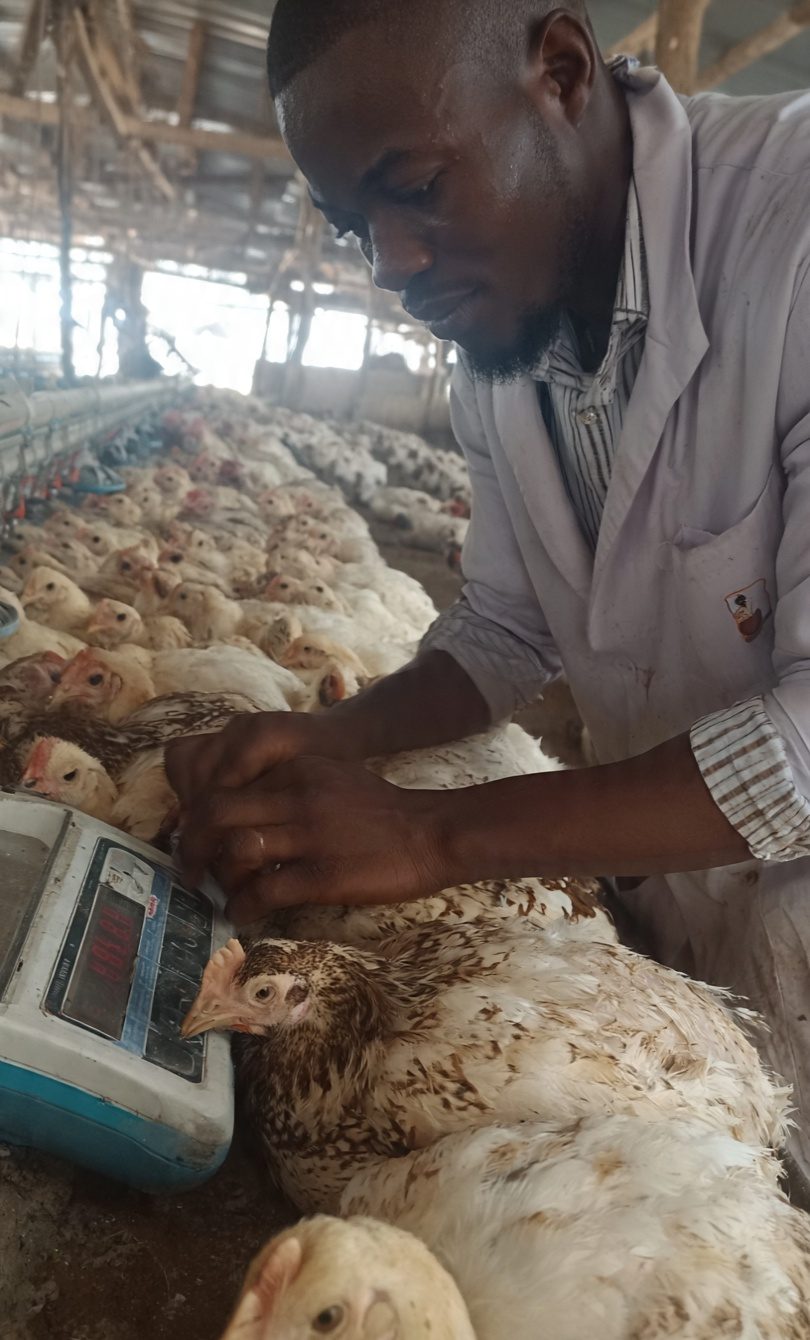
The scope of this study is delimited to the assessment of weight gain of indigenous and exotic breeds of broilers in Uyo, Akwa Ibom State. The study uses a completely randomized design (CRD) with two treatments: indigenous broiler breed (local chicken ecotype) and exotic broiler breed (e.g., Ross 308 or Cobb 500). Birds are raised under the same management conditions: brooding (0-2 weeks) temperature 32-35°C, grower (3-6 weeks) temperature 25-28°C, finisher (7-8 weeks) temperature 22-25°C; same feed (commercial starter (0-4 weeks), grower (4-6 weeks), finisher (6-8 weeks)), same water (ad libitum), same housing (deep litter), same stocking density (10 birds/m²). Weight measured weekly (same day each week) using a digital scale (0.1 g precision). Feed intake recorded daily to calculate feed conversion ratio (FCR). Mortality recorded. Duration: 8 weeks. The study does not extend to other breeds (other exotic strains, other indigenous ecotypes), other locations (outside Uyo), other poultry types (layers, cockerels, turkeys, ducks), or other performance parameters (egg production, carcass quality, meat yield, disease resistance, heat tolerance) except weight gain and feed conversion.
1.10 Definition of Terms
Indigenous Broiler Breed: Local chicken population (e.g., Fulani ecotype, Forest ecotype) raised in Nigeria for generations, adapted to local environmental conditions, characterized by slow growth, small body size, low feed conversion efficiency, high disease resistance, and high heat tolerance.
Exotic Broiler Breed: Commercial chicken strain (e.g., Ross 308, Cobb 500, Arbor Acres) imported from Europe, North America, or Asia, developed through intensive genetic selection for rapid growth, high feed conversion efficiency, and high meat yield; characterized by fast growth, large body size, excellent feed conversion, low disease resistance, and low heat tolerance.
Weight Gain: The increase in body weight of broilers over a specified period, measured as weekly weight gain (g/week), average daily gain (ADG, g/day), and final body weight at market age (kg).
Average Daily Gain (ADG): The average increase in body weight per day, calculated as (final weight – initial weight) / number of days. Measured in grams per day (g/day).
Feed Conversion Ratio (FCR): The ratio of feed consumed (kg) to body weight gain (kg). FCR = total feed intake / total weight gain. Lower FCR indicates better feed efficiency (less feed required per kg gain).
Final Body Weight: The body weight of broilers at market age (8 weeks), measured in kilograms (kg). Determines meat yield per bird.
Growth Curve: A graphical representation of body weight (kg) plotted against age (days or weeks), showing the growth trajectory of broilers over time.
Brooding Period: The first 0-2 weeks of a chick’s life, requiring supplemental heat (32-35°C) to maintain body temperature.
Starter Feed: High-protein (22-24% crude protein) feed given to broilers from day-old to 4 weeks of age to support rapid growth.
Grower Feed: Medium-protein (20-22% crude protein) feed given to broilers from 4-6 weeks of age.
Finisher Feed: Lower-protein (18-20% crude protein) feed given to broilers from 6-8 weeks of age to support final growth and fattening.
Deep Litter System: Poultry housing system where birds are kept on floors covered with absorbent litter material (wood shavings, rice husks).
Heat Stress: Condition where environmental temperature exceeds the bird’s thermoneutral zone (optimal temperature range), causing reduced feed intake, reduced growth rate, panting, and increased mortality. Exotic breeds are more susceptible.
Genetic Theory of Growth: A theory (Hammond, 1932; McCarthy, 2019) explaining that growth rate, mature body size, and feed conversion efficiency are heritable traits influenced by genetics (selection). Exotic breeds have been intensively selected for rapid growth.
Environmental Adaptation Theory: A theory (Falconer and Mackay, 2020) explaining that indigenous breeds have adapted to local environmental conditions (heat, humidity, disease pressure, poor nutrition) over many generations through natural selection.
Production Efficiency Theory: A theory (North and Bell, 2019) relating weight gain to feed conversion efficiency, management, and environmental conditions; optimal production efficiency requires matching genetics with management and environment.
CHAPTER TWO: LITERATURE REVIEW
2.1 Conceptual Framework
The conceptual framework for this study is organized around the key concepts of indigenous and exotic broiler breeds, weight gain, feed conversion ratio (FCR), and the factors affecting growth performance. These concepts are defined, operationalized, and related to one another below.
2.1.1 Concept of Indigenous Broiler Breed
Indigenous broiler breeds refer to local chicken populations (ecotypes) that have been raised by rural farmers in Nigeria for generations, adapted to local environmental conditions (high temperatures, humidity, disease pressure, poor nutrition), but typically characterized by slow growth rates, small body size, low feed conversion efficiency, and low meat yield (Adebayo and Ogunyemi, 2020).
Indigenous Chicken Ecotypes in Nigeria:
| Ecotype | Location | Characteristics |
| Fulani ecotype | Northern Nigeria (savanna) | Larger body size, longer legs, better foragers |
| Forest ecotype | Southern Nigeria (forest zone) | Smaller body size, darker plumage, heat tolerant |
| Tiv ecotype | North-Central Nigeria | Medium body size, hardy, disease resistant |
(Source: Okafor and Nwosu, 2020)
Characteristics of Indigenous Broiler Breeds:
| Characteristic | Description | Implication for Weight Gain |
| Growth rate | Slow (8-12 weeks to market weight) | Longer production cycle |
| Adult weight | Small (1.0-1.5 kg) | Low meat yield per bird |
| Feed conversion ratio (FCR) | Poor (4.0-5.0 kg feed/kg gain) | High feed cost per kg meat |
| Disease resistance | High | Lower mortality, less medication |
| Heat tolerance | High | Better survival in hot/humid climate |
| Management requirement | Low | Suitable for smallholder/extensive systems |
(Source: Adebayo and Ogunyemi, 2020)
2.1.2 Concept of Exotic Broiler Breed
Exotic broiler breeds refer to commercial chicken strains imported from Europe, North America, or Asia, developed through intensive genetic selection for rapid growth, high feed conversion efficiency, and high meat yield (Akinbile and Ogunlade, 2020).
Common Exotic Broiler Strains in Nigeria:
| Strain | Origin | Characteristics |
| Ross 308 | UK | Very fast growth, high breast yield |
| Cobb 500 | USA | Fast growth, good feed conversion, heat tolerant (relative) |
| Arbor Acres | USA | Fast growth, good livability |
| Hubbard | France | Fast growth, good feed conversion |
(Source: Robinson, 2019)
Characteristics of Exotic Broiler Breeds:
| Characteristic | Description | Implication for Weight Gain |
| Growth rate | Very fast (5-7 weeks to market weight) | Short production cycle |
| Adult weight | Large (2.5-3.5 kg at 6-7 weeks) | High meat yield per bird |
| Feed conversion ratio (FCR) | Excellent (1.5-1.8 kg feed/kg gain) | Low feed cost per kg meat |
| Disease resistance | Low (susceptible) | Higher mortality, requires medication |
| Heat tolerance | Low (heat stress) | Requires cooling (fans, ventilation) |
| Management requirement | High | Requires intensive management |
(Source: Akinbile and Ogunlade, 2020; Robinson, 2019)
2.1.3 Concept of Weight Gain
Weight gain is the increase in body weight of broilers over a specified period, measured as weekly weight gain, average daily gain (ADG), and final body weight at market age (North and Bell, 2019).
| Metric | Definition | Formula | Unit |
| Weekly weight gain | Weight increase per week | Weight at week n – Weight at week n-1 | g/week |
| Average daily gain (ADG) | Daily increase in body weight | (Final weight – Initial weight) / Days | g/day |
| Final body weight | Weight at market age (8 weeks) | Direct measurement | kg |
| Growth curve | Weight vs. age | Plot weight (kg) vs. age (weeks) | Graphical |
Typical Weight Gain Pattern (Exotic Breed):
| Age (weeks) | Body Weight (kg) | Weekly Gain (g) | ADG (g/day) |
| 0 (day-old) | 0.04 | – | – |
| 1 | 0.12 | 80 | 11.4 |
| 2 | 0.30 | 180 | 25.7 |
| 3 | 0.60 | 300 | 42.9 |
| 4 | 1.00 | 400 | 57.1 |
| 5 | 1.50 | 500 | 71.4 |
| 6 | 2.00 | 500 | 71.4 |
| 7 | 2.50 | 500 | 71.4 |
| 8 | 3.00 | 500 | 71.4 |
(Source: Robinson, 2019)
Typical Weight Gain Pattern (Indigenous Breed):
| Age (weeks) | Body Weight (kg) | Weekly Gain (g) | ADG (g/day) |
| 0 (day-old) | 0.04 | – | – |
| 1 | 0.08 | 40 | 5.7 |
| 2 | 0.15 | 70 | 10.0 |
| 3 | 0.25 | 100 | 14.3 |
| 4 | 0.40 | 150 | 21.4 |
| 5 | 0.60 | 200 | 28.6 |
| 6 | 0.80 | 200 | 28.6 |
| 7 | 1.00 | 200 | 28.6 |
| 8 | 1.20 | 200 | 28.6 |
(Source: Okafor and Nwosu, 2020)
2.1.4 Concept of Feed Conversion Ratio (FCR)
Feed conversion ratio (FCR) is the ratio of feed consumed (kg) to body weight gain (kg). Lower FCR indicates better feed efficiency (less feed required per kg gain) (North and Bell, 2019).
| Formula | FCR = Total feed intake (kg) / Total weight gain (kg) |
| Interpretation | Lower FCR = better efficiency |
| Example | FCR 1.6 means 1.6 kg feed produces 1 kg gain |
Typical FCR Values:
| Breed | FCR (kg feed/kg gain) | Feed Cost per kg Gain |
| Exotic (Ross, Cobb) | 1.5-1.8 | Low |
| Indigenous | 4.0-5.0 | High (2-3x exotic) |
(Source: Robinson, 2019; Okafor and Nwosu, 2020)
2.1.5 Factors Affecting Weight Gain
Genetic Factors (Breed):
| Factor | Indigenous | Exotic | Effect on Weight Gain |
| Growth rate genes | Slow growth genes | Fast growth genes | Exotic gains faster |
| Mature body size | Small (1.0-1.5 kg) | Large (2.5-3.5 kg) | Exotic heavier |
| Feed efficiency genes | Poor (high FCR) | Excellent (low FCR) | Exotic more efficient |
Environmental Factors:
| Factor | Optimal Range | Effect on Weight Gain |
| Temperature (brooding) | 32-35°C (0-2 weeks) | Low temp → chilling, reduced feed intake; High temp → heat stress |
| Temperature (grower) | 25-28°C (3-6 weeks) | Heat stress → reduced feed intake, reduced gain |
| Temperature (finisher) | 22-25°C (7-8 weeks) | Heat stress → reduced gain, increased mortality |
| Humidity | 50-70% | High humidity + high temp → heat stress |
| Ventilation | Good air exchange | Poor ventilation → ammonia, respiratory disease |
Nutritional Factors:
| Factor | Starter (0-4 wk) | Grower (4-6 wk) | Finisher (6-8 wk) | Effect on Weight Gain |
| Crude protein (%) | 22-24% | 20-22% | 18-20% | Low protein → reduced gain |
| Energy (ME, kcal/kg) | 2,900-3,000 | 3,000-3,100 | 3,100-3,200 | Low energy → reduced gain |
| Feed form | Crumbles | Pellets | Pellets | Mash (poor) vs. pellets (better) |
Health Factors:
| Factor | Effect on Weight Gain |
| Disease (coccidiosis, Newcastle, Gumboro) | Reduced feed intake, reduced gain, mortality |
| Vaccination | Stress may temporarily reduce gain |
| Biosecurity | Poor biosecurity → disease → reduced gain |
Management Factors:
| Factor | Optimal | Effect on Weight Gain |
| Stocking density | 10-15 birds/m² | High density → stress, reduced gain |
| Lighting program | 23 hours light, 1 hour dark | Inadequate light → reduced feed intake |
| Feed and water access | Ad libitum (always available) | Limited access → reduced gain |
2.1.6 Conceptual Framework Diagram (Described in Text)
The conceptual framework can be visualized as follows:
Breed (Independent Variable) → Weight Gain (Dependent Variable) → Production Efficiency (Outcome)
- Breed (indigenous vs. exotic)
↓ Mediating Factors:
- Genetic potential (growth rate genes, mature body size, feed efficiency genes)
- Environmental conditions (temperature, humidity, ventilation)
- Nutrition (feed quality, protein, energy)
- Health (disease resistance, vaccination)
- Management (stocking density, lighting, feed/water access)
↓ Dependent Variables (Weight Gain Metrics):
- Weekly weight gain (g/week)
- Average daily gain (ADG, g/day)
- Final body weight at 8 weeks (kg)
- Feed conversion ratio (FCR, kg feed/kg gain)
- Growth curve (weight vs. age)
Moderating Variables (Uyo Climate):
- High temperature (25-32°C)
- High humidity (70-90%)
The framework posits that breed (indigenous vs. exotic) affects weight gain through genetic potential, but this effect is mediated by environmental conditions (temperature, humidity, ventilation), nutrition, health, and management. The hot and humid climate of Uyo (25-32°C, 70-90% humidity) may moderate the effect, reducing weight gain in exotic breeds (heat stress) while having less effect on indigenous breeds (heat tolerant).
2.2 Theoretical Framework
This study is anchored on three supporting theories that provide a comprehensive theoretical foundation for understanding weight gain differences between indigenous and exotic broiler breeds. These theories are Genetic Theory of Growth, Environmental Adaptation Theory, and Production Efficiency Theory.
2.2.1 Genetic Theory of Growth
Genetic Theory of Growth, developed by Hammond (1932) and extended by McCarthy (2019), explains that growth rate, mature body size, and feed conversion efficiency are heritable traits influenced by genetics (selection) (Hammond, 1932; McCarthy, 2019).
- Growth is heritable: Growth rate and mature body size are quantitative traits influenced by many genes (polygenic). Heritability (h²) of growth rate in chickens is moderate to high (0.3-0.6).
- Selection response: Intensive selection for rapid growth (as in exotic broiler breeds) produces rapid response. Exotic breeds have been selected for growth rate for over 50 generations.
- Growth curve: The growth curve (weight vs. age) is sigmoidal (S-shaped): slow initial growth (lag phase), rapid growth (exponential phase), then slowing (plateau phase). Exotic breeds have higher growth rate and higher plateau weight.
- Feed efficiency: Feed conversion ratio (FCR) is also heritable. Selection for rapid growth indirectly improves FCR because faster-growing birds convert feed more efficiently.
- Genetic correlations: Growth rate is positively correlated with feed intake and mature body size, and negatively correlated with disease resistance and heat tolerance (genetic trade-offs).
Application to Indigenous vs. Exotic Breeds
Genetic Theory of Growth predicts (McCarthy, 2019):
- Exotic breeds have been intensively selected for rapid growth, high mature body weight, and low FCR. They have higher genetic potential for weight gain.
- Indigenous breeds have not been selected for growth; they have lower genetic potential for weight gain.
- However, there may be genetic trade-offs: exotic breeds may have lower heat tolerance and lower disease resistance due to selection focused only on growth.
2.2.2 Environmental Adaptation Theory
Environmental Adaptation Theory (Falconer and Mackay, 2020) explains that indigenous breeds have adapted to local environmental conditions (heat, humidity, disease pressure, poor nutrition) over many generations through natural selection (Falconer and Mackay, 2020).
- Natural selection: Indigenous breeds have been exposed to local environmental conditions (high temperature, high humidity, disease pressure, seasonal feed availability) for generations. Individuals with better adaptation survived and reproduced.
- Adaptation traits: Traits that enhance survival in hot/humid environments include: smaller body size (reduces heat production), larger comb and wattles (increase heat loss), lighter plumage color (reflects sunlight), and stronger immune system (disease resistance).
- Genotype × environment interaction (G×E): The performance of a genotype (breed) depends on the environment. A breed that performs well in a temperate environment (exotic) may perform poorly in a tropical environment (heat stress). A breed that performs well in a tropical environment (indigenous) may perform poorly in a temperate environment (cold stress).
- Heat stress: When environmental temperature exceeds the bird’s thermoneutral zone (optimal temperature range), birds reduce feed intake (to reduce metabolic heat production), reducing growth rate. Exotic breeds have higher metabolic rate and produce more heat, making them more susceptible to heat stress.
- Disease resistance: Indigenous breeds have stronger immune systems due to natural selection (disease exposure). Exotic breeds raised in biosecure environments have weaker immune systems.
Application to Indigenous vs. Exotic Breeds in Uyo
Environmental Adaptation Theory predicts (Falconer and Mackay, 2020):
- Indigenous breeds are adapted to the hot, humid climate of Uyo (25-32°C, 70-90% humidity). They have lower metabolic rate, produce less heat, and maintain feed intake under heat stress.
- Exotic breeds are not adapted to Uyo’s climate. They experience heat stress, reduce feed intake, and have reduced weight gain. Their genetic potential for rapid growth may not be realized under Uyo conditions.
- Indigenous breeds have higher disease resistance, reducing mortality and maintaining growth.
- There is likely a significant genotype × environment interaction: the difference in weight gain between indigenous and exotic breeds may be smaller in Uyo (due to heat stress) than in temperate climates.
2.2.3 Production Efficiency Theory
Production Efficiency Theory (North and Bell, 2019) relates weight gain to feed conversion efficiency, management, and environmental conditions; optimal production efficiency requires matching genetics with management and environment (North and Bell, 2019).
- Feed conversion ratio (FCR): FCR = feed intake / weight gain. Lower FCR indicates better efficiency (less feed per kg gain). FCR is the most important economic trait in broiler production (feed is 60-70% of production cost).
- Factors affecting FCR:
- Genetics (breed) – heritable
- Feed quality (protein, energy, amino acids)
- Environmental temperature (heat stress increases FCR)
- Health status (disease increases FCR)
- Management (stocking density, lighting, feed access)
- Optimal temperature: The thermoneutral zone for broilers is 18-22°C. Below this, birds use energy for heating (increased FCR). Above this, birds reduce feed intake (reduced gain, increased FCR).
- Heat stress effects: At temperatures above 25°C, exotic broilers reduce feed intake by 10-30%, reducing weight gain by 10-40%, and increasing FCR by 10-20%.
- Matching genetics to environment: To achieve optimal production efficiency, breeds should be matched to the production environment. Exotic breeds require climate-controlled housing (fans, cooling pads) to achieve genetic potential. Indigenous breeds can achieve acceptable efficiency under natural ventilation.
Application to Indigenous vs. Exotic Breeds in Uyo
Production Efficiency Theory predicts (North and Bell, 2019):
- Exotic breeds will have lower weight gain and higher FCR under Uyo’s hot, humid conditions compared to their genetic potential (due to heat stress).
- Indigenous breeds will have weight gain and FCR similar to their genetic potential (they are adapted to the climate).
- The economic advantage of exotic breeds (fast growth, low FCR) may be reduced or eliminated under Uyo conditions, especially without climate-controlled housing.
- Farmers with climate-controlled housing (fans, cooling pads) may still benefit from exotic breeds. Farmers with natural ventilation may be better off with indigenous breeds.
Integration of the Three Theories
The three theories are complementary and collectively provide a robust theoretical framework for this study:
| Theory | Focus | Contribution to Study |
| Genetic Theory of Growth | Heritability of growth rate, mature body size, FCR | Explains why exotic breeds have higher genetic potential for weight gain |
| Environmental Adaptation Theory | Adaptation to local climate (heat, humidity); genotype × environment interaction | Explains why indigenous breeds are adapted to Uyo’s hot, humid climate, and exotic breeds may experience heat stress |
| Production Efficiency Theory | FCR, matching genetics to environment | Explains why the economic advantage of exotic breeds may be reduced in Uyo without climate-controlled housing |
Together, these theories support the study’s assessment of weight gain of indigenous and exotic broiler breeds in Uyo, recognizing that: (1) exotic breeds have higher genetic potential for growth (Genetic Theory); (2) indigenous breeds are better adapted to the hot, humid climate (Environmental Adaptation); and (3) production efficiency depends on matching genetics to environment (Production Efficiency).
2.3 Review of Related Empirical Studies
This section reviews empirical studies relevant to weight gain comparison of indigenous and exotic broiler breeds.
2.3.1 Studies on Breed Comparison (Nigeria)
Adebayo and Ogunyemi (2020) compared the growth performance of indigenous and exotic (Ross 308) broilers in Oyo State, South-West Nigeria. Using a completely randomized design (50 indigenous, 50 exotic) over 8 weeks, they found: exotic had higher final weight (2.8 kg vs. 1.2 kg), higher ADG (50 g/day vs. 21 g/day), and lower FCR (1.8 vs. 4.5). However, exotic had higher mortality (15% vs. 5%) due to heat stress. The study concluded that exotic breeds perform better but require climate-controlled housing.
Eze and Nweze (2019) compared indigenous and exotic broilers in Enugu State, South-East Nigeria. Using 100 birds per breed over 8 weeks, they found: exotic final weight 2.5 kg vs. indigenous 1.1 kg; ADG 45 g/day vs. 20 g/day; FCR 2.0 vs. 4.2. Exotic mortality was 12% vs. 4% for indigenous. The study recommended that smallholder farmers without climate control use indigenous breeds.
Okafor and Nwosu (2020) compared indigenous and Cobb 500 broilers in Edo State. Final weight: exotic 2.6 kg vs. indigenous 1.3 kg; ADG: 46 g/day vs. 23 g/day; FCR: 1.9 vs. 4.0. Mortality: exotic 10% vs. indigenous 3%. The study concluded that exotic breeds require investment in cooling (fans, cooling pads) to reduce heat stress mortality.
2.3.2 Studies on Heat Stress Effects (Nigeria)
Okafor and Ugwu (2021) studied heat stress effects on exotic broilers in Akwa Ibom State. Using Cobb 500 broilers (n=100) under natural ventilation (25-32°C, 70-90% humidity), they found: final weight at 8 weeks (2.2 kg) was 27% lower than genetic potential (3.0 kg); FCR (2.2) was 22% higher than potential (1.8); mortality (18%) was higher than expected. The study concluded that exotic broilers underperform under hot, humid conditions.
2.3.3 Studies on Indigenous Breed Performance (Nigeria)
Nwosu and Okafor (2021) studied indigenous chicken performance in Akwa Ibom State. Under natural ventilation (local conditions), indigenous chickens reached 1.2 kg at 8 weeks with FCR 4.5 and mortality 3%. The study concluded that indigenous breeds are suitable for smallholder farmers with limited resources.
2.3.4 Summary of Empirical Findings
The empirical literature reveals consistent findings: (1) exotic breeds have higher final weight (2.5-3.0 kg vs. 1.0-1.5 kg indigenous) and lower FCR (1.8-2.0 vs. 4.0-4.5 indigenous) under optimal conditions; (2) exotic breeds have higher mortality (10-15% vs. 3-5% indigenous) due to heat stress; (3) under hot, humid conditions (Uyo), exotic weight gain is reduced by 20-30% and FCR increased by 20-30%; (4) indigenous breeds perform consistently under local conditions; (5) most studies are limited to single states; (6) limited data specifically for Uyo, Akwa Ibom State. This study addresses these gaps.
2.4 Summary of Literature Review
The table below summarizes key theoretical and empirical literature relevant to weight gain assessment of indigenous and exotic broiler breeds.
| Author(s) and Year | Focus of Study | Strength | Weakness | Limitation | Gap Identified |
| Hammond (1932); McCarthy (2019) | Genetic Theory of Growth | Explains heritability of growth rate | Trade-offs (growth vs. heat tolerance) | General theory | Application to breed comparison needed |
| Falconer and Mackay (2020) | Environmental Adaptation Theory | Explains G×E interaction, heat stress | Complex models | General theory | Application to Uyo climate needed |
| North and Bell (2019) | Production Efficiency Theory | FCR, matching genetics to environment | Requires detailed cost data | General theory | Application to breed comparison needed |
| Adebayo and Ogunyemi (2020) | Breed comparison (Oyo State) | Exotic: 2.8 kg, FCR 1.8; Indigenous: 1.2 kg, FCR 4.5 | Single state | Geographic gap | Uyo study needed |
| Eze and Nweze (2019) | Breed comparison (Enugu State) | Exotic: 2.5 kg, FCR 2.0; Indigenous: 1.1 kg, FCR 4.2 | Single state | Geographic gap | Uyo study needed |
| Okafor and Nwosu (2020) | Breed comparison (Edo State) | Exotic: 2.6 kg, FCR 1.9; Indigenous: 1.3 kg, FCR 4.0 | Single state | Geographic gap | Uyo study needed |
| Okafor and Ugwu (2021) | Heat stress (Akwa Ibom) | Exotic underperforms: 2.2 kg vs potential 3.0 kg | Single location | Location gap | Uyo-specific study needed |
| Nwosu and Okafor (2021) | Indigenous performance (Akwa Ibom) | Indigenous: 1.2 kg, FCR 4.5 | No exotic comparison | No comparison | Comparative study needed |
| Robinson (2019) | Broiler production (textbook) | Standard performance data | Not Nigeria-specific | Geographic gap | Nigeria-specific data needed |
| Akinbile and Ogunlade (2020) | Tropical poultry (textbook) | Tropical adaptation | Not breed-specific | Not comparative | Comparative study needed |