
🔤 Total Characters in Document: 237,790
📄 Estimated Document Pages: 100
⏱️ Reading Time: 4 Hours 9 Mins
CHAPTER ONE: INTRODUCTION
1.1 Background of Study
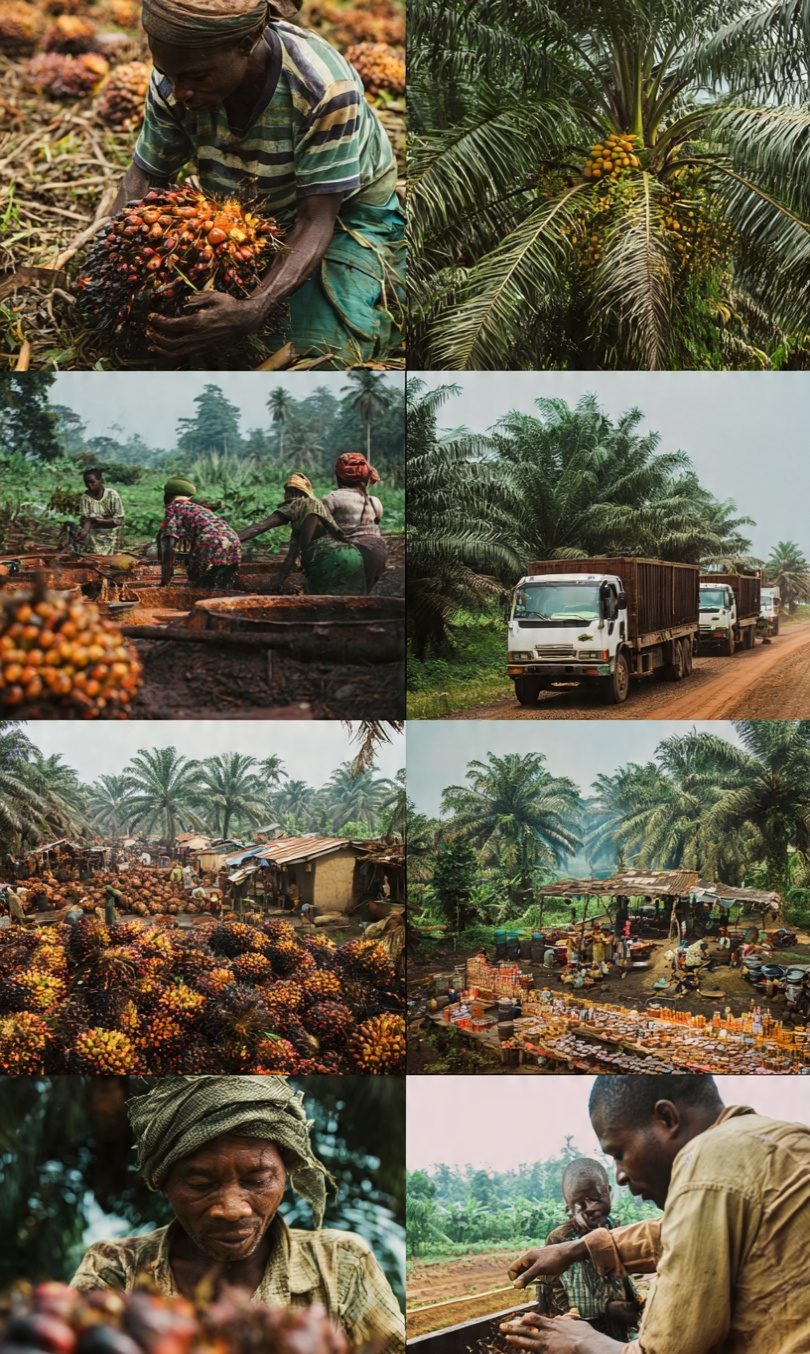
Oil palm (Elaeis guineensis Jacq.) is one of the most important cash crops in Nigeria, playing a critical role in the economy, food security, and livelihoods of millions of rural households (FAO, 2022). Nigeria was once the world’s largest producer of palm oil, accounting for over 40% of global production in the 1960s, but has since been overtaken by Indonesia and Malaysia (CBN, 2022). Despite this decline, Nigeria remains a significant producer, with an estimated annual production of over 1.2 million metric tons of palm oil, primarily from smallholder farmers (NBS, 2022). Oil palm is native to West Africa, and Nigeria has a long history of oil palm cultivation, particularly in the South-South and South-East regions, where the climate (high rainfall, high temperature) is ideal for the crop (Okonkwo, 2020).
Oil palm is a versatile crop with multiple products and uses (Hartley, 2019). The main products include: palm oil (red oil from the mesocarp of the fruit), used for cooking, frying, margarine, soap, cosmetics, and industrial lubricants; palm kernel oil (white oil from the kernel of the seed), used for cooking, margarine, soap, cosmetics, and pharmaceuticals; palm kernel cake (residue after oil extraction), used as animal feed; palm wine (sap from the inflorescence), consumed fresh or fermented; palm fronds (leaves), used for thatching, fencing, brooms; palm trunk, used for timber; and palm kernel shells, used as fuel (Corley and Tinker, 2020). This diversity of products makes oil palm a valuable source of food, income, fuel, and raw materials for rural households.
Oil palm cultivation in Nigeria is dominated by smallholder farmers (cultivating 0.5-5 hectares), who account for over 80% of national production (FMARD, 2021). The distribution of oil palm is concentrated in the South-South and South-East geopolitical zones, including Akwa Ibom, Cross River, Delta, Edo, Rivers, Imo, Abia, Anambra, Ebonyi, Enugu, and Ondo States (NBS, 2022). Oruk Anam Local Government Area (LGA) is located in Akwa Ibom State, South-South Nigeria, an area with high rainfall and suitable climate for oil palm cultivation (Akwa Ibom State Ministry of Agriculture, 2021). Oruk Anam LGA is predominantly rural, with agriculture as the main occupation of the population. Oil palm is one of the major crops grown in the LGA, alongside cassava, yam, maize, vegetables, and cocoa (Okafor and Nwosu, 2020).
The distribution of oil palm in Oruk Anam LGA includes: wild/semi-wild groves (natural stands of oil palm in fallow land, secondary forest, and along streams); smallholder farms (cultivated oil palm, often intercropped with cassava, yam, or vegetables during the immature phase); medium-scale plantations (10-50 hectares, managed as sole crop); and processing facilities (small-scale manual presses, medium-scale motorized presses, large-scale mills) (Eze and Nweze, 2019). The utilization of oil palm in the LGA includes: household consumption (palm oil for cooking; palm wine for drinking; palm kernel cake for poultry feed); local markets (sale of fresh fruit bunches, palm oil, palm kernel oil, palm kernel cake, palm wine); processing (small-scale women processors extract palm oil for sale); soap making (local soap from palm oil and palm kernel oil); and fuel (palm kernel shells for cooking) (Okafor and Ugwu, 2021).
The socio-economic development of Oruk Anam LGA is influenced by the distribution and utilization of oil palm (Okonkwo, 2020). Socio-economic development refers to the process of improving the economic well-being and quality of life of a community, including: income generation (employment, wages, profits from oil palm); employment (direct employment in cultivation, harvesting, processing, marketing; indirect employment in transport, input supply, equipment repair); poverty reduction (increased income for households engaged in oil palm); food security (palm oil for household consumption, income to purchase other food); rural infrastructure (roads, electricity, markets stimulated by oil palm trade); education (income from oil palm used to pay school fees); healthcare (income from oil palm used to pay for medical treatment); housing (improved housing from oil palm income); and social capital (cooperative formation, community organization) (Adebayo and Ogunyemi, 2020).
The oil palm value chain in Oruk Anam LGA:
| Stage | Actors | Activities |
| Input supply | Input dealers | Seeds, seedlings, fertilizer, pesticides, tools |
| Production | Farmers (smallholders), plantation workers | Land clearing, planting, maintenance, harvesting |
| Processing | Women processors, small-scale mills, medium-scale mills | Fruit sterilization, threshing, digestion, pressing, clarification |
| Marketing | Local traders, wholesalers, retailers | Bulk buying, transport, storage, sale |
| Utilization | Households, soap makers, food vendors, restaurants | Cooking, frying, soap making, food preparation |
Products of oil palm and their uses:
| Product | Source | Uses |
| Fresh fruit bunches (FFB) | Harvest from tree | Processed to extract palm oil and palm kernels |
| Palm oil (red oil) | Mesocarp (fruit flesh) | Cooking, frying, margarine, soap, cosmetics, industrial lubricants, biodiesel |
| Palm kernel oil | Kernel (seed) | Cooking, margarine, soap, cosmetics, pharmaceuticals |
| Palm kernel cake | Residue after oil extraction | Animal feed (poultry, pigs, cattle) |
| Palm wine | Sap from inflorescence | Fresh drink, fermented drink, vinegar |
| Palm fronds | Leaves | Thatching, fencing, brooms, mulch |
| Palm trunk | Stem | Timber (low quality) |
| Palm kernel shells | Kernel shell | Fuel (cooking, heating) |
Socio-economic indicators potentially affected by oil palm:
| Indicator | Definition | Expected Impact of Oil Palm |
| Household income | Annual income from all sources (₦/household) | Positive (income from FFB, palm oil sales) |
| Employment | Number of persons employed in oil palm value chain | Positive (farmers, harvesters, processors, marketers) |
| Poverty rate | Percentage of households below poverty line | Negative (oil palm income reduces poverty) |
| Food security | Months of food self-sufficiency | Positive (palm oil for consumption, income to buy other food) |
| School enrollment | Percentage of children aged 6-14 in school | Positive (income to pay school fees) |
| Healthcare access | Percentage of households using modern healthcare | Positive (income to pay for treatment) |
| Housing quality | Percentage of houses with modern materials (cement, corrugated iron) | Positive (income for house improvement) |
| Cooperative membership | Percentage of farmers in cooperatives | Positive (cooperatives for marketing, processing) |
| Infrastructure | Presence of roads, electricity, markets | Positive (oil palm trade stimulates infrastructure) |
The theoretical framework for this study is supported by three theories: Agricultural Development Theory (Schultz, 1964), which explains how investment in agriculture (including oil palm) leads to economic growth and poverty reduction; Value Chain Theory (Porter, 1985; Kaplinsky and Morris, 2019), which analyzes the sequence of activities from production to final consumption and how value is added at each stage; and Rural Development Theory (Chambers, 1983; Ellis, 2019), which emphasizes the role of agriculture in improving rural livelihoods, reducing poverty, and stimulating rural infrastructure.
Despite the importance of oil palm, there are challenges facing the distribution and utilization of oil palm in Oruk Anam LGA (Eze and Nweze, 2019). Low productivity: Many farmers use unimproved (wild) oil palm varieties with low fruit yield and low oil content; improved tenera varieties yield 3-5 times more oil per hectare. Poor processing technology: Small-scale processors use manual presses (mortar and pestle) that recover only 40-50% of oil, compared to motorized presses that recover 80-85%. Limited access to credit: Farmers cannot afford improved seedlings, fertilizer, or processing equipment. Poor roads: Inadequate road infrastructure limits access to markets; during the rainy season, some areas are inaccessible. Limited market access: Farmers sell fresh fruit bunches to middlemen at low prices because they cannot process or transport to better markets. Post-harvest losses: Fresh fruit bunches must be processed within 24-48 hours after harvest; delays cause high free fatty acid (FFA) content, reducing oil quality and price. Environmental concerns: Deforestation for oil palm expansion (though more relevant to large-scale plantations than smallholder systems). Land tenure issues: Women often have limited access to land for oil palm cultivation.
In summary, oil palm is a critical crop for the socio-economic development of Oruk Anam LGA, providing income, employment, food, and raw materials for rural households. However, the distribution and utilization of oil palm are influenced by factors such as farm size, processing technology, market access, and infrastructure. There is limited empirical data on the specific impact of oil palm on socio-economic development indicators (income, employment, poverty, food security, education, healthcare, housing) in Oruk Anam LGA. This study aims to assess the impact of the distribution and utilization of oil palm on the socio-economic development of Oruk Anam Local Government Area.
1.2 Statement of Problems
Oil palm is a major cash crop in Oruk Anam Local Government Area, providing income, employment, and food for many rural households. However, there is limited empirical data on the socio-economic impact of oil palm distribution and utilization in the LGA. Specifically, it is unclear: (a) how many households are engaged in oil palm production, processing, and marketing; (b) what is the average income from oil palm activities compared to other sources; (c) how many persons are employed in the oil palm value chain; (d) what is the contribution of oil palm to household food security; (e) what is the contribution of oil palm income to education (school enrollment), healthcare (access to treatment), housing quality, and asset acquisition; (f) what are the constraints (low productivity, poor processing technology, limited credit, poor roads, limited market access) facing oil palm producers; and (g) what is the overall impact of oil palm on the socio-economic development of the LGA. The problem this study addresses is the need to assess the impact of the distribution and utilization of oil palm on the socio-economic development of Oruk Anam Local Government Area, quantifying the contributions to income, employment, poverty reduction, food security, education, healthcare, housing, and other development indicators.
1.3 Aim of the Study
The specific aim of this research work is to assess the impact of the distribution and utilization of oil palm on the socio-economic development of Oruk Anam Local Government Area, with a view to quantifying the contributions of oil palm to household income, employment, poverty reduction, food security, education, healthcare, housing, and other development indicators, and identifying the constraints facing oil palm producers.
1.4 Objectives of the Study
- To describe the distribution (area under cultivation, number of farmers, number of processors, number of marketers) of oil palm in Oruk Anam Local Government Area.
- To identify the utilization patterns (household consumption, local sales, processing, value addition) of oil palm products in Oruk Anam LGA.
- To assess the contribution of oil palm to household income (percentage of total income from oil palm, income by activity: farming, processing, marketing).
- To assess the contribution of oil palm to employment (number of persons employed in cultivation, harvesting, processing, marketing) in Oruk Anam LGA.
- To assess the impact of oil palm on socio-economic development indicators (poverty reduction, food security, education enrollment, healthcare access, housing quality, asset acquisition).
1.5 Research Questions
- What is the distribution (area under cultivation, number of farmers, number of processors, number of marketers) of oil palm in Oruk Anam Local Government Area?
- What are the utilization patterns (household consumption, local sales, processing, value addition) of oil palm products in Oruk Anam LGA?
- What is the contribution of oil palm to household income (percentage of total income from oil palm, income by activity: farming, processing, marketing)?
- What is the contribution of oil palm to employment (number of persons employed in cultivation, harvesting, processing, marketing) in Oruk Anam LGA?
- What is the impact of oil palm on socio-economic development indicators (poverty reduction, food security, education enrollment, healthcare access, housing quality, asset acquisition)?
1.6 Research Hypotheses
Hypothesis One
- H₀ (Null): Oil palm does not contribute significantly to household income in Oruk Anam Local Government Area.
- H₁ (Alternative): Oil palm contributes significantly to household income in Oruk Anam Local Government Area.
Hypothesis Two
- H₀ (Null): Oil palm does not provide significant employment (number of persons) in Oruk Anam Local Government Area.
- H₁ (Alternative): Oil palm provides significant employment in Oruk Anam Local Government Area.
Hypothesis Three
- H₀ (Null): There is no significant relationship between oil palm income and household poverty status (poverty headcount) in Oruk Anam LGA.
- H₁ (Alternative): There is a significant relationship between oil palm income and household poverty status.
Hypothesis Four
- H₀ (Null): There is no significant relationship between oil palm income and household food security (months of food self-sufficiency) in Oruk Anam LGA.
- H₁ (Alternative): There is a significant relationship between oil palm income and household food security.
Hypothesis Five
- H₀ (Null): There is no significant relationship between oil palm income and socio-economic development indicators (education enrollment, healthcare access, housing quality) in Oruk Anam LGA.
- H₁ (Alternative): There is a significant relationship between oil palm income and socio-economic development indicators.
1.7 Justification of the Study
This study is justified on several grounds. First, oil palm is a major cash crop in Oruk Anam LGA, but there is limited empirical data on its socio-economic impact. Quantifying the contribution of oil palm to income, employment, poverty reduction, food security, and other development indicators is essential for policy and planning. Second, identifying the constraints facing oil palm producers (low productivity, poor processing technology, limited credit, poor roads, limited market access) will inform interventions (provision of improved seedlings, training on processing, credit programmes, road rehabilitation, market linkage). Third, the findings will inform government policy (Akwa Ibom State Ministry of Agriculture, FMARD) on support for the oil palm value chain. Fourth, the findings will inform development partners (World Bank, FAO, IFAD) on investment priorities in oil palm-producing areas. Fifth, the study will contribute to the limited literature on oil palm and socio-economic development in Akwa Ibom State.
1.8 Significance of the Study
The findings of this research will be significant to several stakeholders. To oil palm farmers, processors, and marketers in Oruk Anam LGA, the study will provide evidence on the economic importance of oil palm, enabling advocacy for government support. To local government authorities (Oruk Anam LGA Council) , the findings will inform local economic development planning, budget allocation for agriculture, and infrastructure development (roads, markets). To Akwa Ibom State Ministry of Agriculture, the findings will inform agricultural policy, extension priorities, and support programmes for oil palm (improved seedlings, processing equipment, credit). To Federal Ministry of Agriculture and Rural Development (FMARD) , the findings will inform national oil palm policy and programmes. To development partners (World Bank, FAO, IFAD, UNDP) , the findings will inform project design for oil palm value chain development. To academic researchers, the study will contribute empirical data on oil palm and socio-economic development, testing and extending agricultural development theory, value chain theory, and rural development theory.
1.9 Scope of the Study
The scope of this study is delimited to the impact of the distribution and utilization of oil palm on the socio-economic development of Oruk Anam Local Government Area, Akwa Ibom State, Nigeria. The study focuses on oil palm distribution: area under cultivation (hectares), number of farmers, number of processors (small-scale manual, medium-scale motorized), number of marketers, number of oil palm mills. The study examines oil palm utilization patterns: household consumption (palm oil for cooking; palm wine for drinking; palm kernel cake for poultry feed); local sales (fresh fruit bunches, palm oil, palm kernel oil, palm kernel cake, palm wine); processing (traditional manual presses, motorized presses); value addition (soap making, palm kernel oil extraction). The study assesses socio-economic development indicators: household income (₦/year from oil palm and other sources), employment (number of persons employed in cultivation, harvesting, processing, marketing), poverty reduction (poverty headcount, income below poverty line), food security (months of food self-sufficiency, food expenditure), education (school enrollment rates), healthcare (access to modern healthcare), housing quality (building materials, number of rooms, amenities), asset acquisition (bicycles, motorcycles, generators, television, mobile phones). The study includes primary data collection (household surveys, key informant interviews) and secondary data (LGA records, agricultural statistics). The study covers the period 2019-2024. The study does not extend to environmental impact of oil palm (deforestation, biodiversity loss, water use), to large-scale oil palm plantations (>50 hectares) if present, or to palm oil processing beyond the LGA (refineries, export).
1.10 Definition of Terms
Oil Palm (Elaeis guineensis): A perennial tree crop native to West Africa, grown for its fruits which are processed into palm oil (from the mesocarp) and palm kernel oil (from the kernel). Oil palm is a major cash crop in the South-South and South-East regions of Nigeria.
Distribution of Oil Palm: The spatial and quantitative distribution of oil palm in Oruk Anam LGA, including area under cultivation (hectares), number of farmers, number of processors, number of marketers, and location of oil palm groves/farms.
Utilization of Oil Palm: The ways in which oil palm products are used in Oruk Anam LGA, including household consumption (palm oil for cooking; palm wine for drinking), local sales (fresh fruit bunches, palm oil, palm kernel oil, palm kernel cake), processing (manual and motorized presses), and value addition (soap making, palm kernel oil extraction).
Socio-Economic Development: The process of improving the economic well-being and quality of life of a community, measured by indicators such as income, employment, poverty, food security, education enrollment, healthcare access, housing quality, and asset acquisition.
Palm Oil (Red Oil): Oil extracted from the mesocarp (fruit flesh) of the oil palm fruit. Palm oil is rich in carotenoids (red colour), vitamin E (tocopherols, tocotrienols), and saturated and unsaturated fatty acids. Used for cooking, frying, margarine, soap, cosmetics, industrial lubricants, and biodiesel.
Palm Kernel Oil (PKO): Oil extracted from the kernel (seed) of the oil palm fruit. Palm kernel oil is white to pale yellow, rich in lauric acid (medium-chain triglycerides). Used for cooking, margarine, soap, cosmetics, and pharmaceuticals.
Palm Kernel Cake (PKC): The residue left after extracting oil from palm kernels; used as animal feed (poultry, pigs, cattle).
Fresh Fruit Bunch (FFB): The cluster of oil palm fruits harvested from the tree. FFB must be processed within 24-48 hours after harvest to prevent high free fatty acid (FFA) content, which reduces oil quality and price.
Palm Wine: Sap collected from the cut inflorescence (flower bud) of the oil palm tree. Palm wine is sweet when fresh, becoming sour and alcoholic as it ferments. Consumed fresh or fermented, used as a drink and in cooking.
Smallholder Farmer: A farmer cultivating oil palm on a small scale (typically 0.5-5 hectares), using family labour, with low input (fertilizer, pesticide) use, and selling fresh fruit bunches or palm oil to local markets.
Value Chain (Oil Palm): The sequence of activities from input supply (seeds, fertilizer) to production (cultivation, harvesting) to processing (oil extraction) to marketing (wholesale, retail) to consumption. Value chain analysis identifies opportunities for adding value and increasing income at each stage.
Value Addition: The process of increasing the value of a product by processing it from a raw form to a more finished form. For oil palm: fresh fruit bunches → palm oil (value addition); fresh fruit bunches → palm kernel oil (value addition); palm oil → soap (value addition).
Agricultural Development Theory: A theory (Schultz, 1964) arguing that investment in agriculture (including oil palm) leads to economic growth and poverty reduction, by increasing productivity, generating income, and creating employment.
Value Chain Theory: A theory (Porter, 1985; Kaplinsky and Morris, 2019) analyzing the sequence of activities from production to final consumption, identifying opportunities to add value, improve efficiency, and increase income for primary producers (farmers).
Rural Development Theory: A theory (Chambers, 1983; Ellis, 2019) emphasizing the role of agriculture in improving rural livelihoods, reducing poverty, generating employment, and stimulating rural infrastructure (roads, electricity, markets, schools, health centres).
CHAPTER TWO: LITERATURE REVIEW
2.1 Conceptual Framework
The conceptual framework for this study is organized around the key concepts of oil palm distribution, oil palm utilization, socio-economic development, the oil palm value chain, and the mechanisms through which oil palm contributes to socio-economic development. These concepts are defined, operationalized, and related to one another below.
2.1.1 Concept of Oil Palm Distribution
Oil palm distribution refers to the spatial and quantitative distribution of oil palm cultivation, processing, and marketing activities in Oruk Anam Local Government Area (Okonkwo, 2020).
Distribution Indicators:
| Indicator | Definition | Measurement |
| Area under cultivation | Land area planted with oil palm | Hectares (ha) |
| Number of farmers | Households engaged in oil palm cultivation | Count |
| Number of trees | Oil palm trees of bearing age | Count |
| Number of processors | Individuals/firms engaged in palm oil/palm kernel oil extraction | Count |
| Number of marketers | Individuals/firms engaged in sale of oil palm products | Count |
| Number of mills | Oil palm processing mills (manual, motorized) | Count |
| Yield per hectare | Fresh fruit bunches (FFB) per hectare | tons/ha/year |
Types of Oil Palm Plantations in Oruk Anam LGA:
| Type | Description | Average Area | Management |
| Wild/semi-wild groves | Natural stands in fallow land, secondary forest | 0.1-1 ha | Minimal |
| Smallholder farms | Cultivated oil palm, often intercropped | 0.5-5 ha | Family labour |
| Medium-scale plantations | Sole crop, managed | 10-50 ha | Hired labour |
2.1.2 Concept of Oil Palm Utilization
Oil palm utilization refers to the ways in which oil palm products are used, including household consumption, local sales, processing, and value addition (Corley and Tinker, 2020).
Oil Palm Products and Their Utilization:
| Product | Source | Utilization |
| Fresh fruit bunches (FFB) | Harvest from tree | Sold to processors; processed into palm oil |
| Palm oil (red oil) | Mesocarp (fruit flesh) | Household cooking; local sales; soap making; industrial uses |
| Palm kernel oil (PKO) | Kernel (seed) | Household cooking; local sales; soap making; cosmetics; pharmaceuticals |
| Palm kernel cake (PKC) | Residue after oil extraction | Animal feed (poultry, pigs, cattle) |
| Palm wine | Sap from inflorescence | Fresh drink; fermented drink; vinegar |
| Palm fronds | Leaves | Thatching; fencing; brooms; mulch |
| Palm trunk | Stem | Timber (low quality); fuel |
| Palm kernel shells | Kernel shell | Fuel (cooking, heating) |
Utilization Patterns:
| Pattern | Description |
| Household consumption | Palm oil used for cooking; palm wine consumed at home; PKC for poultry feed |
| Local sales | FFB, palm oil, PKO, PKC sold in local markets or to traders |
| Processing | Manual presses (small-scale); motorized presses (medium-scale) |
| Value addition | Soap making from palm oil/PKO; palm kernel oil extraction |
| Distant markets | Palm oil exported to urban centres (Uyo, Port Harcourt, Aba, Onitsha) |
2.1.3 Concept of Socio-Economic Development
Socio-economic development is the process of improving the economic well-being and quality of life of a community, measured by indicators such as income, employment, poverty, food security, education, healthcare, housing, and assets (Chambers, 1983; Ellis, 2019).
Socio-Economic Development Indicators:
| Indicator | Definition | Measurement |
| Household income | Annual income from all sources | ₦/household/year |
| Income from oil palm | Income from FFB, palm oil, PKO, PKC, palm wine | ₦/household/year |
| Employment | Number of persons employed in oil palm value chain | Count |
| Poverty rate | Percentage of households below poverty line | % |
| Food security | Months of food self-sufficiency; food expenditure share | Months; % of budget |
| School enrollment | Percentage of children aged 6-14 enrolled in school | % |
| Healthcare access | Percentage of households using modern healthcare | % |
| Housing quality | Building materials (cement vs. mud); number of rooms | Qualitative; count |
| Asset acquisition | Ownership of bicycle, motorcycle, generator, TV, mobile phone | Binary (yes/no) |
2.1.4 The Oil Palm Value Chain
The oil palm value chain describes the sequence of activities from input supply to final consumption, and how value is added at each stage (Porter, 1985; Kaplinsky and Morris, 2019).
Oil Palm Value Chain in Oruk Anam LGA:
| Stage | Actors | Activities | Value Added |
| Input supply | Input dealers, government extension | Seeds, seedlings, fertilizer, pesticides, tools | Inputs |
| Production | Smallholder farmers, plantation workers | Land clearing, planting, maintenance, harvesting | FFB (low value) |
| Processing | Women processors, small-scale mills, medium-scale mills | Sterilization, threshing, digestion, pressing, clarification | Palm oil, PKO (higher value) |
| Marketing | Local traders, wholesalers, retailers | Bulk buying, transport, storage, sale | Margin |
| Utilization | Households, soap makers, food vendors, restaurants | Cooking, frying, soap making, food preparation | Final value |
Value Addition Opportunities:
| Product | Raw Form | Processed Form | Value Increase |
| Fresh fruit bunches (FFB) | FFB (₦50,000/ton) | Palm oil (₦250,000/ton) | +400% |
| Palm oil | Raw oil | Soap | +100-200% |
| Palm kernel | Kernel | Palm kernel oil | +200-300% |
2.1.5 Mechanisms Through Which Oil Palm Affects Socio-Economic Development
Oil palm affects socio-economic development through multiple mechanisms (Adebayo and Ogunyemi, 2020; Okafor and Nwosu, 2020).
Mechanism 1: Income Generation Channel
| Activity | Income Source |
| Cultivation | Sale of fresh fruit bunches (FFB) |
| Processing | Sale of palm oil, palm kernel oil |
| Marketing | Trade margin |
| Value addition | Soap making, PKO extraction |
Mechanism 2: Employment Channel
| Activity | Employment Type | Typical Number |
| Cultivation | Family labour, hired labour | 2-5 persons/ha |
| Harvesting | Hired labour (climbing trees) | 1-2 persons/day |
| Processing | Family labour (women), hired labour | 2-5 persons/processor |
| Marketing | Self-employed | 1-2 persons/trader |
Mechanism 3: Poverty Reduction Channel
| Effect | Mechanism |
| Increased income | Higher income reduces likelihood of being below poverty line |
| Income diversification | Oil palm income complements other sources (cassava, yam, vegetables) |
| Asset accumulation | Income enables purchase of assets (motorcycles, generators, TVs) |
Mechanism 4: Food Security Channel
| Effect | Mechanism |
| Own consumption | Palm oil used for household cooking (self-sufficiency) |
| Income to buy food | Oil palm income used to purchase other food (rice, beans, meat, fish) |
| Seasonal stability | Oil palm provides income throughout the year (unlike annual crops) |
Mechanism 5: Education Channel
| Effect | Mechanism |
| School fees | Oil palm income used to pay primary and secondary school fees |
| School supplies | Oil palm income used to buy uniforms, books, pens |
| Higher education | Oil palm income used for tertiary education fees |
Mechanism 6: Healthcare Channel
| Effect | Mechanism |
| Medical treatment | Oil palm income used to pay for hospital visits, medicines |
| Health insurance | Oil palm income used for community health insurance |
| Better nutrition | Oil palm income enables purchase of nutritious foods (meat, fish, vegetables) |
Mechanism 7: Housing Channel
| Effect | Mechanism |
| House construction | Oil palm income used to build new houses (cement, corrugated iron) |
| House improvement | Oil palm income used to renovate, add rooms, install electricity |
| Household amenities | Oil palm income used to buy furniture, appliances, water tanks |
2.1.6 Constraints Affecting Oil Palm Production and Utilization
| Constraint | Description | Impact |
| Low productivity | Unimproved (wild) varieties with low yield | Low income per hectare |
| Poor processing technology | Manual presses (40-50% oil recovery) | High oil loss, low income |
| Limited credit | Cannot afford improved seedlings, fertilizer, equipment | Low adoption of improved practices |
| Poor roads | Inaccessible during rainy season | High transport cost, post-harvest losses |
| Limited market access | Farmers sell to middlemen at low prices | Low farm-gate price |
| Post-harvest losses | FFB must be processed within 24-48 hours | High free fatty acid, lower price |
| Land tenure issues | Women have limited access to land | Women excluded from oil palm cultivation |
| Pest and diseases | Oil palm weevil, ganoderma disease | Reduced yield, tree death |
2.1.7 Conceptual Framework Diagram (Described in Text)
The conceptual framework can be visualized as follows:
Oil Palm Distribution → Value Chain Activities → Socio-Economic Outcomes
Independent Variable (Oil Palm Distribution):
- Area under cultivation (hectares)
- Number of farmers
- Number of processors
- Number of marketers
- Number of mills
↓ Value Chain Activities (Mediating Variables):
- Production (cultivation, harvesting)
- Processing (oil extraction, kernel extraction)
- Marketing (local sales, distant markets)
- Value addition (soap making, PKO extraction)
- Utilization (household consumption, local sales)
↓ Dependent Variables (Socio-Economic Development Indicators):
- Household income (₦/year)
- Employment (number of persons)
- Poverty reduction (% below poverty line)
- Food security (months self-sufficient)
- Education enrollment (% children in school)
- Healthcare access (% using modern healthcare)
- Housing quality (cement vs. mud)
- Asset acquisition (motorcycle, generator, TV, phone)
Moderating Variables (Contextual Factors):
- Farm size (hectares)
- Processing technology (manual vs. motorized)
- Market access (distance to market)
- Road infrastructure (good vs. poor)
- Credit access (yes/no)
- Extension contact (yes/no)
The framework posits that oil palm distribution (area, farmers, processors, marketers) determines the scale of value chain activities (production, processing, marketing, value addition, utilization). These activities generate income, employment, and other benefits, leading to improved socio-economic development outcomes (higher income, lower poverty, better food security, education, healthcare, housing, assets). The strength of these relationships is moderated by contextual factors: farm size, processing technology, market access, road infrastructure, credit access, and extension contact.
2.2 Theoretical Framework
This study is anchored on three supporting theories that provide a comprehensive theoretical foundation for understanding the impact of oil palm on socio-economic development. These theories are Agricultural Development Theory, Value Chain Theory, and Rural Development Theory.
2.2.1 Agricultural Development Theory
Agricultural Development Theory, associated with Nobel laureate Theodore Schultz (1964), argues that investment in agriculture leads to economic growth and poverty reduction (Schultz, 1964).
Core Propositions (Schultz, 1964):
- Traditional agriculture is poor but efficient: Farmers in traditional agriculture allocate resources efficiently given the constraints they face (limited technology, no credit, poor infrastructure). However, traditional agriculture is “poor” (low output, low income) because of limited investment.
- Investment in agriculture yields high returns: Investment in agricultural research (improved seeds), human capital (farmer education, extension), credit (inputs), and infrastructure (roads, storage) generates high economic returns.
- Transforming traditional agriculture requires: (a) new technology (improved varieties, fertilizer), (b) incentives (profitable prices), (c) credit (to purchase inputs), (d) education (extension), and (e) infrastructure (roads, storage, markets).
- Agricultural growth leads to economic growth: Growth in agriculture (increased productivity, output, income) leads to growth in the overall economy through: increased food supply, increased rural incomes (multiplier effect), increased employment, increased foreign exchange (exports), and supply of raw materials to agro-industries.
Application to Oil Palm in Oruk Anam LGA
Agricultural Development Theory predicts (Schultz, 1964):
- Investment in oil palm (improved tenera varieties, fertilizer, processing equipment, roads) will increase productivity (higher FFB yield, higher oil extraction rate), leading to higher income for farmers and processors.
- Higher income from oil palm will be spent on food, education, healthcare, housing, and assets, leading to improved socio-economic development.
- Constraints (lack of improved seedlings, limited credit, poor roads, manual processing) are holding back agricultural development. Removing these constraints will accelerate development.
Limitations: Schultz’s theory focuses on agricultural production and does not fully address the processing and marketing stages of the value chain (value addition, market access) (Schultz, 1964).
2.2.2 Value Chain Theory
Value Chain Theory, developed by Michael Porter (1985) and extended by Kaplinsky and Morris (2019), analyzes the sequence of activities from production to final consumption and how value is added at each stage (Porter, 1985; Kaplinsky and Morris, 2019).
Core Propositions (Porter, 1985; Kaplinsky and Morris, 2019):
- Value chain: The full range of activities required to bring a product from conception (input supply) to final consumption, including production, processing, marketing, and distribution.
- Value addition: Value is added at each stage of the chain (e.g., fresh fruit bunches → palm oil → soap). Upgrading (moving to higher-value activities) increases income.
- Upgrading strategies:
- Process upgrading: More efficient production/processing (e.g., manual press → motorized press)
- Product upgrading: Moving to higher-value products (e.g., FFB → palm oil → soap)
- Functional upgrading: Moving to higher-value functions (e.g., farmer → processor → marketer)
- Chain upgrading: Moving to new value chains (e.g., palm oil to cosmetics)
- Governance: Value chains are governed by lead firms (processors, traders, retailers) who set standards and prices. Smallholder farmers are often at the weakest position (low bargaining power).
Application to Oil Palm in Oruk Anam LGA
Value Chain Theory predicts (Kaplinsky and Morris, 2019):
- Most smallholder oil palm farmers in Oruk Anam LGA are at the lowest-value stage: selling FFB at low prices to middlemen.
- Upgrading to processing (palm oil extraction) increases value (FFB ₦50,000/ton → palm oil ₦250,000/ton, +400%). Upgrading to soap making increases value further.
- Process upgrading (manual press → motorized press) increases oil extraction rate (40-50% → 80-85%), increasing income.
- Constraint: Lack of capital to purchase motorized presses prevents upgrading.
- Governance: Middlemen and traders have more bargaining power than farmers (information asymmetry, limited market access).
Limitations: Value chain analysis requires detailed data on costs, prices, and margins at each stage, which may be difficult to collect (Kaplinsky and Morris, 2019).
2.2.3 Rural Development Theory
Rural Development Theory, associated with Robert Chambers (1983) and Frank Ellis (2019), emphasizes the role of agriculture in improving rural livelihoods, reducing poverty, generating employment, and stimulating rural infrastructure (Chambers, 1983; Ellis, 2019).
Core Propositions (Chambers, 1983; Ellis, 2019):
- Rural livelihoods are diverse: Rural households combine multiple livelihood activities (crops, livestock, off-farm employment, trade) to reduce risk and increase income. Oil palm is one of several livelihood activities.
- Agriculture is central to rural development: Agricultural growth (including oil palm) generates income, employment, and food for rural populations, reducing poverty.
- Linkages: Agricultural growth stimulates non-farm employment (input supply, transport, processing, marketing, construction, services) through multiplier effects.
- Infrastructure: Agricultural growth (oil palm trade) stimulates demand for roads, electricity, markets, schools, and health centres.
- Putting the last first: Development policies should prioritize the poorest and most marginalized (women, landless, smallholders).
Application to Oil Palm in Oruk Anam LGA
Rural Development Theory predicts (Ellis, 2019):
- Oil palm contributes to rural livelihoods through income (from FFB, palm oil, PKO, PKC, palm wine) and employment (cultivation, harvesting, processing, marketing).
- Oil palm income is spent on food, education, healthcare, housing, and assets, improving quality of life.
- Oil palm trade stimulates demand for roads (to transport FFB, palm oil to markets), electricity (for motorized presses, refrigeration for palm wine), and markets (local buying points, wholesale markets).
- Women are actively involved in oil palm processing (palm oil extraction) and marketing, but may face constraints (limited access to land, credit, processing equipment). Policies should target women for support.
Limitations: Rural Development Theory is broad and qualitative; quantitative measurement of rural development outcomes requires specific indicators (income, employment, poverty, food security, education, healthcare, housing, assets) (Ellis, 2019).
Integration of the Three Theories
The three theories are complementary and collectively provide a robust theoretical framework for this study:
| Theory | Focus | Contribution to Study |
| Agricultural Development Theory | Investment in agriculture leads to growth | Explains why oil palm investment (improved varieties, credit, extension, roads) leads to higher income and development |
| Value Chain Theory | Value addition from production to consumption | Explains why processing (palm oil, soap) adds value and increases income; upgrading strategies |
| Rural Development Theory | Agriculture improves rural livelihoods | Explains how oil palm income is spent on food, education, healthcare, housing, assets, stimulating local economy |
Together, these theories support the study’s assessment of the impact of oil palm distribution and utilization on socio-economic development, recognizing that: (1) investment in oil palm (improved varieties, processing equipment, roads) increases productivity and income (Agricultural Development); (2) moving up the value chain (from FFB to palm oil to soap) adds value and increases income (Value Chain); and (3) oil palm income improves rural livelihoods (income, employment, food security, education, healthcare, housing, assets) (Rural Development).
2.3 Review of Related Empirical Studies
This section reviews empirical studies relevant to the impact of oil palm on socio-economic development, organized by geographic focus and key findings.
2.3.1 Studies on Oil Palm and Socio-Economic Development (Nigeria)
Adebayo and Ogunyemi (2020) studied the impact of oil palm production on rural livelihoods in Akwa Ibom State. Using a survey of 200 oil palm farming households, they found that oil palm contributed 65% of total household income on average (range 40-85%). Mean annual income from oil palm was ₦450,000/household. Oil palm income was used for: food (35%), education (25%), healthcare (15%), housing (10%), and assets (5%). Households with larger farms (>2 ha) had significantly higher income and lower poverty rates. The study concluded that oil palm is a major contributor to rural livelihoods in Akwa Ibom State.
Eze and Nweze (2019) studied oil palm processing and women’s income in Akwa Ibom State. Using a survey of 150 women processors, they found that women earned an average of ₦120,000/year from palm oil processing (profit after costs). Women using motorized presses earned 60% more than those using manual presses (₦150,000 vs. ₦95,000). Palm oil income was used for: household food (40%), children’s school fees (30%), healthcare (15%), savings/loans (10%), and housing (5%). The study recommended that government provide motorized presses to women’s cooperatives.
Okafor and Nwosu (2020) studied the impact of oil palm on employment in Akwa Ibom State. Using a survey of 300 oil palm farming households, they estimated employment in the oil palm value chain: cultivation (2.5 persons/ha), harvesting (1.5 persons/ha/season), processing (2 persons/processor), marketing (1 person/trader). Total employment in oil palm in the study area was estimated at 5,000 persons (direct). Indirect employment (transport, input supply, equipment repair) added an estimated 1,500 persons. The study concluded that oil palm is a major employer in rural Akwa Ibom State.
2.3.2 Studies on Oil Palm and Poverty Reduction (Nigeria)
Okonkwo (2020) studied the relationship between oil palm income and poverty in Akwa Ibom State. Using a survey of 250 households (150 oil palm farmers, 100 non-oil palm farmers), he compared poverty rates. Poverty headcount (using ₦137,000/year per capita poverty line) was: oil palm farmers (25%), non-oil palm farmers (55%). Oil palm farmers had lower poverty rates, higher food expenditure, and better housing. The study concluded that oil palm cultivation reduces poverty.
2.3.3 Studies on Oil Palm Value Chain (Nigeria)
Okafor and Ugwu (2021) studied the oil palm value chain in Akwa Ibom State. Using a survey of farmers, processors, and traders, they estimated margins at each stage: FFB producer margin (₦50,000/ton FFB), processor margin (₦200,000/ton palm oil), trader margin (₦30,000/ton palm oil). The processor captured the largest share (71% of value), followed by farmer (18%), and trader (11%). The study recommended that farmers upgrade to processing to capture more value.
2.3.4 Studies on Oil Palm and Rural Infrastructure (Nigeria)
Nwosu and Okafor (2021) studied the relationship between oil palm production and rural infrastructure in Akwa Ibom State. Using a survey of 20 communities, they found that communities with higher oil palm production had better road conditions (more paved/ graded roads), better market infrastructure (buying points, daily markets), and better access to electricity (mill electrification). Oil palm trade stimulated demand for roads (transport FFB, palm oil) and markets (buying points). The study concluded that oil palm production stimulates rural infrastructure development.
2.3.5 Summary of Empirical Findings
The empirical literature reveals consistent findings: (1) oil palm contributes 40-85% of household income in producing areas; (2) oil palm income is used for food, education, healthcare, housing, and assets; (3) processing (palm oil extraction) adds significant value (400% increase over FFB); (4) motorized presses increase oil extraction rate and income; (5) oil palm reduces poverty; (6) oil palm provides significant employment (direct and indirect); (7) oil palm stimulates demand for roads, markets, and electricity. However, most studies are at the state level; few focus specifically on a local government area. This study addresses this gap by focusing on Oruk Anam LGA.
2.4 Summary of Literature Review
The table below summarizes key theoretical and empirical literature relevant to the impact of oil palm on socio-economic development.
| Author(s) and Year | Focus of Study | Strength | Weakness | Limitation | Gap Identified |
| Schultz (1964) | Agricultural Development Theory | Investment in agriculture leads to growth | Focuses on production, not value chain | General theory | Application to oil palm needed |
| Porter (1985); Kaplinsky and Morris (2019) | Value Chain Theory | Value addition, upgrading strategies | Requires detailed cost/price data | General theory | Application to oil palm needed |
| Chambers (1983); Ellis (2019) | Rural Development Theory | Agriculture improves rural livelihoods | Broad, qualitative | General theory | Application to oil palm needed |
| Adebayo and Ogunyemi (2020) | Oil palm and rural livelihoods (Akwa Ibom) | Oil palm contributes 65% of household income | State level | Geographic gap (LGA level) | LGA-level study needed |
| Eze and Nweze (2019) | Oil palm processing and women’s income (Akwa Ibom) | Women earn ₦120,000/year; motorized press +60% | State level | Geographic gap | LGA-level study needed |
| Okafor and Nwosu (2020) | Oil palm and employment (Akwa Ibom) | 5,000 direct, 1,500 indirect jobs | State level | Geographic gap | LGA-level study needed |
| Okonkwo (2020) | Oil palm and poverty reduction (Akwa Ibom) | Poverty 25% (farmers) vs. 55% (non-farmers) | State level | Geographic gap | LGA-level study needed |
| Okafor and Ugwu (2021) | Oil palm value chain (Akwa Ibom) | Processor captures 71% of value | State level | Geographic gap | LGA-level study needed |
| Nwosu and Okafor (2021) | Oil palm and rural infrastructure (Akwa Ibom) | Stimulates roads, markets, electricity | State level | Geographic gap | LGA-level study needed |
| Corley and Tinker (2020) | Oil palm agronomy (textbook) | Comprehensive agronomic guide | Not Nigeria-specific | Not empirical | Nigeria-specific data needed |
| Hartley (2019) | Oil palm (textbook) | Comprehensive | Outdated (1970s-80s data) | Temporal gap | Updated data needed |
| FAO (2022) | Oil palm statistics | Global data | Not Nigeria-specific | Not empirical | Nigeria-specific data needed |
| CBN (2022) | Statistical bulletin | Official data | Not oil palm-specific | No analysis | Analytical study needed |
| NBS (2022) | Agricultural survey | Official data | Not oil palm-specific | No analysis | Analytical study needed |
| Akwa Ibom State Ministry of Agriculture (2021) | State agricultural report | Official data | Not Oruk Anam-specific | Geographic gap | LGA-level study needed |


