
🔤 Total Characters in Document: 253,510
📄 Estimated Document Pages: 111
⏱️ Reading Time: 4 Hours 37 Mins
CHAPTER ONE: INTRODUCTION
1.1 Background of the Study
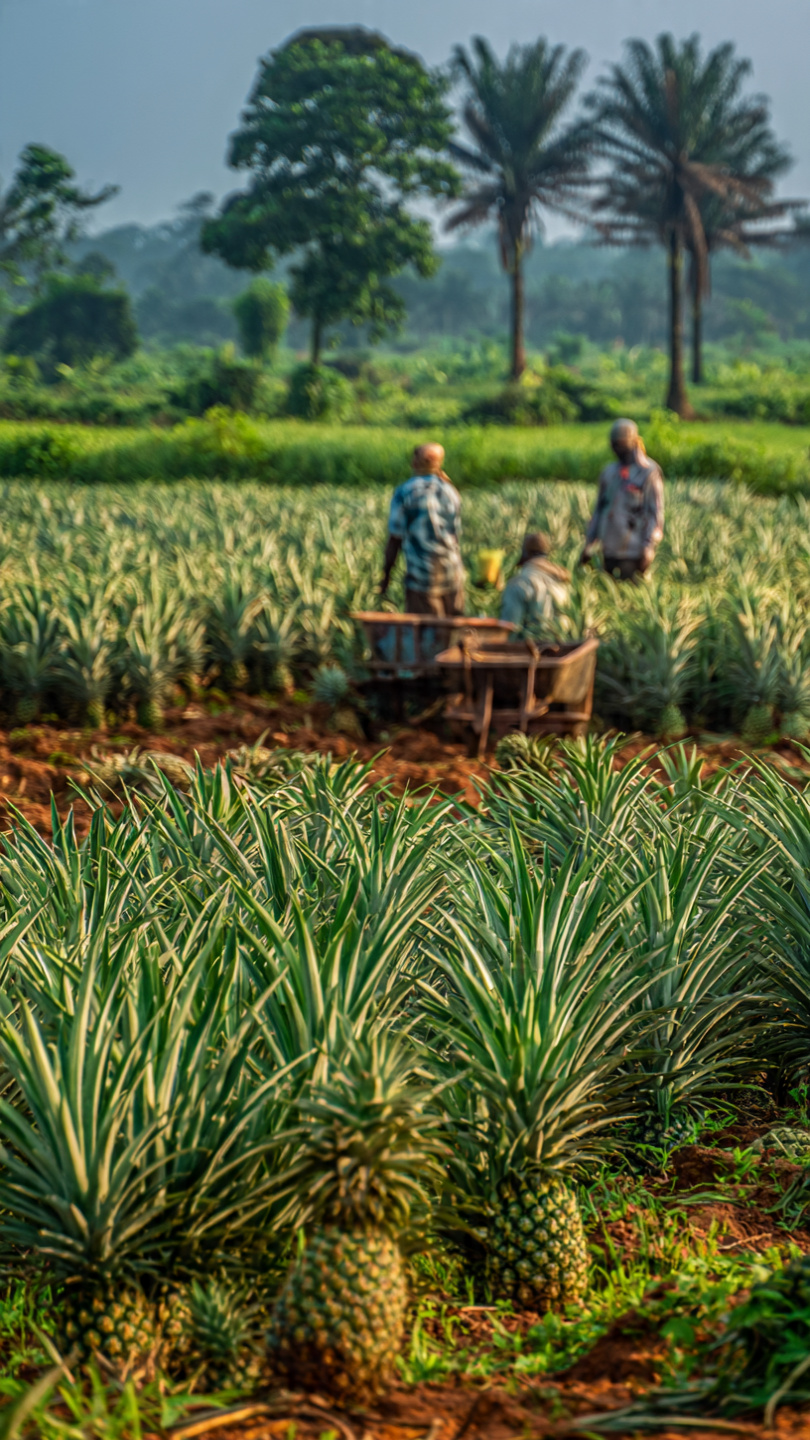
Pineapple (Ananas comosus (L.) Merr.) is one of the most economically important tropical fruits globally, valued for its sweet flavor, high vitamin C content, digestive enzymes (bromelain), and versatility for both fresh consumption and industrial processing. The global pineapple market has expanded substantially over the past three decades, driven by rising consumer demand for fresh and processed tropical fruits, growth in the fruit juice industry, and increased recognition of pineapple’s nutritional and health benefits (FAOSTAT, 2020). Major global producers include Costa Rica, the Philippines, Brazil, Thailand, Indonesia, and India, with Costa Rica dominating the export market for fresh pineapples. In Africa, Nigeria, Ghana, Kenya, and South Africa are significant producers, though most production is consumed domestically or regionally rather than exported to extra-continental markets (FAO, 2019). (FAOSTAT, 2020; FAO, 2019)
Nigeria possesses substantial potential for pineapple production due to its favorable tropical climate, abundant arable land, and growing domestic and regional demand for fresh pineapple and processed products (canned pineapple, pineapple juice, dried pineapple, pineapple jam, and pineapple-based beverages). Pineapple is cultivated in many states across Nigeria, with major producing areas including Edo, Oyo, Ogun, Osun, Kaduna, Benue, and Cross River States. Current estimates place Nigeria’s annual pineapple production at approximately 1.2-1.5 million metric tons, cultivated on an estimated 80,000-100,000 hectares, primarily by smallholder farmers (NBS, 2020). Despite this significant production volume, Nigeria has not realized its full potential as a pineapple exporter, facing challenges related to post-harvest losses (estimated at 30-40%), inconsistent fruit quality, high production costs, and limited processing capacity (Adebayo and Oladele, 2019). (NBS, 2020; Adebayo and Oladele, 2019)
Edo State, located in the rainforest belt of southern Nigeria, has emerged as one of the country’s leading pineapple-producing states, with pineapple cultivation concentrated in several Local Government Areas, including Esan West and Ovia South, which are the focus of this study. The state’s favorable agroecological conditions—high rainfall (1,500-2,500 mm annually), relatively fertile soils (tropical ferruginous and alluvial soils), and warm temperatures year-round (25-30°C)—provide an ideal environment for pineapple cultivation (Edo State Ministry of Agriculture, 2020). Pineapple is typically grown as a monocrop or intercropped with other crops (cassava, maize, vegetables) during the early stages of establishment. The crop is particularly attractive to farmers because it provides a relatively long harvest window (smooth cayenne varieties produce fruit over several months) and generates higher returns per hectare than many annual crops, despite requiring a longer growing cycle (12-24 months from planting to first harvest depending on planting material type) (Igbekele and Ogunbayo, 2018). (Edo State Ministry of Agriculture, 2020; Igbekele and Ogunbayo, 2018)
Esan West Local Government Area, with its headquarters in Irrua, is one of the major pineapple-producing LGAs in Edo State, located in the central part of the state within the rainforest zone. The LGA is characterized by rolling terrain, well-drained soils, and a dense network of rural roads that facilitate market access to urban centers including Benin City and beyond. Pineapple production in Esan West has expanded over the past two decades, driven by farmer adoption of improved varieties (particularly smooth cayenne and MD2), increased availability of planting materials (suckers and crowns), and growing market demand from fruit traders, juice processors, and fresh fruit exporters (Esan West LGA Agriculture Department, 2020). However, production is primarily smallholder-based, with most farmers cultivating 0.5-2.0 hectares of pineapple, using a mix of traditional and improved management practices. (Esan West LGA Agriculture Department, 2020)
Ovia South Local Government Area, located in the southern part of Edo State near the Benin River and bordering Delta State, is another important pineapple-producing area. The LGA benefits from extensive low-lying terrain, abundant rainfall, and proximity to Benin City (the state capital), which provides a ready market for fresh pineapple. Ovia South also has linkages to pineapple processing companies and fruit exporters operating in the region. Farmers in Ovia South typically cultivate pineapple on plots ranging from 0.5 to 3.0 hectares, using both the smooth cayenne variety (dominant for fresh consumption and processing) and, in some areas, the sugar loaf and queen varieties (preferred for fresh consumption due to their sweetness) (Ovia South LGA Agriculture Department, 2020). The LGA’s coastal location and transportation linkages to Delta and Rivers States provide additional market opportunities for pineapple farmers. (Ovia South LGA Agriculture Department, 2020)
Pineapple production involves a series of operations from land preparation to harvest and post-harvest handling, each with cost and revenue implications. The production cycle begins with land clearing and preparation (slashing, burning, ploughing, harrowing, and bed formation). Planting material preparation follows: suckers (shoots arising from the stem), slips (shoots arising from the fruit stalk), and crowns (the leafy top of the fruit) are collected, graded, sometimes treated with fungicides to prevent rot, and planted at recommended spacing (typically 30-60 cm between plants and 60-100 cm between rows, giving plant populations of 20,000-60,000 plants per hectare depending on variety and purpose). Weed management is critical, especially during the first 6-9 months before the crop canopy closes; most farmers use a combination of manual weeding and herbicides. Fertilizer application (primarily nitrogen and potassium, with phosphorus, magnesium, and micronutrients as needed) is typically split into 3-6 applications over the crop cycle. Pest management (primarily mealybugs, scale insects, and fruit borers) and disease management (heart rot, root rot, fruitlet core rot) are also important. Flower induction (forcing) using calcium carbide or other growth regulators is sometimes practiced to synchronize flowering and fruiting. Harvesting occurs 12-24 months after planting (depending on planting material type and growing conditions), with the main harvest period for smooth cayenne varieties typically lasting 3-6 months (Okwu and Agbo, 2019). (Okwu and Agbo, 2019)
The economic analysis of pineapple production examines the relationships between inputs (land, labor, planting materials, fertilizers, pesticides, herbicides, capital) and outputs (pineapple fruit yield, quality, revenue), with the goal of understanding profitability, efficiency, and the factors that influence economic performance. For smallholder pineapple farmers in Esan West and Ovia South, the economic viability of pineapple production depends on: fruit yield (typically 20-40 tons per hectare for good management, but can be as low as 10-15 tons per hectare under poor management); fruit quality (size, shape, color, sugar content, absence of defects), which affects price; input costs (planting materials, fertilizers, pesticides, herbicides, labor); the timing of harvest (prices may vary seasonally); post-harvest handling (sorting, grading, packing, transport); and the marketing channel selected (farm-gate sales to itinerant traders, sales at rural markets, direct supply to processors or exporters) (Oguntade and Adebayo, 2020). (Oguntade and Adebayo, 2020)
The profitability of pineapple production in Edo State varies considerably across farmers, locations, and seasons, influenced by a range of technical, economic, institutional, and environmental factors. At the technical level, adoption of recommended practices—including improved varieties (smooth cayenne, MD2), optimal plant density, appropriate fertilizer application (based on soil testing or recommended rates), effective weed and pest management, and proper harvesting and post-harvest handling—can significantly increase yields and improve fruit quality, thereby enhancing profitability. At the economic level, access to credit (to finance planting materials, fertilizers, and labor), input prices, output prices (which vary seasonally and by quality), and labor costs affect net returns. At the institutional level, extension services, farmer group membership, and market access influence productivity and profitability. At the environmental level, rainfall distribution, soil fertility, pest and disease pressure, and the risk of flooding in low-lying areas affect yield realizations (Oladapo and Ogunwale, 2019). (Oladapo and Ogunwale, 2019)
Pineapple is a long-cycle crop (12-24 months), which has distinctive implications for economic analysis compared to annual crops. First, the investment in land preparation, planting materials, fertilizers, and labor is made many months before revenue is received, creating cash flow challenges for smallholder farmers with limited savings. Access to credit or other forms of pre-harvest financing is therefore particularly important for pineapple production. Second, the long production cycle exposes the crop to multiple risks over an extended period—drought, flooding, pest outbreaks, disease epidemics, price volatility—that can affect the final economic outcome. Third, the opportunity cost of land (and capital) is tied up for a longer period, requiring that the returns per hectare per year (rather than per crop cycle) be evaluated. Fourth, the multi-year nature of pineapple production means that farmers’ discount rates (how they value present vs. future income) strongly affect investment decisions. These temporal dimensions have not been adequately addressed in most pineapple economic studies in Nigeria (Ike and Agwu, 2018). (Ike and Agwu, 2018)
The cost structure of pineapple production in Esan West and Ovia South typically includes both establishment costs (incurred in the first 12 months before first harvest) and recurrent costs (incurred during the production cycle). Establishment costs include: land clearing and preparation (hired labor or opportunity cost of family labor); planting material purchase or collection (suckers, slips, crowns); initial fertilizer application (usually at planting and early growth); and initial weed management (herbicides or manual weeding). Recurrent costs include: additional fertilizer applications (2-5 split applications); weed management (throughout the cycle); pest and disease management (as needed); flower induction (if practiced); and harvest and post-harvest handling labor. For many smallholder farmers, labor (especially for planting, weeding, fertilizer application, and harvest) represents the largest single cost item, followed by planting materials and fertilizers. For farmers using improved varieties (e.g., MD2), planting material costs may be substantially higher than for local varieties (Olayemi and Adebayo, 2018). (Olayemi and Adebayo, 2018)
The revenue side of pineapple production is determined by both yield (tons per hectare) and price (NGN per fruit or per kg). Pineapple yields in Esan West and Ovia South vary widely depending on variety, plant density, soil fertility, management quality, and harvest timing. Reported average yields range from 15-25 tons per hectare for farmers using local varieties and traditional practices, and 30-45 tons per hectare for farmers using improved varieties, optimal plant density, and good management (Edo State Ministry of Agriculture, 2020). Pineapple prices are highly variable: larger fruits command higher prices; fruits with good color, shape, and sugar content command premium prices; prices are typically higher in the off-season (when supply is lower) and lower during peak harvest periods. Fresh pineapple prices in major Nigerian markets range from NGN 200-500 per fruit for medium-sized fruit (1-2 kg) to NGN 500-1,000 per fruit for large, high-quality fruit. Processors and exporters pay based on weight (typically NGN 100-250 per kg, depending on quality and season) (NEPC, 2019). (Edo State Ministry of Agriculture, 2020; NEPC, 2019)
The marketing of fresh pineapple in Esan West and Ovia South involves multiple channels and actors, with significant implications for the prices farmers receive and thus the profitability of production. The simplest channel is sale to local itinerant traders (middlemen) who visit farms, purchase fruit at farm-gate prices, and transport to urban markets (Benin City, Lagos, Warri, Onitsha, etc.). Farmers may also sell at rural periodic markets (weekly markets) or at larger urban markets (if they have transport). Some farmers supply directly to pineapple processors (e.g., fruit juice companies) or to fresh fruit exporters (who require high-quality, uniform fruit meeting export standards). Cooperatives of pineapple farmers may aggregate fruit from multiple members to achieve economies of scale in transport and to improve bargaining power with buyers (Baba and Musa, 2019). Each channel has different price implications: farm-gate prices are typically lowest (reflecting the trader’s costs and profit margin); direct supply to processors or exporters may yield higher prices but requires meeting stricter quality standards, timely delivery, and sometimes contractual arrangements (Obi and Ezeh, 2020). (Baba and Musa, 2019; Obi and Ezeh, 2020)
Post-harvest losses are a significant economic issue for pineapple production in Nigeria, affecting profitability and constraining market development. Pineapple is a highly perishable fruit; under ambient tropical conditions (25-30°C), harvested fruit begin to deteriorate within 2-5 days, with weight loss, softening, browning, and microbial spoilage. In the absence of cold storage and refrigerated transport, farmers and traders must sell fruit quickly after harvest, often accepting lower prices to avoid complete loss. Estimates suggest that post-harvest losses for fresh pineapple in Nigeria range from 25-40% along the value chain, from farm to final consumer (Adebayo and Oladele, 2019). These losses represent foregone revenue for farmers and contribute to higher consumer prices. Reducing post-harvest losses through improved handling, packaging, shade structures, cool storage, processing, and market coordination could substantially improve producer profitability, but these interventions require investment that many smallholder farmers cannot afford. (Adebayo and Oladele, 2019)
The socio-economic characteristics of pineapple farmers in Esan West and Ovia South—including age, educational attainment, household size, farming experience, farm size, asset ownership, access to credit, and extension contact—systematically influence both the technical and economic performance of pineapple production. Younger farmers may be more willing to invest in improved varieties and practices but may have less capital and experience. More educated farmers may better understand market information, quality requirements, and the economics of input use. Larger farm sizes may allow economies of scale in input purchasing and marketing, but pineapple is often a high-value crop that can be profitable even on small areas. Access to credit enables purchase of planting materials, fertilizers, and hired labor at optimal times. Extension contact can improve knowledge of recommended practices, pest management, and post-harvest handling (Rogers, 2003; Feder and Umail, 2020). (Rogers, 2003; Feder and Umail, 2020)
The role of agricultural extension services in improving pineapple production economics is substantial but often underutilized in Edo State. Extension agents can provide information on: improved varieties suitable for different areas; optimal plant density and planting arrangements; fertilizer recommendations (rates, timing, application methods); pest and disease identification and management; flower induction (forcing) to synchronize harvest; harvesting and post-harvest handling (maturity indicators, harvesting techniques, grading, packing, transport); quality standards for different markets; and market price information. However, extension contact among pineapple farmers in Esan West and Ovia South is reported to be low, with estimates suggesting that less than 20% of pineapple farmers have had any contact with extension agents in the past year. Reasons include inadequate numbers of extension agents (low agent-to-farmer ratios), limited technical knowledge of extension agents specifically on pineapple (which is often treated as a minor or orchard crop), and limited transport and logistical support for extension operations (Edo State Ministry of Agriculture, 2020). (Edo State Ministry of Agriculture, 2020)
Access to credit is widely recognized as a critical enabling factor for pineapple production, given the long production cycle and significant upfront investment requirements. In Esan West and Ovia South, pineapple farmers face significant constraints in accessing formal credit from banks and microfinance institutions: collateral requirements (land titles, which many smallholders lack), high interest rates, complex application procedures, limited branch presence in rural areas, and lenders’ unfamiliarity with pineapple production economics (including the long production cycle and associated risks). Informal credit sources (moneylenders, input suppliers, cooperatives, family) are more accessible but may carry high interest rates or impose social obligations. Some farmers have accessed credit through pineapple cooperatives or through input credit arrangements with buying agents or processors (who provide planting materials and fertilizers in exchange for exclusive purchase of output), but these arrangements are not universally available and may involve unfavorable terms (Obi and Ezeh, 2020). (Obi and Ezeh, 2020)
Previous economic analyses of pineapple production in Nigeria have been conducted in several states, including Oyo (Oladapo and Ogunwale, 2019), Ogun (Oguntade and Adebayo, 2020), Kaduna (Igbekele and Ogunbayo, 2018), and Cross River (Okwu and Agbo, 2019). These studies have consistently reported that pineapple production is profitable (positive gross margins and net returns) under most conditions, with profitability varying with variety (improved varieties more profitable), plant density (higher densities generally increase yield but may reduce fruit size), fertilizer use (positive effect on yield and profitability), and market channel (direct marketing more profitable than farm-gate sales). However, these studies have also reported wide variation in profitability across farmers, with the least profitable quartile of farmers sometimes earning negative net returns (when family labor and imputed land costs are included). No previous economic analysis of pineapple production has been conducted specifically for Esan West and Ovia South LGAs in Edo State, despite the state’s importance as a pineapple-producing region. This gap is significant because Edo’s agroecological conditions (higher rainfall, lower temperatures than some other producing areas), farming systems, pest and disease profiles, market access (proximity to Benin City and other urban markets), and institutional environment differ from those in other pineapple-producing states (Ogunniyi and Olagunju, 2019). (Oladapo and Ogunwale, 2019; Oguntade and Adebayo, 2020; Igbekele and Ogunbayo, 2018; Okwu and Agbo, 2019; Ogunniyi and Olagunju, 2019)
In summary, pineapple production among smallholder farmers in Esan West and Ovia South Local Government Areas of Edo State represents an economically significant agricultural enterprise with substantial potential for income generation and rural poverty reduction. The favorable agroecological conditions of the area, proximity to urban markets (especially Benin City), and growing demand for fresh pineapple and processed products create opportunities for farmers. However, the economic performance of pineapple production—profitability, efficiency, and the factors that influence economic outcomes—has not been systematically analyzed for these LGAs. Previous studies from other states suggest that pineapple is generally profitable but that there is substantial room for improvement through adoption of improved varieties, better agronomic practices, reduced post-harvest losses, and enhanced market access. This study therefore seeks to fill this knowledge gap by conducting a comprehensive economic analysis of pineapple production in Esan West and Ovia South LGAs of Edo State, generating evidence to inform productivity-enhancing interventions, market development, and agricultural policy (Igbekele and Ogunbayo, 2021; Okwu and Agbo, 2021). (Igbekele and Ogunbayo, 2021; Okwu and Agbo, 2021)
1.2 Statement of the Problems
Despite the increasing importance of pineapple as a cash crop in Esan West and Ovia South Local Government Areas of Edo State—with production expanding annually in response to attractive market prices and the crop’s suitability to local conditions—the economic performance of pineapple production among smallholder farmers has not been systematically documented or analyzed. Policymakers, extension managers, development partners, and farmers themselves lack reliable empirical evidence on: the profitability of pineapple production (gross margin and net return per hectare); the efficiency with which farmers convert inputs into outputs; the factors that distinguish more profitable and efficient farmers from less profitable ones; and the constraints that limit economic performance. This knowledge gap hinders evidence-based policy formulation, program design, and farmer decision-making.
Preliminary evidence and anecdotal reports suggest that pineapple production in Esan West and Ovia South is characterized by substantial variation in profitability across farmers, fields, and seasons. Some farmers reportedly achieve high net returns (NGN 500,000-1,500,000 per hectare) from pineapple, while others barely break even or incur losses (when family labor and land costs are valued). This variation suggests that many farmers are not achieving the economic potential of pineapple production, and that interventions to improve productivity, reduce costs, enhance post-harvest handling, or improve market access could substantially improve farmer welfare. However, without systematic economic analysis, the magnitude of the profitability gap (actual vs. potential profitability) cannot be quantified, and the specific factors responsible for low profitability cannot be identified.
A first specific problem is the absence of baseline economic data on pineapple production in Esan West and Ovia South LGAs, including basic parameters such as average yield, average production cost per hectare, average revenue per hectare, and average net return per hectare. While state-level aggregate data exist for area cultivated and total production, these data do not provide the farm-level economic parameters needed for profitability assessment. Furthermore, aggregate data mask variation across different production zones, different types of farmers (e.g., those using improved vs. local varieties, those with vs. without extension contact), and different seasons (e.g., main harvest vs. off-season). Without farm-level economic data, it is impossible to assess whether pineapple production is, on average, economically viable, or to identify segments of the farming population for whom pineapple is not profitable.
A second problem concerns the lack of knowledge regarding the cost structure of pineapple production in the study areas. Which cost components dominate: labor (and within labor, which operations: land preparation, planting, weeding, fertilizer application, harvesting, post-harvest handling?), planting materials, fertilizers, or pest management inputs? Do costs vary systematically by farm size, variety choice, planting material source (suckers vs. crowns vs. tissue culture plantlets), or location? Understanding the cost structure is essential for identifying potential cost-saving interventions (e.g., mechanization for land preparation, improved weed management, group purchasing of inputs) and for assessing the impact of price changes (e.g., if fertilizer prices increase, which farmers are most affected?). Current evidence does not permit such analysis for pineapple farmers in Esan West and Ovia South.
A third problem concerns the relationship between the adoption of improved pineapple technologies (improved varieties, optimal plant density, fertilizer recommendations, pest management practices, flower induction, post-harvest handling) and economic performance. While improved technologies have been promoted by research and extension—including the smooth cayenne and MD2 varieties, recommended spacing and plant density, fertilizer rates, and management practices—the actual economic returns to adopting these technologies under Esan West and Ovia South farm conditions have not been estimated. Do adopters of improved varieties achieve significantly higher net returns than non-adopters, after controlling for other factors? Do the benefits of adoption justify the additional costs of improved planting materials and fertilizers? Without such evidence, promotion of improved technologies rests on technical performance assumptions rather than demonstrated economic returns.
A fourth problem concerns the technical efficiency of pineapple production—the ability of farmers to produce maximum output from given inputs. Inefficiency (producing less than the technically feasible maximum) can arise from poor management, untimely operations (delayed weeding, late fertilizer application), inadequate knowledge of pest management, improper harvesting techniques, or other factors. Inefficient farmers could increase output without increasing inputs simply by improving their practices. The extent of technical efficiency among pineapple farmers in Esan West and Ovia South—the average efficiency score, the range of efficiency scores, and the proportion of farmers operating far below the production frontier—has not been estimated. Furthermore, the factors associated with higher efficiency (e.g., education, extension contact, group membership, experience) have not been identified.
A fifth problem concerns the allocative and economic efficiency of pineapple production. Even if farmers are technically efficient (producing maximum output from given inputs), they may be allocatively inefficient if they use inputs in proportions that are not optimal given input and output prices. For example, a farmer may use too much labor relative to fertilizer, or vice versa, resulting in unnecessarily high costs for a given output level. Economic efficiency (technical efficiency times allocative efficiency) measures overall performance in maximizing profit. The allocative and economic efficiency of pineapple farmers in the study areas has not been estimated, nor have the factors associated with higher efficiency been identified.
A sixth problem concerns the relationship between plant density and economic performance. Pineapple is often planted at densities ranging from 20,000 to 60,000 plants per hectare, depending on variety, soil fertility, and intended market (smaller fruits for processing vs. larger fruits for fresh market). Higher densities increase yield per hectare but may reduce average fruit size (which affects price per fruit) and increase input costs (more planting materials, more fertilizer, more labor). The optimal density from an economic perspective (maximizing profit, not yield) is not known for Esan West and Ovia South conditions, and it is unknown whether farmers are planting at densities that are too low (foregoing yield) or too high (reducing fruit size and increasing costs unnecessarily).
A seventh problem concerns the post-harvest handling and marketing of pineapple and its effect on profitability. Pineapple is highly perishable, and losses between harvest and sale (due to poor handling, delayed transport, inadequate storage) can be substantial, directly reducing revenue and profitability. Farmers who harvest properly (correct maturity stage, careful handling), grade and sort fruit (separating by size and quality), pack fruit appropriately (using crates or baskets that reduce bruising), and transport to market quickly are likely to achieve higher prices and lower losses. The extent of post-harvest losses among pineapple farmers in the study areas, the practices that reduce losses, and the profitability implications of improved post-harvest handling have not been quantified.
An eighth problem concerns the measurement and treatment of family labor and land costs in economic analysis. Pineapple production is labor-intensive, particularly for weeding, fertilizer application, and harvest, and most of this labor is provided by family members (household heads, spouses, children). The standard approach in profitability analysis is to either: (a) exclude family labor from costs (calculating “gross margin”), which yields an estimate of returns to family labor; or (b) value family labor at a shadow wage or market wage rate (calculating “net return”), which yields an estimate of economic profit. Both approaches are informative but answer different questions. Neither approach has been systematically applied to pineapple production in Esan West and Ovia South, so there is no evidence on: the returns to family labor in pineapple (how much value is generated per day of family labor); whether returns to family labor exceed off-farm wage rates (indicating whether pineapple is a competitive use of family labor); or the distribution of these returns across different types of households.
A ninth problem concerns the gender dimensions of pineapple production economics. In Edo State, both men and women participate in pineapple production, but their roles differ: men typically prepare land, make major decisions about input purchases, and handle sales to traders; women often participate in planting, weeding, fertilizer application, and some harvesting and post-harvest activities. The profitability of pineapple production may differ systematically between male-managed and female-managed plots, or between male-headed and female-headed households, due to differences in access to inputs, labor, credit, extension, and markets. Furthermore, the intra-household distribution of pineapple income (who controls revenue from sales) has implications for household welfare and women’s economic empowerment. These gender dimensions have not been examined in the Esan West and Ovia South pineapple context.
A tenth problem concerns the constraints that limit pineapple profitability, and the strategies that farmers employ to overcome them. Farmers may face multiple constraints: lack of access to improved planting materials (suckers, crowns) of improved varieties; inability to afford fertilizers (particularly at establishment and early growth); labor shortages at critical times (especially weeding and harvest); limited knowledge of pest and disease management (e.g., mealybug wilt, heart rot); high post-harvest losses due to poor handling and lack of storage; poor market access (distance, transport costs, information); lack of credit for pre-harvest financing; and climate risks (drought, flooding, extreme temperatures). The relative importance of these constraints for different farmer groups has not been quantified for the study areas. Furthermore, the coping strategies farmers employ—e.g., using poor-quality planting materials, reducing fertilizer rates, selling at farm gate despite low prices, harvesting sub-optimally—may have consequences for profitability that are not well understood.
An eleventh problem concerns the risk and uncertainty facing pineapple producers and their effects on economic decisions. Pineapple prices are volatile, influenced by seasonal supply patterns, competition from other producing areas, and consumer demand. Yields are variable, affected by rainfall distribution, pest and disease outbreaks, and the risk of flooding (particularly in low-lying areas of Ovia South). The long production cycle (12-24 months) means that farmers commit to production decisions long before harvest and price outcomes are known. Risk-averse farmers may make decisions (e.g., planting lower densities, using less fertilizer, avoiding improved varieties) that reduce expected profitability but also reduce downside risk. The risk environment for pineapple in Esan West and Ovia South—the magnitude of price and yield variability, the correlation between the two, and the extent of risk that is insurable or diversifiable—has not been characterized. Consequently, the extent to which observed suboptimal economic performance reflects rational risk management rather than inefficiency cannot be determined.
A twelfth problem concerns the comparability of economic performance between Esan West and Ovia South LGAs, and across different producing areas within each LGA. The two LGAs differ in agroecological conditions: Esan West has more rolling terrain and potentially better-drained soils; Ovia South has more low-lying areas with higher flood risk but also proximity to the coast and potential access to delta markets. Market access also differs: both LGAs have access to Benin City, but Ovia South’s proximity to the Benin River may provide additional marketing opportunities (though this is not well-developed). Extension coverage and cooperative presence may also differ. It is plausible that profitability and efficiency differ systematically between the LGAs and across different wards, with implications for targeting of interventions and for understanding the external validity of findings. No comparative analysis of pineapple production economics across these two LGAs has been conducted.
In summary, the economic analysis of pineapple production among smallholder farmers in Esan West and Ovia South Local Government Areas of Edo State is characterized by a substantial knowledge gap. Despite the crop’s growing importance and the favorable conditions for its production in these LGAs, there are no systematic empirical estimates of: profitability (costs, returns, net margins) at the farm level; technical, allocative, or economic efficiency; the factors that influence profitability and efficiency; the effects of improved technology adoption on economic outcomes; the role of post-harvest handling and marketing channels; the gender dimensions of production economics; the constraints that limit economic performance; or the risk environment. This study therefore seeks to fill these gaps by conducting a comprehensive economic analysis of pineapple production in Esan West and Ovia South LGAs of Edo State, generating evidence to inform productivity-enhancing interventions, market development, and agricultural policy.
1.3 Aim of the Study
The aim of this study is to conduct an economic analysis of pineapple production among smallholder farmers in Esan West and Ovia South Local Government Areas of Edo State, Nigeria.
1.4 Objectives of the Study
The specific objectives of this study are to:
- Describe the socio-economic characteristics of pineapple farmers in Esan West and Ovia South LGAs and identify the production practices (varieties, planting material sources, plant density, fertilizer use, pest management, harvesting, post-harvest handling) employed.
- Estimate the cost and return structure of pineapple production (establishment costs, recurrent costs, revenue, gross margin, net return per hectare and per farm) and analyze the profitability of pineapple production.
- Estimate the technical efficiency of pineapple production using stochastic frontier analysis and identify the factors (farmer characteristics, institutional factors, technology adoption, location) associated with differences in efficiency.
- Analyze the factors influencing profitability of pineapple production (including input use levels, output prices, input prices, farm size, variety choice, and marketing channel) using multiple regression analysis.
- Examine the constraints limiting pineapple production profitability (including planting material access, fertilizer affordability, labor availability, pest/disease pressure, post-harvest losses, market access, and credit constraints) and develop recommendations for policy, extension, and intervention programs.
1.5 Research Questions
This study seeks to answer the following research questions:
- What are the socio-economic characteristics of pineapple farmers in Esan West and Ovia South LGAs of Edo State, and what production practices do they employ?
- What is the cost structure, revenue structure, and net profitability (gross margin and net return per hectare) of pineapple production in the study areas?
- What is the level of technical efficiency among pineapple farmers in the study areas, and what factors are associated with higher or lower efficiency?
- What factors (input levels, prices, farm characteristics, farmer characteristics, institutional factors) significantly influence the profitability of pineapple production?
- What are the major constraints limiting the profitability of pineapple production in the study areas, and what strategies can be employed to enhance economic performance?
1.6 Research Hypotheses
Hypothesis One
- Null Hypothesis (H₀₁): Pineapple production among smallholder farmers in Esan West and Ovia South LGAs is not profitable (net return per hectare is not significantly greater than zero).
- Alternative Hypothesis (H₁₁): Pineapple production among smallholder farmers in Esan West and Ovia South LGAs is profitable (net return per hectare is significantly greater than zero).
Hypothesis Two
- Null Hypothesis (H₀₂): There is no significant difference in net return per hectare of pineapple production between farmers using improved varieties (e.g., smooth cayenne, MD2) and farmers using local varieties.
- Alternative Hypothesis (H₁₂): Farmers using improved varieties achieve significantly higher net return per hectare of pineapple production than farmers using local varieties in the study areas.
Hypothesis Three
- Null Hypothesis (H₀₃): There is no significant relationship between plant density (number of plants per hectare) and net return per hectare of pineapple production (no optimal density effect).
- Alternative Hypothesis (H₁₃): There is a significant quadratic (inverse-U) relationship between plant density and net return per hectare, indicating an economically optimal plant density range.
Hypothesis Four
- Null Hypothesis (H₀₄): There is no significant relationship between access to agricultural extension services and the technical efficiency of pineapple production in the study areas.
- Alternative Hypothesis (H₁₄): There is a significant positive relationship between access to agricultural extension services and the technical efficiency of pineapple production in the study areas.
Hypothesis Five
- Null Hypothesis (H₀₅): There is no significant difference in net return per hectare of pineapple production between farmers who sell directly to processors/exporters or through cooperatives and farmers who sell to itinerant traders at farm-gate.
- Alternative Hypothesis (H₁₅): Farmers who sell directly to processors/exporters or through cooperatives achieve significantly higher net return per hectare of pineapple production than farmers who sell to itinerant traders at farm-gate.
1.7 Significance of the Study
This study is significant for multiple stakeholders and purposes. First, for smallholder pineapple farmers in Esan West and Ovia South LGAs, the findings will provide benchmark economic data on profitability and efficiency, enabling them to assess their own performance, identify areas for improvement, and make more informed production and marketing decisions. Second, for the Edo State Ministry of Agriculture and the Edo State Agricultural Development Programme (EDOADP), the study will provide evidence to guide extension programming (training content, target audiences, delivery methods), input subsidy targeting, and market development interventions for the pineapple subsector. Third, for policymakers at state and federal levels, the study will inform decisions about allocating resources to pineapple research, extension, and market infrastructure; about prioritizing pineapple relative to other crops in agricultural development strategies; and about designing credit and input supply programs suitable for long-cycle crops. Fourth, for research institutions (e.g., National Horticultural Research Institute – NIHORT), the study will provide feedback on the economic performance of improved varieties and management practices under real farm conditions in the study areas, guiding future research and technology development priorities. Fifth, for development partners and NGOs working in agricultural value chain development in Edo State (e.g., IFAD, World Bank, FAO, FADAMA), the findings will guide intervention design and resource allocation for pineapple value chain programs. Sixth, for pineapple processors, fresh fruit exporters, and buying agents operating in the region, the study will provide information on production costs, yield determinants, quality constraints, and supply patterns, informing pricing and procurement strategies. Seventh, for financial institutions and microfinance programs, the study will provide data on the profitability of pineapple production, the capital requirements, and the risk profile of pineapple lending, supporting credit underwriting decisions and product design for agricultural lending. Eighth, for the academic community, the study will contribute to the literature on horticultural crop production economics in Nigeria, specifically for pineapple—an under-researched but economically important fruit crop. Finally, by generating evidence that can enhance pineapple profitability and efficiency, the study will contribute indirectly to increasing farm household incomes, reducing rural poverty, diversifying agricultural production, reducing post-harvest losses, and generating employment along the pineapple value chain.
1.8 Scope of the Study
The geographical scope of this study is limited to Esan West and Ovia South Local Government Areas of Edo State, Nigeria. Esan West LGA is located in the central part of Edo State, with its headquarters in Irrua. Ovia South LGA is located in the southern part of Edo State, with its headquarters in Iguobazuwa. These LGAs were selected purposively based on their significance in pineapple production within Edo State, their representativeness of different production environments (Esan West: interior, rolling terrain; Ovia South: low-lying, coastal influence), and their accessibility for research purposes. The study will focus on rural wards within each LGA where pineapple production is a significant livelihood activity. The thematic scope focuses specifically on the economic analysis of pineapple production, including: cost of production (establishment costs and recurrent costs); revenue and profitability (gross margin, net return per hectare, net return per farm); technical efficiency (using stochastic frontier analysis); factors influencing profitability (using multiple regression analysis); production constraints; and marketing channel analysis. The study examines pineapple grown for fresh fruit production (not for planting material production) and includes both smooth cayenne and other varieties grown in the study areas. The study does not extend to pineapple processing (canning, juicing, drying) beyond farm-level post-harvest handling, nor does it extend to marketing beyond the farm-gate and local market levels (i.e., wholesaling, retailing, export logistics are not examined). The respondent scope includes smallholder pineapple farmers (cultivating ≤5 hectares of pineapple, though most will be 0.5-2.0 hectares) in the selected LGAs. Key informants (extension agents, pineapple traders/buyers, cooperative leaders, EDOADP officials) are also included for qualitative data collection. The temporal scope covers the period 2019-2025, with primary data collected between 2024 and 2025, focusing on the most recent completed pineapple production cycle (typically 18-24 months from planting to final harvest).
1.9 Limitation of the Study
Several limitations inherent in this study should be acknowledged transparently. First, the study relies primarily on cross-sectional survey data collected from a single production cycle, which captures economic performance for one cycle but may not be representative of typical performance if that cycle was atypical (e.g., unusually good or bad rainfall, abnormal pest or disease pressure, unusual price movements). Second, the study focuses on two LGAs within Edo State, so findings may not be generalizable to other pineapple-producing LGAs in Edo State (e.g., Ovia North-East, Igueben, Uhunmwonde) or to pineapple farmers in other states with different agroecological conditions. Third, the study’s reliance on farmer recall for data on input use, output, costs, and prices over a 12-24 month production cycle is subject to substantial recall bias and measurement error; where possible, the study will employ multiple recall aids (e.g., seasonal calendars, key event anchors) and cross-check responses, but direct measurement (e.g., recording input use contemporaneously) is logistically infeasible. Fourth, social desirability bias may affect responses about input use (overstating use of improved practices) and profitability (overstating income). Fifth, the study values family labor at market wage rates for calculating net returns, but market wage rates may not accurately reflect the opportunity cost of family labor (especially if off-farm employment is limited or if labor markets are thin). Sixth, the study does not include a longitudinal component, so it cannot assess inter-cycle variability in profitability or the sustainability of pineapple production over multiple cycles (pineapple is typically grown for 2-4 cycles before replanting). Seventh, the stochastic frontier analysis used to estimate technical efficiency assumes a particular functional form (e.g., Cobb-Douglas or Translog) and distributional assumptions for the inefficiency term; results may be sensitive to these assumptions. Eighth, the study does not include soil sampling, so soil fertility variation (which affects yield and thus profitability) is captured only through farmer reports and location dummy variables. Ninth, the sample size, while statistically adequate for planned analyses, may limit the ability to detect small effects or to conduct highly disaggregated subgroup analyses (e.g., separate analysis for each LGA with small cell sizes). Tenth, the study does not include a detailed measurement of post-harvest losses (at harvest, during handling, during transport, at market), which would require observation and measurement at multiple points along the value chain beyond the scope of a farm-level survey. Eleventh, the study focuses on pineapple production (farm-level economics) and does not include a full value chain analysis examining processing, wholesaling, or retailing margins. Twelfth, security conditions in some parts of Edo State (occasional communal conflicts, farmer-herder tensions, highway banditry) may affect data collection access and respondent willingness to participate. Despite these limitations, the study will employ rigorous sampling methods (stratified random sampling to ensure representation of different farmer types and locations), validated survey instruments (piloted and refined), appropriate analytical techniques (including diagnostic tests for functional form assumptions in stochastic frontier analysis, sensitivity analyses, and robustness checks), and transparent reporting to maximize the credibility and utility of its findings for policy and practice.
1.10 Definition of Terms
Pineapple (Ananas comosus): A tropical fruit crop of the family Bromeliaceae, cultivated for its sweet, juicy, aggregate fruit. Pineapple is a perennial crop typically grown in cycles of 2-4 harvests (ratoon cycles) before replanting, with the first harvest occurring 12-24 months after planting depending on planting material type and growing conditions.
Economic Analysis: The systematic examination of the relationships between inputs (land, labor, planting materials, fertilizers, pesticides, herbicides, capital) and outputs (pineapple fruit yield, quality, revenue) to assess profitability, efficiency, and the factors that influence economic performance. In this study, economic analysis includes cost-benefit analysis, production function estimation, and efficiency measurement (technical, allocative, and economic efficiency).
Profitability: The excess of revenue over costs in pineapple production. This study measures profitability through two metrics: (a) gross margin (revenue minus variable costs, where family labor is excluded from costs), which represents the return to fixed factors (land, family labor, management, and capital invested); and (b) net return (revenue minus total costs including valued family labor and allocated fixed costs), which represents economic profit.
Cost of Production: The total expenditure (cash and imputed) incurred in pineapple production over the production cycle (typically 12-24 months from planting to first harvest). Costs include: establishment costs (land clearing and preparation, planting material purchase, initial fertilizer and pest management); recurrent costs (subsequent fertilizer applications, weed management, pest and disease management, flower induction if practiced, harvest and post-harvest handling labor); and fixed costs (depreciation of tools and equipment, land rental payments or imputed land cost, imputed family labor valued at market wage rate).