
🔤 Total Characters in Document: 110,505
📄 Estimated Document Pages: 55
⏱️ Reading Time: 2 Hours 16 Mins
DESIGN AND TESTING OF A SMALL-SCALE UPDRAFT GASIFIER FOR GASIFICATION OF EASTERN REDCEDAR
Abstract
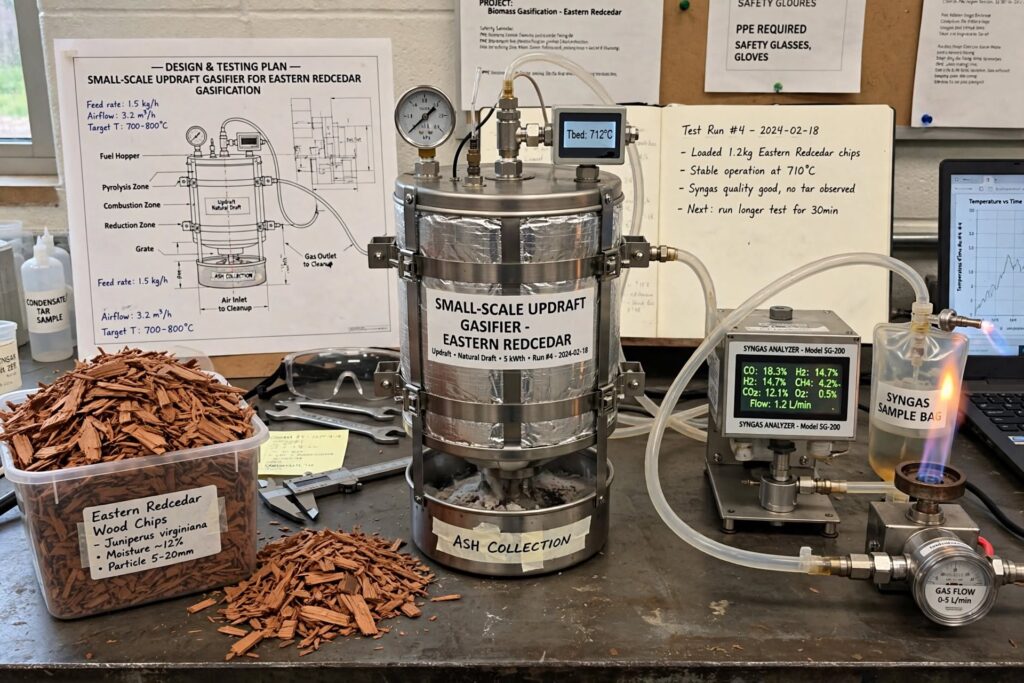
This study focused on the design, construction, and testing of a small-scale updraft gasifier for the gasification of Eastern Redcedar (Juniperus virginiana) biomass. The specific objectives were to design the components of the gasifier based on thermochemical principles; construct the gasifier using locally available materials; evaluate the performance of the gasifier using Eastern Redcedar wood chips as feedstock; characterize the producer gas produced; determine the optimal operating parameters (airflow rate, feedstock moisture content); and assess the potential applications of the producer gas. The design calculations were based on principles of mass and energy balance. The constructed gasifier consisted of a reaction chamber, an air inlet system, a grate, a gas outlet, and a cleaning system (cyclone and filter). Performance tests were conducted by varying the airflow rate and the moisture content of the feedstock. Data were collected on gas composition (CO, H2, CH4, CO2), gas production rate, gas heating value, and tar content. The data were analyzed using descriptive statistics and comparative analysis. The findings revealed that the gasifier successfully converted Eastern Redcedar chips into a combustible producer gas. The optimal performance was achieved at an intermediate airflow rate, producing a gas with a heating value of approximately 4.5 MJ/Nm³. The gas composition consisted mainly of CO, H2, and CH4, with some CO2 and N2. The study concluded that a small-scale updraft gasifier is a viable technology for converting Eastern Redcedar, an invasive species in many areas, into a useful energy source. It was recommended that the producer gas be used for thermal applications like cooking and heating, and that further research be conducted to reduce tar content in the gas.
Chapter One – Introduction
1.1 Background of the Study
The global demand for energy is continuously rising, driven by population growth and economicdevelopment. This demand is currently met largely by fossil fuels, which are finite and contributesignificantly to greenhouse gas emissions and climate change. The urgent need to transition to a more sustainable energy system has led to a growing interest in renewable energy sources, including solar, wind, hydro, and biomass. Biomass, in particular, offers a unique advantage as it is a versatile resource that can be used for heat, power, and transportation fuels. (International Energy Agency [IEA], 2021).
Biomass refers to organic matter derived from plants and animals. It is a renewable source of energy because the carbon released during its combustion was recently absorbed from the atmosphere during plant growth. The conversion of biomass into useful energy can be achieved through various thermochemical processes, including combustion, pyrolysis, and gasification. Gasification is a particularly promising technology because it converts solid biomass into a combustible gas (producer gas), which is more versatile and efficient to use than the original solid fuel. (Basu, 2018).
Gasification is a thermochemical process that converts carbonaceous materials (like biomass) into a combustible gas mixture at high temperatures (typically 700-1000°C) in the presence of a limited amount of an oxidizing agent (air, oxygen, or steam). The resulting gas, known as producer gas, is primarily composed of carbon monoxide (CO), hydrogen (H2), methane (CH4), carbon dioxide (CO2), and nitrogen (N2, if air is used). Producer gas can be used for a variety of applications, including cooking, heating, and generating electricity in internal combustion engines or gas turbines. (Basu, 2018).
Gasifiers are classified into different types based on the direction of airflow relative to the fuel flow. The main types are updraft (counter-current), downdraft (co-current), and crossdraft. In an updraft gasifier, air is introduced at the bottom, and the producer gas exits at the top. The fuel is fed from the top and moves downwards. This design is known for its high thermal efficiency and its ability to handle fuels with high moisture content, but it typically produces gas with a high tar content. (Reed and Das, 2018).
Eastern Redcedar (Juniperus virginiana) is a coniferous tree native to North America. However, it is considered an invasive species in many parts of the Great Plains of the United States. Its encroachment into grasslands and pastures has negative ecological and economic impacts, reducing forage for livestock and altering wildlife habitats. The need to control its spread has led to significant efforts to remove the trees. The resulting biomass, however, is often considered a waste product with little economic value. Finding a beneficial use for this abundant biomass is a key challenge. (Smith and Johnson, 2019).
The utilization of Eastern Redcedar as a feedstock for gasification offers a potential solution to two problems simultaneously: the need for a renewable energy source and the need to manage an invasive species. The wood of Eastern Redcedar has a moderate energy content and can be chipped or shredded for use in a gasifier. Converting this “waste” biomass into a useful energy product would create a value chain that incentivizes the removal of the invasive trees. This is a win-win scenario for both the environment and the economy. (Smith and Johnson, 2019).
The design of a gasifier requires a careful consideration of the principles of thermochemistry and fluid dynamics. Key design parameters include the size of the reaction chamber, the type and distribution of the air inlet, the design of the grate, and the method for cleaning the gas. The design must ensure that the fuel is properly heated, that the gasification reactions occur efficiently, and that the resulting gas is of acceptable quality for its intended use. The choice of materials for construction is also critical, particularly for the high-temperature zones. (Reed and Das, 2018).
The performance of a gasifier is evaluated using several key indicators. These include the composition of the producer gas, the gas production rate (volume of gas produced per unit mass of fuel), the heating value of the gas (the amount of energy contained in a unit volume of gas), the cold gas efficiency (the ratio of energy in the gas to energy in the fuel), and the tar content. Tar is a complex mixture of heavy hydrocarbons that condenses as a sticky, viscous liquid; it is a major problem for gasifier applications as it can clog engines and other equipment. (Basu, 2018).
The optimization of gasifier performance involves finding the correct balance between various parameters. The airflow rate (or equivalence ratio) is a critical factor; too little air leads to incomplete gasification, while too much air leads to combustion and a gas with low heating value. The moisture content of the feedstock is also important; high moisture reduces the temperature in the reactor and lowers the quality of the gas. The type of fuel and its particle size also have a significant influence. (Reed and Das, 2018).
The use of locally available materials and local fabrication skills is a key principle of appropriate technology. The construction of a small-scale gasifier using materials like steel drums, pipes, and sheet metal makes the technology accessible and affordable in developing countries and rural areas. This approach reduces the cost, promotes local ownership, and enables the technology to be replicated easily. The design and construction of such a gasifier is a major focus of this study. (Srivastava, Goering, and Rohrbach, 2019).
This study is therefore designed to design, construct, and test a small-scale updraft gasifier for the gasification of Eastern Redcedar. The study will investigate the optimal operating conditions, characterize the producer gas, and assess the potential applications. This will provide valuable evidence for promoting the utilization of this invasive species as a renewable energy resource. (Emmanuel and Okafor, 2022).
The findings of this study are expected to be of significant value to a wide range of stakeholders. For landowners and communities dealing with the Eastern Redcedar problem, the study will provide a potential pathway for turning a liability into an asset. For researchers, the study will contribute to the literature on biomass gasification. For entrepreneurs, the study will provide a technical foundation for developing small-scale energy businesses. Ultimately, the study aims to contribute to the development of sustainable and decentralized energy systems. (World Bank, 2022).
1.2 Statement of the Problem
The encroachment of Eastern Redcedar on grasslands and rangelands presents a significant ecological and economic problem, leading to reduced biodiversity and loss of productive land. The core problem is that the large amount of biomass generated from the removal of this invasive species is largely treated as a waste product with little or no economic value. This lack of a viable end-use for the harvested trees undermines the economic incentives for effectivemanagement and control. Finding a profitable and sustainable utilization pathway for this biomass is essential. (Smith and Johnson, 2019).
A fundamental problem is the lack of affordable and appropriate conversion technologies that can process Eastern Redcedar at the small scale. While large-scale power plants can utilize woody biomass, they are not suitable for the dispersed nature of the Eastern Redcedar resource, which is spread across vast areas. The problem is that the high cost of transporting bulky biomass to centralized facilities often makes it uneconomical. A small-scale, decentralized conversion technology, like a gasifier, is needed to process the biomass locally. (Basu, 2018).
The problem of the high tar content typically associated with updraft gasifiers is a major technical challenge. Tar is a sticky, viscous substance that condenses as the producer gas cools. The problem is that tar can clog pipes, filters, and especially the internal components of engines if the gas is used for power generation. The management and removal of tar are critical for the successful application of updraft gasification technology. The design of an effective and simple tar removal system is a key challenge. (Reed and Das, 2018).
There is a significant problem with the lack of empirical performance data for the gasification of Eastern Redcedar specifically. While gasification of other woody biomass has been widely studied, the specific properties of Eastern Redcedar—such as its density, resin content, and ash composition—may affect gasifier performance in unique ways. The problem is that this lack of specific data makes it difficult to design and optimize a gasifier for this particular feedstock. The need for dedicated experimentation is therefore essential. (Smith and Johnson, 2019).
The issue of feedstock preparation is a practical challenge. The gasification process requires the feedstock to be in a suitable form, typically as chips or pellets of a certain size and moisture content. The problem is that the preparation of Eastern Redcedar into a suitable feedstock requires equipment like chippers and dryers, which add to the cost and complexity of the process. The development of an efficient and cost-effective feedstock preparation method is an important consideration. (Basu, 2018).
The problem of the variability of the feedstock’s moisture content is a key operational issue. Freshly harvested Eastern Redcedar has a high moisture content, which is detrimental to the gasification process. The problem is that high moisture content reduces the temperature in the gasifier, leading to incomplete reactions and a lower-quality gas. The need to dry the feedstock to an acceptable moisture level is therefore essential, and this drying process consumes energy. The trade-off between drying energy and gas quality must be managed. (Reed and Das, 2018).
There is a significant problem with the lack of a simple, robust, and easy-to-operate gasifier design that is suitable for use in remote or rural settings. Many existing gasifier designs are complex and require skilled operators. The problem is that this complexity is a barrier to adoption, particularly in developing countries or rural areas where technical expertise is limited. The need for a “low-tech” but effective design is paramount. This study aims to address this by focusing on a simple, robust design made from locally available materials. (Srivastava et al., 2019).
The problem of the disposal of the by-products of gasification, particularly the ash and the leftover char, is an environmental consideration. While the ash can sometimes be used as a soil amendment, its properties depend on the feedstock and the gasification conditions. The problem is that the improper disposal of these by-products can create a new environmental problem. The characterization and potential utilization of the by-products are therefore important aspects of a complete assessment. (Basu, 2018).
The issue of the economic viability of a small-scale gasification system is critical for its adoption. The capital cost of the gasifier, the operating costs (labor, feedstock preparation), and the value of the products (gas for heat or power) must all be considered. The problem is that if the system is not economically competitive with existing alternatives (like propane or grid electricity), it is unlikely to be adopted. A thorough economic analysis is essential to demonstrate the value proposition. (Heady and Dillon, 2018).
The problem of the lack of awareness and technical capacity regarding gasification technology is a barrier. Many potential users, such as farmers and small businesses, may not be aware of the technology or its potential benefits. The problem is that this lack of awareness limits demand. The development of training programs and demonstration projects is essential for promoting the technology. This study, by providing a concrete example and performance data, contributes to this goal. (Emmanuel and Okafor, 2022).
This study is designed to address these problems by designing, constructing, and testing a small-scale updraft gasifier specifically for Eastern Redcedar. It will provide empirical data on gasifier performance, characterize the producer gas, and address the critical issue of tar. The core problem this research aims to solve is the lack of a viable technology and supporting data for converting the abundant, problematic biomass of Eastern Redcedar into a useful energy resource. (Emmanuel and Okafor, 2022).
1.3 Aim of the Study
The aim of this study is to design, construct, and test a small-scale updraft gasifier for the gasification of Eastern Redcedar biomass.
1.4 Objectives of the Study
The specific objectives of this study are to:
- Design the components of a small-scale updraft gasifier based on thermochemical principles.
- Construct the gasifier using locally available materials.
- Evaluate the performance of the gasifier using Eastern Redcedar wood chips as feedstock.
- Characterize the producer gas produced (composition, heating value).
- Determine the optimal operating parameters (airflow rate, feedstock moisture content).
The following research questions were formulated to guide this study:
- What are the key design parameters for an effective small-scale updraft gasifier?
- Can the gasifier be constructed using readily available local materials?
- What is the composition and heating value of the producer gas from Eastern Redcedar?
- What is the effect of airflow rate on gasifier performance and gas quality?
- What is the effect of feedstock moisture content on gasifier performance?
The following null (H₀) and alternative (H₁) hypotheses were tested in this study:
- H₀: The airflow rate does not have a significant effect on the heating value of the producer gas.
H₁: The airflow rate has a significant effect on the heating value of the producer gas. - H₀: The moisture content of the feedstock does not have a significant effect on the composition of the producer gas.
H₁: The moisture content of the feedstock has a significant effect on the composition of the producer gas. - H₀: The gasifier cannot successfully convert Eastern Redcedar chips into a combustible producer gas.
H₁: The gasifier can successfully convert Eastern Redcedar chips into a combustible producer gas. - H₀: The tar content of the producer gas is not significantly affected by the operating temperature of the gasifier.
H₁: The tar content of the producer gas is significantly affected by the operating temperature of the gasifier. - H₀: There is no significant difference in the gas production rate at different airflow rates.
H₁: There is a significant difference in the gas production rate at different airflow rates.
1.7 Significance of the Study
This study holds significant value for a wide range of stakeholders. For landowners, farmers, and rural communities struggling with the Eastern Redcedar invasion , the study will provide a potential solution for turning a problematic species into a valuable energy resource. The gasifier technology can enable them to generate their own fuel for heating or cooking, reducing their dependence on expensive fossil fuels. This creates an economic incentive for managing the invasive species, turning a cost into a benefit.
For researchers and academics in the fields of bioenergy, thermochemical conversion, and environmental engineering , this study will contribute valuable empirical data. The performance data for the gasification of Eastern Redcedar, a specific and problematic feedstock, is a unique contribution to the literature. The design and construction details of a simple, small-scale gasifier will be useful for other researchers. The study provides a foundation for further research on optimizing the process and reducing tar.
For entrepreneurs and small businesses , this study will provide a technical foundation for developing small-scale energy projects based on biomass gasification. The use of locally available materials and simple construction techniques makes the technology accessible for local fabrication. The performance data and economic considerations can inform the development of business plans. The study demonstrates a potential pathway for creating value from a waste product.
For policymakers and development organizations , the study will provide evidence on the potential of small-scale gasification for promoting renewable energy and rural development. The findings can inform programs aimed at supporting the deployment of decentralized energy technologies. The study highlights the potential for integrating invasive species management with energy production, which is a win-win for the environment and the economy. It contributes to the broader goals of sustainable energy for all.
1.8 Scope of the Study
This study is focused on the design, construction, and testing of a small-scale updraft gasifier for the gasification of Eastern Redcedar. The study involves the mechanical design of the gasifier, its construction using locally available materials (e.g., steel drums, pipes), and the testing of its performance. The performance evaluation is conducted using Eastern Redcedar wood chips at different airflow rates and moisture contents. The key performance indicators are gas composition, gas production rate, heating value, and tar content. The study is limited to the updraft gasifier design and to Eastern Redcedar as the feedstock. The study does not cover the use of the producer gas in an engine or the design of other gasifier types.
1.9 Limitation of the Study
This study is subject to certain limitations. The primary limitation is that the gasifier is a small-scale, batch-fed prototype, and its performance may not be directly scalable to larger, continuous systems. The tests were conducted under controlled conditions, which may not fully represent the variability of real-world operating environments. The measurement of tar content is complex and subject to some uncertainty. The study does not include a detailed economic analysis of the full system, including the costs of feedstock preparation and gas cleaning. The long-term durability and corrosion characteristics of the gasifier components, particularly in the high-temperature zone, were not assessed.
1.10 Definition of Terms
For the purpose of clarity, the following terms are defined as they are used in this study:
- Gasification: A thermochemical process that converts carbonaceous materials into a combustible gas mixture at high temperatures with a limited supply of oxygen.
- Updraft Gasifier: A type of gasifier where air flows upwards, counter-current to the downward-moving fuel. Producer gas exits at the top.
- Producer Gas: The combustible gas produced by the gasification process, primarily composed of CO, H2, CH4, CO2, and N2.
- Feedstock: The raw material (biomass) fed into the gasifier.
- Eastern Redcedar (Juniperus virginiana): A coniferous tree species native to North America, often considered invasive in the Great Plains.
- Airflow Rate: The volume or mass of air supplied to the gasifier per unit time.
- Heating Value: The amount of energy released when a unit volume of gas is completely combusted, typically measured in MJ/Nm³.
- Tar: A complex mixture of heavy hydrocarbons that condenses from producer gas as it cools, forming a sticky, viscous liquid.
- Equivalence Ratio (ER): The ratio of the actual air-to-fuel ratio to the stoichiometric air-to-fuel ratio for complete combustion.
- Biomass: Organic matter derived from plants and animals, used as a renewable energy source.
![CHAPTER ONE: INTRODUCTION 1.1 Background of the Study Agriculture is the backbone of Nigeria's economy, contributing approximately 25% to the Gross Domestic Product (GDP) and employing about 70% of the active labour force, with the majority being smallholder farmers (Food and Agriculture Organization [FAO], 2020). The sector is critical for food security, poverty reduction, and economic development, particularly in rural areas where agricultural activities constitute the primary source of livelihood for most households. However, the agricultural sector faces numerous challenges, with climate change emerging as one of the most significant threats to agricultural productivity and rural livelihoods (Intergovernmental Panel on Climate Change [IPCC], 2019). Climate change refers to the long-term alteration of temperature and typical weather patterns in a place, driven by natural and anthropogenic factors, particularly greenhouse gas emissions from human activities (IPCC, 2019). The phenomenon has become one of the most pressing global challenges of the twenty-first century, with profound implications for agriculture, food security, and rural livelihoods, especially in developing countries where adaptive capacity is limited and dependence on climate-sensitive sectors is high (World Bank, 2020). Climate change manifests through increased temperatures, changing precipitation patterns, and more frequent and intense extreme weather events such as droughts, floods, and heatwaves (Adebayo and Ogunleye, 2021). Nigeria is particularly vulnerable to climate change due to its high dependence on rain-fed agriculture, low adaptive capacity, weak institutional frameworks, and limited financial resources to invest in adaptation measures (Ogunleye and Adebayo, 2020). The country's vulnerability is exacerbated by its geographic location in the tropics, where the impacts of climate change are projected to be more severe than in temperate regions. The agricultural sector, which employs the majority of the population, is highly sensitive to climatic variations, making it a critical area of concern for climate change adaptation (Nigerian Meteorological Agency [NiMet], 2020). The impacts of climate change on agriculture in Nigeria are already being felt across all agro-ecological zones, with farmers experiencing changes in rainfall patterns, increased temperatures, and more frequent extreme weather events (Ahmed et al., 2019). These changes have led to reduced crop yields, increased pest and disease pressure, soil degradation, and declining agricultural productivity, threatening food security and rural livelihoods. The northern states, including Sokoto State, are particularly affected, with the Sahel region experiencing some of the most severe impacts of climate change (Olanrewaju and Ogunleye, 2021). Sokoto State, located in the North-Western geopolitical zone of Nigeria, lies within the Sudan Savanna ecological zone, characterized by semi-arid conditions with low and variable rainfall, high temperatures, and fragile ecosystems (Sokoto State Ministry of Agriculture, 2018). The state is highly vulnerable to climate change impacts, with the northern zone being particularly susceptible to desertification, drought, and land degradation. The agricultural sector in the state is predominantly rain-fed, making it highly dependent on climatic conditions and vulnerable to climate variability and change (Mohammed et al., 2020). Farmers' awareness of climate change is a critical prerequisite for effective adaptation, as farmers must perceive changes in climatic conditions and understand the implications for their agricultural activities before they can take action to adapt (Rogers, 2018). Awareness encompasses farmers' knowledge of changes in temperature, rainfall patterns, and extreme weather events, as well as understanding of the causes and consequences of climate change. Studies have shown that farmers' awareness of climate change varies across regions and is influenced by factors such as education, farming experience, access to information, and extension contact (Babatunde and Qaim, 2019). Adaptation measures to climate change refer to the adjustments in ecological, social, or economic systems in response to actual or expected climatic stimuli and their effects, aimed at moderating harm or exploiting beneficial opportunities (IPCC, 2019). Adaptation measures in agriculture can include a wide range of practices and strategies, such as adoption of drought-tolerant crop varieties, changes in planting dates, diversification of crops and livelihoods, soil and water conservation practices, irrigation, agroforestry, and improved storage and processing techniques (Adebayo, 2020). The adoption of adaptation measures by farmers is influenced by various factors, including farmers' awareness and perception of climate change, socioeconomic characteristics, access to resources, institutional support, and the nature of the climate risks faced (Kumar et al., 2020). Understanding these factors is essential for designing effective interventions to promote adaptation and build resilience among farming communities. Studies conducted in various parts of Nigeria have identified education level, farming experience, extension contact, access to credit, membership in cooperative societies, land size, and household income as key determinants of adaptation (Bamire and Adebayo, 2019). The Sokoto State Agricultural Development Project (SSADP) is a key institution responsible for agricultural extension and technology dissemination in the state, providing farmers with information, training, and support to improve agricultural productivity and livelihoods (Sokoto State Ministry of Agriculture, 2018). The SSADP operates through zonal and local government offices, with extension agents working directly with farmers to promote improved agricultural practices and technologies. However, the effectiveness of the SSADP in promoting climate change awareness and adaptation among farmers in the northern zone requires empirical investigation (Ogunleye, 2020). Climate change awareness and adaptation in the northern zone of Sokoto State are particularly critical given the zone's vulnerability to desertification, drought, and land degradation (Ahmed et al., 2019). The northern zone, which includes areas bordering Niger Republic, is characterized by fragile ecosystems and high susceptibility to climate risks. Farmers in this zone face significant challenges, including declining rainfall, increasing temperatures, and recurrent droughts, which threaten agricultural productivity and food security. Understanding farmers' awareness and adaptation measures in this zone is essential for designing targeted interventions to build resilience and support sustainable livelihoods (Olanrewaju and Ogunleye, 2021). The Federal Government of Nigeria has implemented various policies and programs to address climate change, including the National Adaptation Strategy and Plan of Action on Climate Change (NASPA-CCN), which provides a framework for climate change adaptation across sectors (Federal Ministry of Environment [FMEnv], 2011). The agricultural sector is a priority area for adaptation, with strategies including promotion of climate-smart agriculture, improved water management, diversification of livelihoods, and strengthening of extension services. However, significant gaps remain between policy intentions and implementation realities, particularly regarding the delivery of adaptation support to smallholder farmers (Olaniyi, 2020). Climate-smart agriculture (CSA) has emerged as an approach to address the challenges of climate change and food security, aiming to sustainably increase agricultural productivity, enhance adaptation to climate change, and reduce greenhouse gas emissions where possible (FAO, 2019). CSA practices include a range of technologies and management strategies that can help farmers adapt to climate change and build resilience. In Sokoto State, CSA practices such as drought-tolerant crop varieties, water conservation, and agroforestry have been promoted, but their adoption and effectiveness require empirical assessment (Adebayo and Olaniyi, 2021). The role of agricultural extension services in promoting climate change awareness and adaptation is critical, as extension agents are the primary channel for information dissemination and technology transfer to farmers (Adebayo and Ogunleye, 2020). Extension services can provide farmers with information on climate change projections, adaptive practices, and support for implementation. However, extension services in Sokoto State face challenges including underfunding, inadequate staffing, limited mobility, and weak linkages with research institutions, which hamper their effectiveness in reaching farmers with climate change information and adaptation support (Ogunleye and Adebayo, 2020). Indigenous knowledge and local adaptation strategies play an important role in climate change adaptation among farming communities (Muhammad et al., 2020). Farmers in the northern zone of Sokoto State have developed various coping and adaptation strategies based on generations of experience in dealing with climatic variability. These include traditional soil and water conservation practices, crop diversification, and changes in cropping calendars. Understanding and integrating indigenous knowledge with scientific approaches is essential for designing effective and culturally appropriate adaptation interventions (Rogers, 2018). The gender dimensions of climate change awareness and adaptation have important implications for intervention design and targeting (Doss et al., 2020). Women play critical roles in agricultural production and household food security, but often have limited access to resources, information, and decision-making power. Gender disparities in access to extension services, credit, and other support mechanisms may constrain women's ability to adapt to climate change. Understanding these dynamics is essential for designing inclusive adaptation interventions that address the specific needs and constraints of both male and female farmers (Ogunleye, 2020). The socioeconomic and demographic characteristics of farming households influence their awareness of climate change and capacity to adapt (Kumar et al., 2020). Factors such as age, education, farming experience, household size, income, land size, and access to credit affect farmers' ability to perceive climatic changes, access information, and invest in adaptation measures. Understanding the profile of farmers and their characteristics is essential for targeting interventions to those most vulnerable and in need of support. The institutional and policy environment affecting climate change awareness and adaptation in Sokoto State requires analysis (FMEnv, 2011). Government policies, institutional frameworks, and support programs influence farmers' access to information, resources, and incentives for adaptation. The effectiveness of existing institutions, including the SSADP, in supporting climate change adaptation needs to be assessed to identify gaps and opportunities for strengthening institutional support mechanisms. In light of the foregoing, this study is designed to assess farmers' awareness and adaptation measures to climate change in the northern zone of Sokoto State Agricultural Development Project. The study will examine farmers' awareness of climate change, identify the adaptation measures adopted, examine the relationship between awareness and adaptation, identify the factors influencing adaptation measures, determine the socioeconomic characteristics of farmers, and identify the constraints to adaptation. The findings will contribute to the empirical literature on climate change awareness and adaptation in Nigeria and provide evidence for policy formulation and program design. 1.2 Statement of the Problem Climate change poses a significant threat to agricultural productivity and food security in the northern zone of Sokoto State, where farming households depend heavily on rain-fed agriculture for their livelihoods (Mohammed et al., 2020). The zone is characterized by semi-arid conditions with low and variable rainfall, high temperatures, and fragile ecosystems, making it particularly vulnerable to the impacts of climate change. Despite the severity of climate risks, farmers' awareness of climate change and their adaptation measures in this zone have not been adequately documented (Ogunleye, 2020). Farmers' awareness of climate change is a critical prerequisite for effective adaptation, as farmers must perceive changes in climatic conditions and understand the implications for their agricultural activities before they can take action to adapt (Rogers, 2018). However, the level of awareness among farmers in the northern zone of Sokoto State remains unclear, with limited information on what farmers know about climate change, how they perceive changes in temperature and rainfall, and whether they understand the causes and consequences of climate change (Ahmed et al., 2019). Various adaptation measures to climate change have been promoted by agricultural research institutions, extension services, and development organizations, including adoption of drought-tolerant crop varieties, changes in planting dates, soil and water conservation practices, and livelihood diversification (Adebayo, 2020). However, the extent to which farmers in the northern zone of Sokoto State have adopted these adaptation measures and the factors that influence their adoption have not been comprehensively studied (Olanrewaju and Ogunleye, 2021). The relationship between farmers' awareness of climate change and their adoption of adaptation measures has not been adequately explored in the study area. While awareness is expected to facilitate adaptation, the specific mechanisms through which awareness translates into action need empirical investigation (Babatunde and Qaim, 2019). Understanding this relationship is essential for designing awareness-raising interventions that effectively promote adaptation. The socioeconomic and demographic characteristics of farmers in the northern zone of Sokoto State, including age, education level, farming experience, household size, income, and land ownership, likely influence their awareness and adaptation to climate change (Kumar et al., 2020). However, the specific characteristics that affect awareness and adaptation in this zone have not been identified. Understanding these relationships is essential for identifying vulnerable groups and targeting interventions effectively. Access to information and extension services is a critical factor influencing farmers' awareness and adoption of adaptation measures (Adebayo and Ogunleye, 2020). However, information on farmers' sources of climate change information, their access to extension services, and the effectiveness of these services in promoting awareness and adaptation in the northern zone of Sokoto State is limited (Ogunleye and Adebayo, 2020). Assessing the role of extension services is essential for improving climate change communication and adaptation support. The constraints that limit farmers' ability to adapt to climate change in the study area require systematic identification and analysis. Barriers such as limited access to information, inadequate credit facilities, high input costs, poor extension services, and limited capacity likely constrain adaptation (Mohammed et al., 2020). Understanding these constraints is essential for designing interventions to address them and facilitate effective adaptation. The institutional support available to farmers for climate change adaptation, including services provided by the Sokoto State Agricultural Development Project (SSADP), has not been adequately assessed. The SSADP is a key institution responsible for agricultural extension and technology dissemination in the state, but its effectiveness in promoting climate change awareness and adaptation in the northern zone requires evaluation (Ogunleye, 2020). The gender dimensions of climate change awareness and adaptation in the study area require investigation. Women play significant roles in agricultural production and household food security, but often have limited access to information and resources for adaptation (Doss et al., 2020). Understanding gender disparities in awareness and adaptation is essential for designing inclusive interventions. The relationship between awareness and adaptation to climate change and agricultural productivity in the study area has not been empirically established. Understanding whether farmers who are aware of climate change and adopt adaptation measures achieve higher productivity is essential for building the case for investment in awareness-raising and adaptation promotion (Bamire and Adebayo, 2019). The sustainability of adaptation measures adopted by farmers in the study area requires investigation. Some adaptation measures may be unsustainable in the long term or may have negative environmental consequences (FAO, 2019). Understanding the sustainability of adaptation strategies is essential for promoting environmentally sound adaptation practices. The integration of indigenous knowledge with scientific approaches in climate change adaptation has received limited attention in the study area. Farmers possess valuable indigenous knowledge about climate variability and adaptation, which could complement scientific approaches (Muhammad et al., 2020). Assessing the role of indigenous knowledge in adaptation is essential for designing culturally appropriate interventions. The policy and institutional framework for climate change adaptation in Sokoto State requires analysis. National and state-level policies provide guidance for climate change adaptation, but gaps may exist between policy and implementation (FMEnv, 2011). Understanding the policy context is essential for identifying opportunities and constraints for adaptation support. The climate information needs of farmers in the study area have not been adequately assessed. Understanding what climate information farmers need, in what format, and through which channels is essential for designing effective climate information services (NiMet, 2020). Without understanding these needs, efforts to provide climate information may be ineffective. Given the foregoing, this study is designed to assess farmers' awareness and adaptation measures to climate change in the northern zone of Sokoto State Agricultural Development Project. The study will specifically: (i) describe the socioeconomic characteristics of farmers; (ii) assess farmers' awareness of climate change; (iii) identify the adaptation measures adopted by farmers; (iv) examine the relationship between farmers' awareness and adaptation measures; (v) identify the factors influencing adaptation measures; and (vi) identify the constraints to adaptation. 1.3 Aim of the Study The aim of this study is to assess farmers' awareness and adaptation measures to climate change in the northern zone of Sokoto State Agricultural Development Project. 1.4 Objectives of the Study The specific objectives of this study are to: 1. Describe the socioeconomic characteristics of farmers in the northern zone of Sokoto State Agricultural Development Project. 2. Assess the level of farmers' awareness of climate change in the study area. 3. Identify the adaptation measures adopted by farmers in response to climate change in the study area. 4. Examine the relationship between farmers' awareness of climate change and their adoption of adaptation measures in the study area. 5. Identify the factors influencing the adoption of adaptation measures to climate change among farmers in the study area. 6. Identify the constraints to the adoption of adaptation measures to climate change among farmers in the study area. 1.5 Research Questions To achieve the objectives of this study, the following research questions are posed: 1. What are the socioeconomic characteristics of farmers in the northern zone of Sokoto State Agricultural Development Project? 2. What is the level of farmers' awareness of climate change in the study area? 3. What adaptation measures have farmers adopted in response to climate change in the study area? 4. What is the relationship between farmers' awareness of climate change and their adoption of adaptation measures in the study area? 5. What factors influence the adoption of adaptation measures to climate change among farmers in the study area? 6. What are the constraints to the adoption of adaptation measures to climate change among farmers in the study area? 1.6 Research Hypotheses The following null and alternative hypotheses are formulated for this study: Hypothesis One • H₀: There is no significant relationship between socioeconomic characteristics and farmers' awareness of climate change in the study area. • H₁: There is a significant relationship between socioeconomic characteristics and farmers' awareness of climate change in the study area. Hypothesis Two • H₀: There is no significant relationship between farmers' awareness of climate change and their adoption of adaptation measures in the study area. • H₁: There is a significant relationship between farmers' awareness of climate change and their adoption of adaptation measures in the study area. Hypothesis Three • H₀: Institutional factors (extension contact, access to credit, membership in cooperative societies) do not significantly influence the adoption of adaptation measures to climate change among farmers in the study area. • H₁: Institutional factors (extension contact, access to credit, membership in cooperative societies) significantly influence the adoption of adaptation measures to climate change among farmers in the study area. Hypothesis Four • H₀: There is no significant relationship between the adoption of climate change adaptation measures and farm productivity among farmers in the study area. • H₁: There is a significant relationship between the adoption of climate change adaptation measures and farm productivity among farmers in the study area. Hypothesis Five • H₀: Farmers in the study area do not face significant constraints to the adoption of climate change adaptation measures. • H₁: Farmers in the study area face significant constraints to the adoption of climate change adaptation measures. 1.7 Significance of the Study This study is significant for several reasons. First, it will contribute to the empirical literature on climate change awareness and adaptation in Nigeria, specifically focusing on the northern zone of Sokoto State, where limited research has been conducted on this subject. The findings will add to the growing body of knowledge on climate change impacts, awareness, and adaptation in semi-arid agricultural systems. Second, the study will provide policy-relevant information to guide decision-making regarding climate change adaptation programs, agricultural extension services, and support for farming communities. By identifying the factors influencing awareness and adaptation, the findings will inform the design of effective policies and programs to build resilience among farmers in vulnerable areas. Third, the findings will assist the Sokoto State Agricultural Development Project (SSADP) and other extension service providers in designing and delivering more effective climate change communication and adaptation support programs. Understanding farmers' awareness levels, adaptation patterns, and constraints will enable extension agents to tailor their approaches to address the specific needs and circumstances of farmers in the northern zone. Fourth, the study will provide evidence on the relationship between awareness and adaptation, demonstrating the importance of awareness-raising for promoting adaptation. This evidence can be used to build the case for investment in climate change communication and education programs. Fifth, the research will identify the specific constraints to adaptation in the study area, informing the design of interventions to address these barriers and facilitate effective adaptation. This will contribute to more effective and sustainable outcomes from climate change adaptation efforts. Sixth, the study will contribute to understanding the gender dimensions of climate change awareness and adaptation, providing evidence on differential patterns and constraints faced by male and female farmers. This information is essential for designing gender-sensitive climate change policies and programs. Seventh, the findings will provide baseline data on awareness and adaptation patterns that can be used for monitoring and evaluation of climate change adaptation programs in the study area. This will facilitate evidence-based assessment of program impacts and outcomes. Eighth, the study will contribute to the broader discourse on climate change and food security in Nigeria, providing a case study from Sokoto State that can be compared with findings from other regions. This will enhance understanding of regional variations and commonalities in climate change impacts and adaptation responses. Ninth, the research will contribute to capacity building by providing research experience and training opportunities for researchers, students, and field enumerators involved in the project. This will strengthen local research capacity and promote knowledge transfer in climate change adaptation research. Tenth, the study will provide practical recommendations for improving farmers' awareness and adaptation to climate change in the northern zone of Sokoto State, contributing to sustainable agricultural development and food security in the region. 1.8 Scope of the Study The study focuses on the assessment of farmers' awareness and adaptation measures to climate change in the northern zone of Sokoto State Agricultural Development Project (SSADP). The geographical scope covers the northern zone of the SSADP, which includes Local Government Areas in the northern part of Sokoto State bordering Niger Republic. These areas are characterized by semi-arid conditions, high vulnerability to desertification and drought, and significant reliance on rain-fed agriculture. The content scope encompasses climate change awareness, defined as farmers' knowledge and perception of changes in climatic conditions (temperature, rainfall, extreme weather events) and understanding of the causes and consequences of climate change. The adaptation measures include practices and strategies adopted by farmers in response to perceived climate changes, such as use of drought-tolerant crop varieties, changes in planting dates, crop diversification, soil and water conservation, and livelihood diversification. The study population consists of farmers in the northern zone of SSADP who engage in crop production and/or livestock keeping as their primary livelihood activities. The study focuses on smallholder farmers who constitute the majority of the agricultural population in the zone. The analytical scope covers descriptive statistics to characterize the sample population, awareness index to measure awareness levels, adaptation index to measure adoption of adaptation measures, correlation analysis to examine the relationship between awareness and adaptation, logit regression or Tobit regression to identify factors influencing adaptation, and descriptive analysis to identify constraints to adaptation. The study is limited to the 2022/2023 production season for primary data collection, though secondary data sources may provide additional context. The study does not cover other zones of the SSADP beyond the northern zone. 1.9 Limitation of the Study The study is subject to several limitations. First, the geographical scope is limited to the northern zone of the Sokoto State Agricultural Development Project (SSADP). While this zone is a critical area for climate change vulnerability, the findings may not be directly generalizable to other zones of the SSADP or other states of Nigeria, given variations in agro-ecological conditions, socioeconomic contexts, and institutional environments. Second, the study relies on primary data collected through structured questionnaires from a sample of farmers. The accuracy and reliability of the data depend on the honesty and recollection ability of respondents, which may introduce recall bias and measurement errors. Respondents may overstate or understate their awareness of climate change, adaptation practices, and other variables. This is a common limitation of survey-based research. Third, the cross-sectional nature of the study, covering a single point in time, may not capture temporal variations in climate change awareness and adaptation patterns. Climate change is a long-term phenomenon, and awareness and adaptation may evolve over time. A longitudinal study would provide a more comprehensive understanding of the dynamics of awareness and adaptation. Fourth, the study relies on self-reported awareness and adaptation data, which may be subject to social desirability bias, with respondents reporting higher levels of awareness and adaptation than actually present. Direct observation and verification of adaptation practices could have provided more objective measures but were beyond the scope of this study. Fifth, the study is constrained by time and financial resources, which limited the sample size and the scope of data collection. A larger sample and more extensive data collection, including qualitative methods such as focus group discussions and key informant interviews, would have strengthened the study findings. Sixth, the study did not account for the potential endogeneity of awareness and adaptation decisions, which could bias the estimated relationships. While statistical techniques such as logit regression can help control for some confounders, unobserved factors may still influence both awareness and adaptation outcomes. Seventh, the study did not explore the economic impacts of adaptation, including the profitability of adaptation measures and their contribution to household income and food security. Understanding the economic implications of adaptation would provide a more comprehensive assessment of the value of adaptation measures. Eighth, the study did not examine the environmental sustainability of adaptation measures adopted by farmers. Some adaptation measures may have negative environmental consequences that need to be considered in promoting adaptation. Ninth, the study did not assess the climate information services available to farmers, including weather forecasting and early warning systems. Understanding the availability and use of climate information services would provide insights for improving climate communication. Tenth, the study is based on data collected in a specific time period, and subsequent developments in climate patterns, technology availability, market conditions, and policy frameworks may have altered the awareness and adaptation landscape. Despite these limitations, the study provides valuable insights into farmers' awareness and adaptation measures to climate change in the northern zone of Sokoto State, contributing to the evidence base for climate change adaptation policy and program design. 1.10 Definition of Terms Climate Change: This refers to the long-term alteration of temperature and typical weather patterns in a place, driven by natural and anthropogenic factors, particularly greenhouse gas emissions from human activities. In this study, climate change refers to changes in temperature, rainfall patterns, and extreme weather events as perceived by farmers. Climate Change Awareness: This refers to farmers' knowledge and perception of changes in climatic conditions, including understanding of changes in temperature, rainfall patterns, and extreme weather events, as well as awareness of the causes and consequences of climate change. Adaptation: This refers to the adjustments in ecological, social, or economic systems in response to actual or expected climatic stimuli and their effects, aimed at moderating harm or exploiting beneficial opportunities. In this study, adaptation refers to the practices and strategies adopted by farmers to cope with and respond to climate change. Adaptation Measures: These are the specific practices and strategies adopted by farmers in response to climate change, including use of drought-tolerant crop varieties, changes in planting dates, crop diversification, soil and water conservation, irrigation, agroforestry, and livelihood diversification. Farmer: This refers to an individual engaged in agricultural production, including crop production and/or livestock keeping, as a primary livelihood activity. In this study, farmers are smallholder farmers in the northern zone of the Sokoto State Agricultural Development Project. Socioeconomic Characteristics: These are the personal, social, and economic attributes of farmers that may influence their awareness and adaptation to climate change, including age, gender, education level, farming experience, household size, income, land size, and membership in organizations. Sokoto State Agricultural Development Project (SSADP): This is a government institution responsible for agricultural extension and technology dissemination in Sokoto State, providing farmers with information, training, and support to improve agricultural productivity and livelihoods. The SSADP operates through zonal and local government offices. Northern Zone: This refers to the northern operational zone of the Sokoto State Agricultural Development Project, covering Local Government Areas in the northern part of Sokoto State bordering Niger Republic. The zone is characterized by semi-arid conditions and high vulnerability to desertification and drought. Drought: This refers to an extended period of deficient precipitation relative to the statistical multi-year average for a region, resulting in water shortage that affects agricultural production and livelihoods. Desertification: This refers to the process by which fertile land becomes desert, typically as a result of drought, deforestation, or inappropriate agricultural practices, leading to land degradation and reduced productivity. Rain-fed Agriculture: This refers to agricultural production that relies solely on rainfall for water supply, without irrigation. Rain-fed agriculture is highly vulnerable to climate variability and change. Drought-Tolerant Crop Varieties: These are crop varieties that have been developed through breeding programs to withstand water stress and maintain reasonable yields under drought conditions. Crop Diversification: This refers to the practice of growing multiple crop species or varieties on a farm to spread risk and reduce vulnerability to climate and market shocks. Livelihood Diversification: This refers to the process by which households engage in multiple activities and income sources to reduce vulnerability and enhance resilience to shocks, including climate shocks. Soil and Water Conservation: These are practices aimed at preventing soil erosion, maintaining soil fertility, and conserving water resources, including terracing, mulching, contour ploughing, and water harvesting. Extension Services: This refers to the system of providing information, advice, and training to farmers to help them improve their agricultural practices and adopt new technologies, including climate-smart agriculture practices. Climate-Smart Agriculture: This refers to an approach to agricultural development that aims to sustainably increase agricultural productivity, enhance adaptation to climate change, and reduce greenhouse gas emissions where possible. Indigenous Knowledge: This refers to the knowledge, practices, and beliefs developed by local communities through generations of experience in dealing with environmental conditions and challenges, including climate variability. Vulnerability: This refers to the degree to which a system is susceptible to, and unable to cope with, the adverse effects of climate change, including climate variability and extremes. Vulnerability is determined by exposure, sensitivity, and adaptive capacity. Resilience: This refers to the capacity of a system to absorb disturbances, adapt to change, and maintain essential functions and structures. In the context of climate change, resilience refers to the ability of farming systems to withstand and recover from climate shocks. Climate Information Services: This refers to the provision of climate-related information to support decision-making, including weather forecasting, seasonal climate outlooks, and early warning systems. Perception: This refers to the process by which individuals interpret and make sense of sensory information. In this study, perception of climate change refers to how farmers interpret and understand changes in climatic conditions. Constraints: These are the barriers and obstacles that limit farmers' ability to adopt adaptation measures, including limited access to information, inadequate credit, high input costs, poor extension services, and limited capacity. Adaptive Capacity: This refers to the ability of a system to adjust to climate change, including climate variability and extremes, to moderate potential damages, and to cope with the consequences. Adaptive capacity is influenced by resources, institutions, and knowledge. Climate Variability: This refers to variations in the mean state and other statistics of the climate on all temporal and spatial scales beyond individual weather events. Climate variability is a natural phenomenon that is exacerbated by climate change. Greenhouse Gas Emissions: This refers to the release of gases, including carbon dioxide, methane, and nitrous oxide, that trap heat in the atmosphere and contribute to climate change. Agricultural activities are a source of greenhouse gas emissions. Sustainable Agriculture: This refers to agricultural practices that meet current food and fibre needs without compromising the ability of future generations to meet their own needs, balancing economic, social, and environmental objectives.](https://emiawaretechnology.com/wp-content/uploads/2026/07/ASSESSMENT-OF-FARMERS-AWARENESS-AND-ADAPTATION-MEASURES-TO-CLIMATE-CHANGE-IN-THE-NORTHERN-ZONE-OF-SOKOTO-STATE-AGRICULTURAL-DEVELOPMENT-PROJECT.jpg)