Word count
This Post has 2497 Words.
This Post has 19978 Characters.
CHAPTER ONE
INTRODUCTION
1.0 Introduction
Cost control is one of the most important managerial functions in modern manufacturing organizations. Manufacturing firms operate in highly competitive environments where effective management of production costs determines profitability, operational efficiency, and long-term sustainability. In recent years, increasing production costs, inflation, rising energy prices, and economic instability have forced manufacturing industries to adopt efficient cost control mechanisms in order to remain competitive (Horngren, Datar, and Rajan, 2018).
Cost control involves the process of regulating and monitoring organizational expenditures to ensure that actual costs do not exceed planned or standard costs. It is aimed at minimizing waste, improving efficiency, and maximizing profit without compromising product quality. Manufacturing firms rely heavily on cost control systems because production activities consume significant amounts of materials, labor, and overhead resources.
In developing economies such as Nigeria, manufacturing industries face several operational challenges including unstable electricity supply, high transportation costs, inflation, poor infrastructure, and fluctuations in foreign exchange rates. These factors contribute to increasing production costs and reduced profitability. Consequently, cost control has become a necessary managerial strategy for manufacturing firms seeking to survive in a competitive business environment.
The success of manufacturing companies largely depends on their ability to effectively control production costs while maintaining product quality and customer satisfaction. Poor cost management may lead to waste of resources, reduced productivity, low profit margins, and eventual business failure.
This study therefore examines the impacts of cost control on production cost in manufacturing industries using Nigeria Eagle Flour Mills Limited, Ibadan as a case study.
1.1 Brief History of Nigeria Eagle Flour Mill
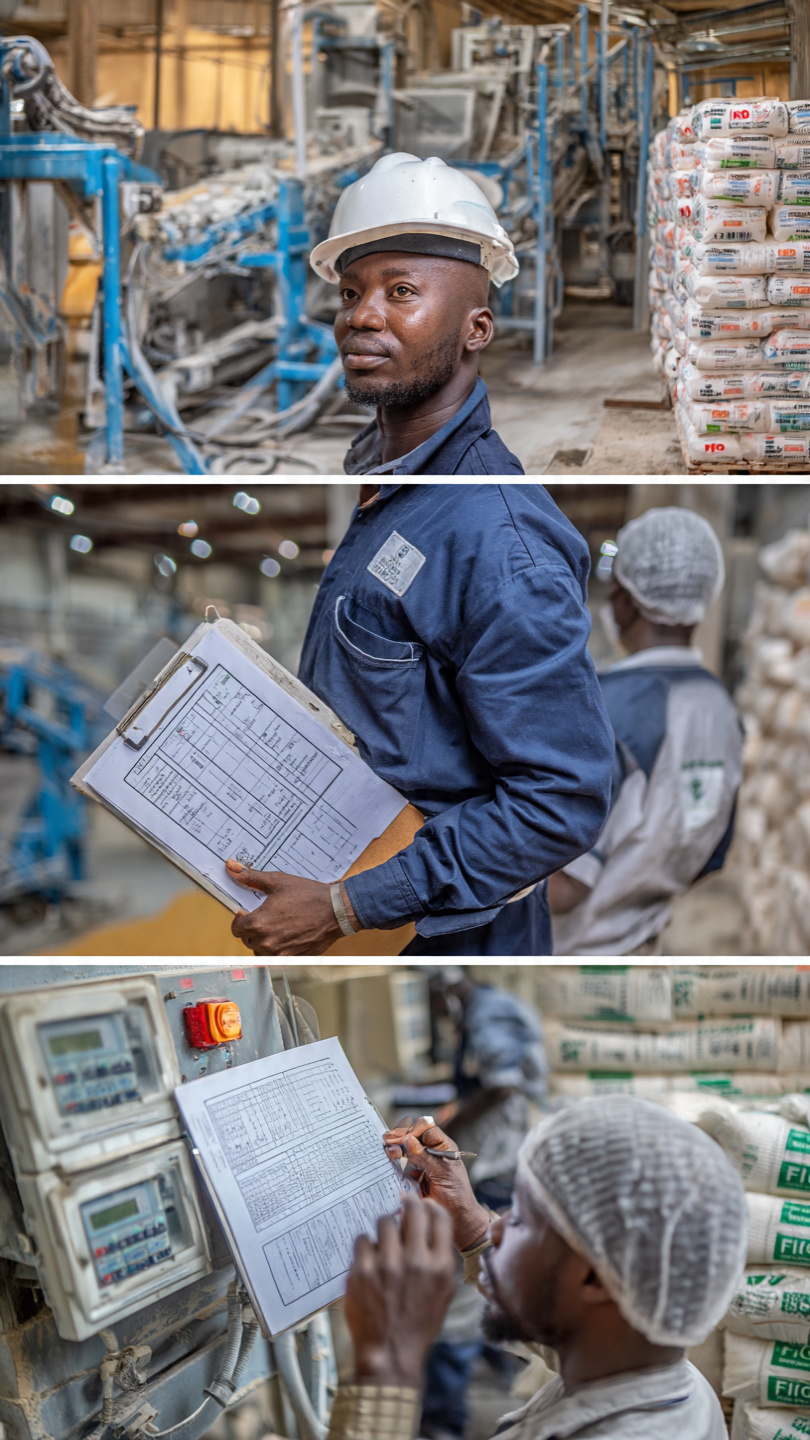
Nigeria Eagle Flour Mills Limited is one of the manufacturing firms involved in flour production and processing in Nigeria. The company was established to meet the increasing demand for flour and related products within the Nigerian market.
The company specializes in the processing of wheat into flour products used for bread, biscuits, noodles, and other food products. Over the years, the organization has expanded its operations and contributed significantly to food production and employment generation in Nigeria.
Like many manufacturing industries in Nigeria, the company operates in a challenging economic environment characterized by high production costs, inflation, unstable power supply, and rising operational expenses. These challenges have made effective cost control a critical aspect of the company’s management strategy.
To remain competitive, the company has adopted various cost control measures such as budgetary control, standard costing, waste reduction strategies, and efficient resource allocation systems. These measures are intended to reduce unnecessary expenditures and improve profitability.
1.2 Organizational Structure of Nigeria Eagle Flour Mill
The organizational structure of Nigeria Eagle Flour Mills Limited follows a hierarchical system designed to ensure effective coordination of activities and proper management control.
The major units of the organization include:
- Board of Directors
- Managing Director/Chief Executive Officer
- Production Department
- Finance and Accounts Department
- Human Resources Department
- Marketing and Sales Department
- Quality Control Department
- Procurement and Logistics Department
- Internal Audit Unit
Each department performs specialized functions that contribute to the overall achievement of organizational objectives. The production department focuses on manufacturing operations, while the finance department handles budgeting, accounting, and cost control activities.
1.3 Purpose of the Study
The main purpose of this study is to examine the impact of cost control on production cost in manufacturing industries.
The study seeks to determine how cost control mechanisms influence operational efficiency, productivity, and profitability in manufacturing firms.
Specifically, the study intends to evaluate the effectiveness of cost control techniques adopted by Nigeria Eagle Flour Mills Limited in reducing production costs and improving organizational performance.
1.4 Scope and Limitation of the Study
The study focuses on the impact of cost control on production cost in manufacturing industries using Nigeria Eagle Flour Mills Limited, Ibadan as a case study.
The study covers areas such as production cost management, cost control techniques, cost reduction strategies, and profitability improvement measures within the company.
However, the study is limited by factors such as inadequate access to confidential company records, financial constraints, time limitations, and possible reluctance of staff to provide sensitive information.
1.5 Definition of Terms
Cost Control
Cost control refers to the process of monitoring and regulating organizational expenditures to ensure that actual costs remain within planned limits.
Production Cost
Production cost refers to the total expenses incurred in converting raw materials into finished goods.
Manufacturing Industry
A manufacturing industry is an organization involved in transforming raw materials into finished products through production processes.
Standard Costing
Standard costing is a cost control technique involving predetermined costs used as benchmarks for evaluating actual performance.
Budgetary Control
Budgetary control refers to the use of budgets to plan and control organizational activities and expenditures.
Overhead Cost
Overhead cost refers to indirect production expenses that cannot be directly traced to a specific product.
1.6 Background of the Problem
Manufacturing industries worldwide are increasingly faced with rising production costs resulting from inflation, technological changes, energy costs, and economic instability. These rising costs negatively affect profitability and operational performance.
In Nigeria, manufacturing industries face additional challenges such as poor infrastructure, unstable electricity supply, high transportation costs, multiple taxation, and dependence on imported raw materials.
These factors significantly increase production costs and reduce the competitiveness of locally manufactured products.
Many manufacturing firms experience wastage of materials, inefficient utilization of labor, and poor management of overhead expenses due to ineffective cost control systems.
Poor cost management practices may lead to declining profitability, low productivity, and inability to compete effectively in the market.
To survive in the competitive business environment, manufacturing companies must adopt effective cost control measures capable of reducing operational inefficiencies and unnecessary expenditures.
This study therefore seeks to investigate how cost control mechanisms can help reduce production costs and improve organizational performance in manufacturing industries.
1.7 Objectives of the Study
The aim of this study is to examine the impacts of cost control on production cost in manufacturing industries.
The objectives are to:
- Examine the relationship between cost control and production cost reduction.
- Evaluate the effectiveness of cost control techniques in manufacturing industries.
- Determine the impact of cost control on profitability.
- Assess the role of budgetary control in managing production costs.
- Identify challenges affecting effective cost control in manufacturing firms.
1.8 Statement of Hypotheses
Hypothesis One
H0₁: Cost control has no significant effect on production cost reduction in manufacturing industries.
H1₁: Cost control has significant effect on production cost reduction in manufacturing industries.
Hypothesis Two
H0₂: Budgetary control does not significantly influence profitability in manufacturing industries.
H1₂: Budgetary control significantly influences profitability in manufacturing industries.
Hypothesis Three
H0₃: Cost control techniques do not significantly improve operational efficiency in manufacturing firms.
H1₃: Cost control techniques significantly improve operational efficiency in manufacturing firms.
CHAPTER TWO
LITERATURE REVIEW
2.1 Introduction
This chapter reviews relevant literature on the impacts of cost control on production cost in manufacturing industries. The chapter examines scholarly opinions, theories, concepts, and empirical studies relating to cost control practices and production cost management in manufacturing organizations.
Cost control is an essential management tool used to improve operational efficiency, reduce waste, and increase profitability in manufacturing industries. Effective cost management enables organizations to maintain competitive advantage and ensure long-term sustainability in challenging economic environments (Horngren, Datar, and Rajan, 2018).
Manufacturing companies in Nigeria face numerous operational challenges such as inflation, unstable electricity supply, high transportation costs, and fluctuations in foreign exchange rates. These factors increase production costs and make effective cost control systems necessary for survival and growth.
This chapter therefore discusses production cost, elements of cost, costing systems, cost control applications, merits of cost control, methods of cost control, and cost reduction strategies in manufacturing industries.
2.2 Production Cost
Production cost refers to the total expenses incurred in transforming raw materials into finished products. It includes all direct and indirect costs associated with production activities such as raw materials, labor, factory overheads, maintenance, and utilities (Drury, 2015).
Production cost is one of the most important determinants of product pricing, profitability, and competitiveness in manufacturing industries. High production costs reduce profit margins and make products less competitive in the market.
According to Horngren et al. (2018), production cost consists of all expenditures incurred from the acquisition of raw materials to the completion of finished goods. Manufacturing organizations must therefore implement effective cost control systems to ensure efficient resource utilization.
Production costs are generally classified into fixed costs, variable costs, and semi-variable costs. Fixed costs remain constant regardless of production output, while variable costs change with the level of production activities. Semi-variable costs contain both fixed and variable components.
In manufacturing industries such as Nigeria Eagle Flour Mills Limited, production costs include the cost of wheat, labor wages, electricity, machinery maintenance, transportation, and packaging materials.
The management of production cost is critical because excessive production expenses can negatively affect profitability and operational performance. Organizations that fail to control production costs may experience declining market share and financial instability.
2.3 Nature and Elements of Cost
Cost refers to the amount of resources sacrificed in order to achieve a specific objective. In manufacturing industries, costs are incurred in the acquisition of raw materials, payment of labor, and operation of production facilities.
The major elements of cost include direct materials, direct labor, and manufacturing overhead.
2.3.1 Direct Material Cost
Direct materials are raw materials that can be physically traced to the finished product. They form an integral part of the production process.
For example, wheat used in flour production by Nigeria Eagle Flour Mills Limited is considered a direct material cost.
Efficient management of direct materials helps reduce wastage and improve production efficiency.
2.3.2 Direct Labor Cost
Direct labor refers to wages paid to employees directly involved in production activities. These workers contribute physically to the manufacturing process.
Examples include machine operators, production supervisors, and factory workers. Labor costs significantly affect total production expenses in manufacturing organizations.
2.3.3 Manufacturing Overhead Cost
Manufacturing overhead consists of indirect production expenses that cannot be directly traced to specific products.
Examples include electricity, factory rent, depreciation of machinery, maintenance costs, and factory insurance.
Overhead costs are important because they affect overall production efficiency and product pricing.
2.4 Costing System and Cost Control
A costing system refers to the procedures and techniques used by organizations to determine the cost of products and services. Costing systems help management evaluate operational efficiency and make informed business decisions.
Cost control, on the other hand, involves the process of monitoring, regulating, and reducing organizational expenditures in order to achieve efficiency and profitability.
According to Drury (2015), cost control involves establishing standards, comparing actual performance with planned performance, and taking corrective actions when deviations occur.
2.4.1 Standard Costing System
Standard costing involves setting predetermined cost estimates for materials, labor, and overheads. Actual costs are later compared with standard costs to identify variances.
This system helps management detect inefficiencies and take corrective actions promptly.
2.4.2 Job Costing System
Job costing is used where products are manufactured based on customer specifications. Costs are accumulated separately for each job or project.
2.4.3 Process Costing System
Process costing is commonly used in industries that produce homogeneous products such as flour mills, breweries, and cement factories. Costs are accumulated for each production process or department.
2.4.4 Marginal Costing System
Marginal costing focuses on variable costs and contribution margin analysis for decision-making purposes. It helps management evaluate the profitability of products and production levels.
2.5 Cost Control Application
Cost control can be applied in various aspects of manufacturing operations. Organizations implement cost control measures to reduce waste, improve productivity, and maximize profitability.
One major application of cost control is budgetary control. Budgets are prepared to guide spending and ensure that departments operate within planned financial limits.
Another application is inventory control, which helps organizations minimize excessive stock holding and avoid material shortages. Efficient inventory management reduces storage costs and production interruptions.
Labor cost control is also important in manufacturing industries. Organizations monitor labor productivity to ensure that employees perform efficiently without unnecessary overtime expenses.
Quality control systems are another important aspect of cost control application. Maintaining quality standards reduces product defects and minimizes wastage during production processes.
2.6 Steps in Cost Control
The process of cost control involves several important steps.
2.6.1 Establishment of Standards
Management establishes standard costs or expected expenditure levels for production activities.
2.6.2 Measurement of Actual Performance
Actual production costs are recorded and analyzed to determine operational performance.
2.6.3 Comparison of Actual Costs with Standards
Actual costs are compared with standard costs to identify deviations known as variances.
2.6.4 Variance Analysis
Variance analysis helps management identify areas of inefficiency and wastage within the production process.
2.6.5 Corrective Action
Management takes corrective measures to address identified inefficiencies and improve operational performance.
2.7 Merits of Cost Control
Effective cost control provides numerous benefits to manufacturing industries.
One major advantage is improved profitability. By reducing unnecessary expenditures, organizations can increase profit margins.
Cost control also improves operational efficiency by ensuring proper utilization of resources.
Another benefit is waste reduction. Effective monitoring of materials and labor reduces production losses and inefficiencies.
Cost control enhances managerial decision-making because management has access to reliable cost information for planning and budgeting purposes.
It also improves competitiveness by enabling firms to produce goods at lower costs and offer competitive prices in the market.
2.8 Cost Control in Production Prerequisites
Certain conditions must exist before cost control systems can operate effectively in manufacturing industries.
Organizations must have efficient accounting and record-keeping systems capable of providing accurate cost information.
Management support is also necessary because cost control policies require effective supervision and enforcement.
There must be proper communication between departments involved in production activities.
Qualified personnel with knowledge of cost accounting and production management are essential for effective implementation of cost control systems.
Strong internal control systems are also necessary to prevent fraud, waste, and unauthorized expenditures.
2.9 Need for Cost Control in Industries
Manufacturing industries require cost control because of increasing production expenses and economic uncertainties.
Rising inflation, unstable exchange rates, and increasing energy costs make cost control necessary for business survival.
Cost control helps organizations maintain profitability despite unfavorable economic conditions.
It also assists firms in achieving efficient resource allocation and improving operational performance.
Without effective cost control systems, manufacturing industries may experience declining productivity, financial losses, and eventual business failure.
2.10 Effect of Cost Cutting Strategies to Increase Profit Margins
Cost cutting strategies are managerial actions aimed at reducing operational expenses without reducing product quality.
Examples include automation of production processes, reduction of waste, energy conservation, outsourcing, and efficient inventory management.
According to Kaplan and Atkinson (2014), effective cost cutting improves organizational profitability and operational efficiency.
However, excessive cost cutting may negatively affect employee morale, customer satisfaction, and product quality if not properly managed.
Organizations must therefore strike a balance between cost reduction and quality maintenance.
2.11 Methods of Cost Control
Manufacturing industries use several methods to control costs effectively.
2.11.1 Budgetary Control
Budgetary control involves the preparation and monitoring of budgets to regulate expenditures.
2.11.2 Standard Costing
Standard costing helps organizations identify variances between planned and actual costs.
2.11.3 Inventory Control
Inventory control ensures efficient management of raw materials and finished goods.
2.11.4 Quality Control
Quality control minimizes production defects and wastage.
2.11.5 Preventive Maintenance
Preventive maintenance reduces machine breakdowns and production interruptions.
2.11.6 Internal Control System
Internal controls help prevent fraud, theft, and misuse of organizational resources.