Word count
This Post has 4327 Words.
This Post has 34474 Characters.
CHAPTER ONE
INTRODUCTION
1.0 Introduction
Economic stability is one of the major objectives of every government because a stable economy promotes growth, employment generation, price stability, investment opportunities, and improved living standards. Governments and monetary authorities therefore formulate and implement various economic policies aimed at controlling inflation, reducing unemployment, stabilizing exchange rates, and maintaining sustainable economic growth. Among the most important macroeconomic policies used in achieving these objectives are monetary and fiscal policies. Monetary and fiscal policies serve as powerful economic management tools through which governments regulate economic activities and ensure stability within the economy. (Jhingan, 2010; Anyanwu, 2014).
Monetary policy refers to actions taken by a country’s central bank to regulate money supply, credit conditions, and interest rates in order to achieve macroeconomic objectives such as price stability, economic growth, full employment, and balance of payments equilibrium. In Nigeria, monetary policy is formulated and implemented by the Central Bank of Nigeria through instruments such as open market operations, reserve requirements, liquidity ratio, bank rate adjustments, and selective credit controls. (Central Bank of Nigeria, 2021; Mishkin, 2016).
Fiscal policy, on the other hand, involves government decisions relating to taxation, public expenditure, borrowing, and budgetary operations aimed at influencing aggregate demand and economic performance. Fiscal policy is implemented by government through ministries of finance and related agencies in order to stabilize the economy and promote development. Effective coordination between monetary and fiscal policies is essential for achieving sustainable economic stability. (Musgrave and Musgrave, 2004; Jhingan, 2010).
The Nigerian economy has experienced various macroeconomic challenges over the years including inflation, unemployment, exchange rate instability, budget deficits, low industrial productivity, and balance of payment disequilibrium. These economic problems necessitated continuous use of monetary and fiscal policies by government and the Central Bank of Nigeria to maintain economic stability and support national development objectives. (Sanusi, 2012; CBN Annual Report, 2021).
This study therefore examines monetary and fiscal policies as efficient tools for economic stability with specific reference to the Central Bank of Nigeria, Awka branch.
1.1 Background of the Study
Economic stability refers to a condition in which an economy experiences steady growth, low inflation, stable prices, reduced unemployment, sustainable balance of payments, and stable exchange rates. Economic stability is essential for national development because unstable economic conditions discourage investment, reduce productivity, and lower living standards. Governments therefore formulate policies aimed at achieving macroeconomic stability and sustainable development. (Jhingan, 2010; Todaro and Smith, 2015).
Monetary policy has become one of the most important economic management tools used by central banks worldwide. Through monetary policy, central banks regulate money supply and credit conditions in order to influence economic activities. Monetary policy affects inflation, interest rates, exchange rates, investment, consumption, and employment levels within an economy. (Mishkin, 2016; Anyanwu, 2014).
The Central Bank of Nigeria was established in 1958 through the Central Bank Act and commenced operations in 1959. The bank serves as the apex monetary authority responsible for formulating and implementing monetary policies in Nigeria. The major objectives of the CBN include maintaining price stability, promoting economic growth, ensuring financial system stability, issuing legal tender currency, and managing external reserves. (CBN Act, 2007; Central Bank of Nigeria, 2021).
Monetary policy instruments used by the Central Bank of Nigeria include open market operations, monetary policy rate, reserve requirements, liquidity ratio, treasury bills, and moral suasion. Through these instruments, the CBN controls liquidity within the banking system and influences overall economic performance. Effective monetary policy contributes significantly to inflation control, exchange rate stability, and sustainable economic growth. (Sanusi, 2012; Mishkin, 2016).
Fiscal policy involves government manipulation of taxation, government expenditure, and borrowing activities in order to influence aggregate demand and economic activities. Fiscal policy may be expansionary or contractionary depending on prevailing economic conditions. Expansionary fiscal policy involves increased government expenditure and reduced taxation aimed at stimulating economic growth, while contractionary fiscal policy involves reduced government expenditure and increased taxation to control inflationary pressures. (Musgrave and Musgrave, 2004; Jhingan, 2010).
In developing economies such as Nigeria, fiscal policy plays important roles in infrastructural development, poverty reduction, industrial growth, and employment generation. Government expenditure on roads, healthcare, education, electricity, agriculture, and public services stimulates economic activities and improves living standards. Taxation also generates revenue required for government developmental projects. (Todaro and Smith, 2015; Anyanwu, 2014).
The Nigerian economy has experienced numerous economic challenges over the years including high inflation rates, unemployment, exchange rate fluctuations, budget deficits, external debt burden, low industrial productivity, and declining purchasing power. These challenges prompted government and the Central Bank of Nigeria to adopt various monetary and fiscal policy measures aimed at restoring economic stability. (CBN Annual Report, 2021; Sanusi, 2012).
One of the major economic problems confronting Nigeria is inflation. Inflation refers to persistent increase in the general price level of goods and services over time. High inflation reduces purchasing power, discourages savings, and creates economic uncertainty. The Central Bank of Nigeria therefore adopts monetary policy measures such as interest rate adjustments and liquidity control to stabilize prices within the economy. (Mishkin, 2016; Jhingan, 2010).
Unemployment is another major economic problem affecting Nigeria. High unemployment rates contribute to poverty, crime, social unrest, and reduced economic productivity. Government uses fiscal policy measures such as increased public expenditure and youth empowerment programs to stimulate employment generation and economic growth. (Todaro and Smith, 2015; Anyanwu, 2014).
Exchange rate instability also poses significant challenges to economic stability in Nigeria. Fluctuations in exchange rates affect importation, exportation, foreign investment, and balance of payments. The Central Bank of Nigeria intervenes in the foreign exchange market through monetary policy measures aimed at stabilizing the value of the national currency. (CBN Annual Report, 2021; Sanusi, 2012).
Another major objective of monetary and fiscal policies is promotion of economic growth. Economic growth involves increase in production of goods and services within an economy over time. Stable economic conditions encourage investment, industrial expansion, entrepreneurship, and employment generation. Monetary and fiscal policies therefore contribute significantly to national development and economic transformation. (Musgrave and Musgrave, 2004; Todaro and Smith, 2015).
The effectiveness of monetary and fiscal policies depends largely on proper coordination between monetary authorities and fiscal authorities. Lack of coordination may create policy conflicts and reduce effectiveness of economic stabilization efforts. For instance, expansionary fiscal policy combined with contractionary monetary policy may generate conflicting economic outcomes. Effective policy coordination therefore enhances macroeconomic stability and development. (Jhingan, 2010; Anyanwu, 2014).
The banking sector plays important roles in implementation of monetary policy because commercial banks serve as channels through which monetary policy measures affect economic activities. Changes in reserve requirements, interest rates, and liquidity ratios influence lending activities, investment decisions, and aggregate demand within the economy. (Rose and Hudgins, 2013; Mishkin, 2016).
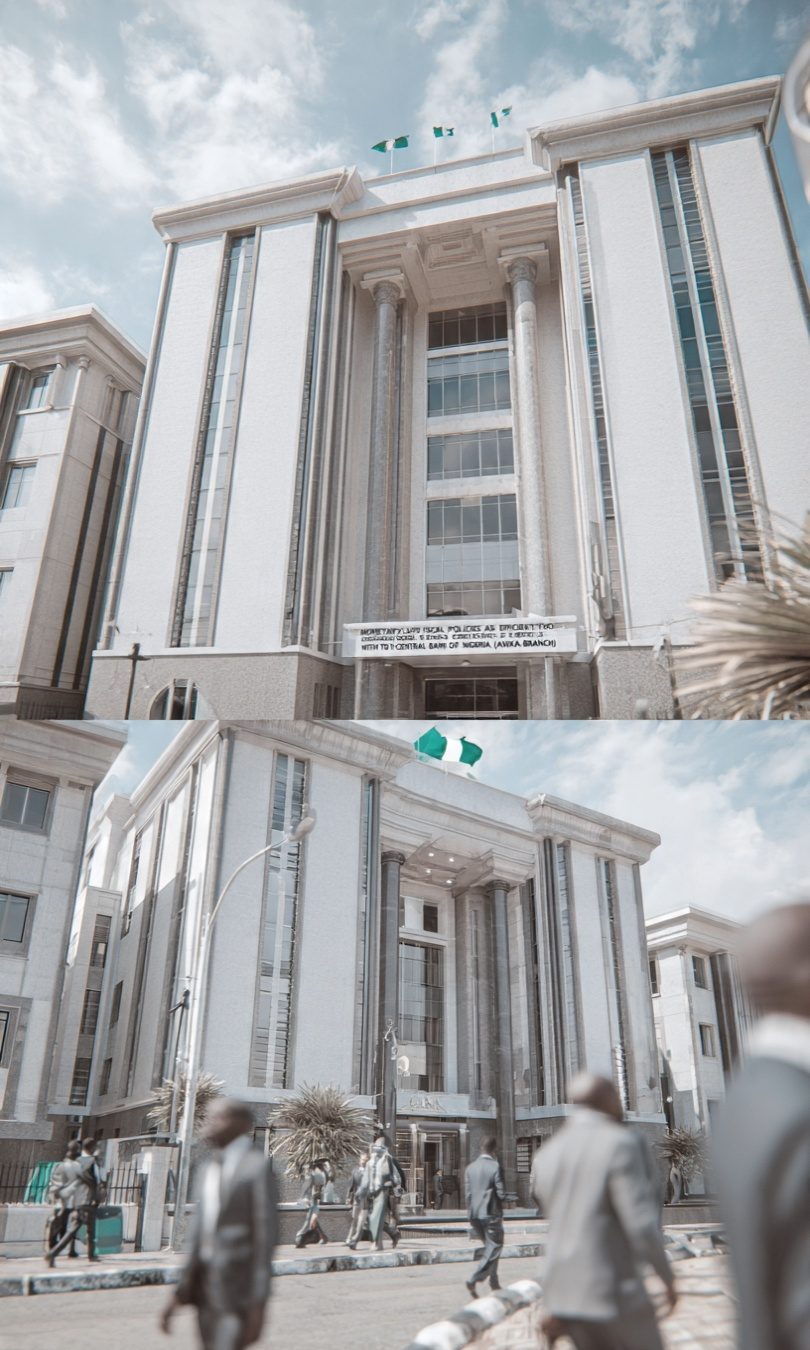
The Central Bank of Nigeria, Awka branch contributes significantly to implementation of monetary policy objectives within the region through supervision of financial institutions, currency distribution, and support for financial stability. The branch also facilitates communication and coordination between the apex bank and commercial banks operating within the area. (CBN Annual Report, 2021).
Over the years, Nigeria has implemented several monetary and fiscal policy reforms aimed at promoting economic stability and development. These reforms include Structural Adjustment Programme (SAP), banking sector reforms, exchange rate reforms, treasury single account policy, cashless economy policy, and fiscal stimulus programs. While some reforms achieved positive results, others faced implementation challenges due to corruption, policy inconsistency, political instability, and inadequate infrastructure. (Sanusi, 2012; Soludo, 2004).
Global economic crises and fluctuations in international oil prices have also affected effectiveness of monetary and fiscal policies in Nigeria. Since Nigeria depends heavily on oil revenue, decline in global oil prices often leads to reduced government revenue, budget deficits, and economic instability. Consequently, government and monetary authorities continuously adjust policy measures to stabilize the economy. (CBN Annual Report, 2021; Todaro and Smith, 2015).
Fiscal deficits and excessive government borrowing constitute additional challenges affecting economic stability in Nigeria. Persistent budget deficits increase public debt burden and may lead to inflationary pressures if financed through excessive money creation. Government therefore requires prudent fiscal management and efficient revenue generation strategies. (Musgrave and Musgrave, 2004; Jhingan, 2010).
Corruption and mismanagement of public resources further reduce effectiveness of fiscal policy in Nigeria. Diversion of public funds, poor implementation of projects, and weak institutional structures limit developmental impacts of government expenditure. Effective accountability and transparency mechanisms are therefore necessary for successful fiscal policy implementation. (Anyanwu, 2014; Sanusi, 2012).
The increasing complexity of modern economies requires continuous review and adjustment of monetary and fiscal policies in response to changing economic conditions. Policymakers must therefore formulate flexible and responsive policies capable of addressing emerging economic challenges and promoting sustainable growth. (Mishkin, 2016; Todaro and Smith, 2015).
This study therefore seeks to examine monetary and fiscal policies as efficient tools for economic stability with specific reference to the Central Bank of Nigeria, Awka branch.
1.2 Statement of Problem
Despite numerous monetary and fiscal policy measures introduced by government and the Central Bank of Nigeria, the Nigerian economy continues to experience macroeconomic instability characterized by inflation, unemployment, exchange rate fluctuations, poverty, low industrial productivity, and budget deficits. These economic challenges raise questions regarding effectiveness of monetary and fiscal policies in achieving economic stability. (CBN Annual Report, 2021; Jhingan, 2010).
One major problem is persistent inflation in Nigeria despite continuous monetary policy interventions by the Central Bank of Nigeria. Rising prices reduce purchasing power, discourage savings and investments, and lower living standards among citizens. High inflation also creates uncertainty within the business environment and discourages economic growth. (Mishkin, 2016; Sanusi, 2012).
Another major problem is high unemployment rate in Nigeria. Despite government fiscal policies and intervention programs aimed at stimulating economic growth and employment generation, millions of Nigerians remain unemployed. Unemployment contributes to poverty, crime, social unrest, and reduced productivity within the economy. (Todaro and Smith, 2015; Anyanwu, 2014).
Exchange rate instability represents another challenge confronting the Nigerian economy. Frequent fluctuations in the value of the naira negatively affect international trade, foreign investment, industrial production, and balance of payments. Although the Central Bank of Nigeria implements various foreign exchange management policies, exchange rate instability remains a major economic problem. (CBN Annual Report, 2021; Sanusi, 2012).
Poor coordination between monetary and fiscal authorities also affects effectiveness of economic policies in Nigeria. Conflicting policy objectives and inconsistent implementation often reduce effectiveness of stabilization efforts and create uncertainty within the economy. (Musgrave and Musgrave, 2004; Jhingan, 2010).
Corruption, poor governance, and policy inconsistency further limit effectiveness of fiscal policy implementation in Nigeria. Mismanagement of public resources and poor implementation of government projects reduce developmental impacts of public expenditure and weaken economic growth efforts. (Anyanwu, 2014; Todaro and Smith, 2015).
There is therefore need to critically examine monetary and fiscal policies as efficient tools for economic stability in Nigeria with specific reference to the Central Bank of Nigeria, Awka branch.
1.3 Purpose / Objectives of the Study
The aim of this study is to examine monetary and fiscal policies as efficient tools for economic stability in Nigeria with specific reference to the Central Bank of Nigeria, Awka branch.
The objectives are to:
- Examine the concept of monetary and fiscal policies.
- Determine the roles of monetary and fiscal policies in economic stability.
- Assess effectiveness of monetary policy instruments used by the Central Bank of Nigeria.
- Examine contributions of fiscal policy toward economic development in Nigeria.
- Identify challenges affecting implementation of monetary and fiscal policies in Nigeria.
1.4 Research Questions
- What are monetary and fiscal policies?
- What roles do monetary and fiscal policies play in achieving economic stability?
- How effective are monetary policy instruments used by the Central Bank of Nigeria?
- How does fiscal policy contribute to economic development in Nigeria?
- What challenges affect implementation of monetary and fiscal policies in Nigeria?
1.5 Significance of the Study
This study will be significant to government policymakers, monetary authorities, researchers, students, financial institutions, and the general public.
The study will help government and monetary authorities understand effectiveness of monetary and fiscal policies in promoting economic stability and national development.
The study will also provide useful information to researchers and students interested in monetary economics, fiscal policy, and macroeconomic management in Nigeria.
Financial institutions including commercial banks will benefit from findings of the study because monetary and fiscal policies significantly influence banking operations and economic activities.
The study will further contribute to existing literature on monetary and fiscal policy implementation and economic stabilization in Nigeria.
1.6 Scope of the Study
This study focuses on monetary and fiscal policies as efficient tools for economic stability in Nigeria with specific reference to the Central Bank of Nigeria, Awka branch. The study examines monetary policy instruments, fiscal policy measures, economic stabilization objectives, and challenges affecting policy implementation in Nigeria.
1.7 Limitations of the Study
The study may be limited by inadequate access to relevant data and financial information relating to monetary and fiscal policy implementation. Time constraints and financial limitations may also affect scope of the research work.
Another limitation may arise from difficulty in obtaining responses from officials and institutions relevant to the study. Despite these limitations, efforts will be made to ensure reliability and validity of findings.
1.8 Definition of Operational Terms
Monetary Policy
Monetary policy refers to measures adopted by the central bank to regulate money supply, interest rates, and credit conditions in order to achieve economic stability.
Fiscal Policy
Fiscal policy refers to government decisions relating to taxation, public expenditure, and borrowing aimed at influencing economic activities.
Economic Stability
Economic stability refers to a condition characterized by low inflation, stable prices, reduced unemployment, and sustainable economic growth.
Inflation
Inflation refers to persistent increase in the general price level of goods and services over time.
Central Bank
A central bank is the apex financial institution responsible for regulating monetary policy and supervising the financial system within a country.
Open Market Operations
Open market operations refer to buying and selling of government securities by the central bank in order to regulate money supply within the economy.
Aggregate Demand
Aggregate demand refers to total demand for goods and services within an economy at a given time.
CHAPTER TWO
REVIEW OF RELATED LITERATURE
2.0 Review of Related Literature
Economic stability remains one of the primary goals of every nation because stable economies promote growth, employment generation, industrial productivity, investment opportunities, and improved standards of living. Governments therefore formulate and implement monetary and fiscal policies aimed at controlling inflation, stabilizing prices, reducing unemployment, and achieving sustainable economic development. Monetary and fiscal policies are regarded as major macroeconomic tools used by governments and central banks to regulate economic activities within an economy. (Jhingan, 2010; Mishkin, 2016).
In Nigeria, monetary policy is formulated and implemented by the Central Bank of Nigeria while fiscal policy is implemented by the federal government through the Ministry of Finance and other relevant agencies. These policies are designed to achieve economic objectives such as price stability, employment generation, economic growth, balance of payments equilibrium, and financial system stability. (Central Bank of Nigeria, 2021; Anyanwu, 2014).
The effectiveness of monetary and fiscal policies has attracted attention from economists, policymakers, researchers, and financial institutions because of their significant influence on national economic performance. Monetary policy affects money supply, credit conditions, and interest rates, while fiscal policy influences government expenditure, taxation, and public borrowing. Both policies therefore play critical roles in economic stabilization and development. (Musgrave and Musgrave, 2004; Todaro and Smith, 2015).
This chapter reviews related literature on monetary and fiscal policies, their objectives, differences, and instruments used in implementation of monetary policy within the Nigerian economy.
2.1 Preamble / Introduction
Monetary and fiscal policies are important macroeconomic management tools used by governments to regulate economic activities and promote stability within an economy. Economic instability characterized by inflation, unemployment, exchange rate fluctuations, and recession often requires government intervention through monetary and fiscal policy measures. Effective policy implementation contributes significantly to national development and economic transformation. (Jhingan, 2010; Anyanwu, 2014).
The concept of monetary policy gained prominence following increasing recognition of the role of money supply and credit regulation in influencing economic performance. Central banks worldwide use monetary policy to control inflation, stabilize financial systems, and promote sustainable growth. In Nigeria, the Central Bank of Nigeria performs these functions through various monetary policy instruments. (Mishkin, 2016; CBN Annual Report, 2021).
Fiscal policy also plays essential roles in economic management through taxation, government expenditure, and public debt management. Government spending on infrastructure, education, healthcare, agriculture, and industrial development stimulates economic growth and employment generation. Taxation equally provides revenue necessary for financing developmental projects and public services. (Musgrave and Musgrave, 2004; Todaro and Smith, 2015).
The Nigerian economy has experienced several macroeconomic challenges over the years including inflation, unemployment, low industrial productivity, exchange rate instability, and balance of payments disequilibrium. Consequently, government and the Central Bank of Nigeria have implemented various monetary and fiscal policy reforms aimed at restoring economic stability and promoting sustainable development. (Sanusi, 2012; Soludo, 2004).
Effective coordination between monetary and fiscal authorities is necessary for successful economic management. Lack of coordination may lead to conflicting policy objectives and reduced effectiveness of stabilization measures. Monetary and fiscal policies therefore complement each other in achieving macroeconomic stability and economic growth. (Jhingan, 2010; Anyanwu, 2014).
2.2 Definition of Monetary Policy
Monetary policy refers to deliberate actions taken by a country’s central bank to regulate money supply, credit conditions, interest rates, and liquidity within the economy in order to achieve specified macroeconomic objectives such as price stability, full employment, economic growth, and balance of payments equilibrium. (Mishkin, 2016; Jhingan, 2010).
According to the Central Bank of Nigeria, monetary policy involves measures designed to regulate the value, supply, and cost of money within an economy in line with expected levels of economic activities. Monetary policy aims at ensuring stable prices, financial system stability, and sustainable economic growth. (Central Bank of Nigeria, 2021).
Monetary policy can be expansionary or contractionary depending on prevailing economic conditions. Expansionary monetary policy involves increasing money supply and reducing interest rates in order to stimulate economic growth and employment generation. Contractionary monetary policy, on the other hand, involves reducing money supply and increasing interest rates to control inflationary pressures within the economy. (Mishkin, 2016; Anyanwu, 2014).
Monetary policy affects economic activities through its influence on lending rates, investment decisions, consumption patterns, exchange rates, and aggregate demand. When money supply increases, commercial banks are able to grant more loans to businesses and individuals, thereby stimulating investment and production. Conversely, reduction in money supply may discourage excessive spending and inflation. (Rose and Hudgins, 2013; Jhingan, 2010).
In Nigeria, monetary policy implementation became more prominent after establishment of the Central Bank of Nigeria in 1958. Since then, the apex bank has used various policy instruments to regulate financial activities and maintain economic stability within the country. (CBN Act, 2007; Sanusi, 2012).
Monetary policy is considered one of the most powerful economic stabilization tools because it influences banking operations, investment activities, foreign exchange markets, inflation control, and overall economic performance. Effective monetary policy implementation therefore contributes significantly to national development and financial system stability. (Mishkin, 2016; Todaro and Smith, 2015).
2.3 Monetary and Fiscal Policies Differentiated
Monetary and fiscal policies are both macroeconomic management tools used to regulate economic activities and achieve stability within an economy. However, they differ in terms of administration, instruments, objectives, and implementation mechanisms. (Jhingan, 2010; Musgrave and Musgrave, 2004).
Monetary policy is formulated and implemented by the central bank of a country while fiscal policy is implemented by the government through the Ministry of Finance and related agencies. In Nigeria, the Central Bank of Nigeria is responsible for monetary policy implementation while fiscal policy is managed by the Federal Ministry of Finance and government authorities. (Central Bank of Nigeria, 2021; Anyanwu, 2014).
Another major difference lies in the instruments used in implementation. Monetary policy uses instruments such as interest rates, reserve requirements, open market operations, liquidity ratio, and credit controls to regulate money supply and banking activities. Fiscal policy, on the other hand, uses taxation, government expenditure, public borrowing, and budgetary policies to influence economic performance. (Mishkin, 2016; Musgrave and Musgrave, 2004).
Monetary policy primarily focuses on controlling inflation, regulating money supply, stabilizing exchange rates, and ensuring financial system stability. Fiscal policy mainly focuses on income redistribution, infrastructural development, employment generation, and economic growth through government spending and taxation. (Todaro and Smith, 2015; Jhingan, 2010).
Monetary policy generally affects economic activities indirectly through the banking and financial system, while fiscal policy directly influences aggregate demand through government expenditure and taxation. For example, increase in government expenditure stimulates demand for goods and services directly, whereas changes in interest rates influence borrowing and investment decisions indirectly. (Rose and Hudgins, 2013; Anyanwu, 2014).
Despite these differences, monetary and fiscal policies complement each other in achieving macroeconomic stability and development. Effective coordination between both policies enhances economic growth, price stability, and sustainable development within an economy. (Jhingan, 2010; Sanusi, 2012).
2.4 Objectives of Monetary Policy
The primary objective of monetary policy is maintenance of price stability within the economy. Stable prices help preserve purchasing power, encourage investment, and reduce economic uncertainty. Inflation control therefore remains a major responsibility of central banks worldwide. (Mishkin, 2016; Jhingan, 2010).
Another important objective of monetary policy is promotion of economic growth. Through regulation of money supply and credit availability, central banks influence investment activities, industrial production, and aggregate demand within the economy. Expansionary monetary policy may stimulate economic growth during periods of recession or low economic activities. (Todaro and Smith, 2015; Anyanwu, 2014).
Monetary policy also aims at achieving full employment. High unemployment rates negatively affect economic productivity and social welfare. By influencing credit conditions and investment activities, monetary policy contributes toward employment generation and economic expansion. (Jhingan, 2010; Mishkin, 2016).
Another objective of monetary policy is stabilization of exchange rates. Exchange rate stability promotes international trade, foreign investment, and balance of payments equilibrium. The Central Bank of Nigeria often intervenes in the foreign exchange market in order to stabilize the value of the naira and reduce excessive currency fluctuations. (CBN Annual Report, 2021; Sanusi, 2012).
Monetary policy further aims at maintaining financial system stability. The central bank supervises banking institutions and regulates liquidity within the financial system in order to prevent financial crises and banking failures. Financial stability enhances public confidence and promotes sustainable economic growth. (Rose and Hudgins, 2013; CBN Act, 2007).
Another objective is promotion of balance of payments equilibrium. Monetary policy measures such as exchange rate adjustments and interest rate regulation help control imports and exports, thereby improving external sector performance and foreign reserve management. (Anyanwu, 2014; Todaro and Smith, 2015).
Monetary policy also seeks to encourage savings and investment within the economy. Interest rate policies influence saving behavior and investment decisions among individuals and businesses. Stable monetary conditions therefore contribute to capital formation and economic development. (Mishkin, 2016; Jhingan, 2010).
2.5 Objectives of Fiscal Policy
One of the major objectives of fiscal policy is promotion of economic growth and development. Government expenditure on infrastructure, healthcare, education, transportation, agriculture, and industrial development stimulates production activities and improves living standards. (Musgrave and Musgrave, 2004; Todaro and Smith, 2015).
Fiscal policy also aims at reducing unemployment through increased government expenditure and public investment programs. Construction projects, public services, and industrial development programs create employment opportunities and stimulate economic activities within the economy. (Anyanwu, 2014; Jhingan, 2010).
Another objective of fiscal policy is equitable distribution of income and wealth within society. Government uses progressive taxation and social welfare programs to reduce income inequality and improve welfare of low-income groups. Fiscal policy therefore promotes social justice and economic inclusion. (Musgrave and Musgrave, 2004; Todaro and Smith, 2015).
Fiscal policy further aims at controlling inflation and stabilizing prices. During periods of excessive inflation, government may reduce expenditure or increase taxation in order to reduce aggregate demand within the economy. (Jhingan, 2010; Mishkin, 2016).
Another objective is provision of public goods and social services. Government expenditure finances roads, electricity, hospitals, schools, water supply, security, and other essential services necessary for economic and social development. (Musgrave and Musgrave, 2004; Anyanwu, 2014).
Fiscal policy also seeks to achieve balance of payments equilibrium through taxation and trade-related policies. Government may encourage exports and discourage excessive imports in order to improve external sector performance and foreign reserve position. (Todaro and Smith, 2015; Jhingan, 2010).
In developing countries such as Nigeria, fiscal policy is important for poverty reduction and infrastructural development. Government intervention through fiscal measures helps address market failures and developmental challenges affecting the economy. (Sanusi, 2012; Anyanwu, 2014).
2.6 Tools / Instruments of Monetary Policy
The Central Bank of Nigeria uses various monetary policy instruments to regulate money supply, credit conditions, and liquidity within the economy. These instruments are designed to achieve macroeconomic objectives such as price stability, employment generation, and financial system stability. (CBN Annual Report, 2021; Mishkin, 2016).
One major instrument of monetary policy is open market operations. Open market operations involve buying and selling of government securities such as treasury bills by the central bank in order to regulate money supply. When the central bank sells securities, money supply reduces because cash is withdrawn from circulation. Conversely, buying securities increases money supply within the economy. (Jhingan, 2010; Rose and Hudgins, 2013).
Another important instrument is the monetary policy rate (MPR), formerly known as bank rate. This refers to the interest rate at which the central bank lends money to commercial banks. Changes in the monetary policy rate influence lending rates charged by commercial banks and affect borrowing, investment, and spending activities within the economy. (Mishkin, 2016; CBN Annual Report, 2021).
Reserve requirement is another monetary policy instrument used by the central bank. Commercial banks are required to keep a specified percentage of customer deposits as reserves with the central bank. Increasing reserve requirements reduces banks’ ability to grant loans while reducing reserve requirements increases lending capacity and money supply. (Rose and Hudgins, 2013; Jhingan, 2010).
Liquidity ratio is also used as a monetary policy instrument. Liquidity ratio refers to the proportion of liquid assets commercial banks must maintain relative to their liabilities. The central bank adjusts liquidity ratio requirements in order to regulate banking operations and ensure financial stability. (CBN Act, 2007; Anyanwu, 2014).
Selective credit control represents another instrument of monetary policy. Through selective credit controls, the central bank directs commercial banks regarding allocation of credit to specific sectors of the economy such as agriculture, manufacturing, and export industries. These measures promote priority sectors and national development objectives. (Sanusi, 2012; Mishkin, 2016).
Moral suasion is another monetary policy instrument involving persuasion and directives issued by the central bank to commercial banks regarding lending behavior and financial operations. Although moral suasion is not legally binding, banks often comply due to regulatory influence of the central bank. (Jhingan, 2010; Rose and Hudgins, 2013).
Foreign exchange management also constitutes an important monetary policy tool. The Central Bank of Nigeria intervenes in the foreign exchange market to stabilize the value of the naira and manage foreign reserves. Exchange rate policies significantly influence imports, exports, inflation, and balance of payments performance. (CBN Annual Report, 2021; Sanusi, 2012).

![THE IMPACT OF FINANCIAL ACCOUNTING ON THE CORPORATE PERFORMANCE OF BUSINESS ORGANIZATION [A CASE STUDY OF NIGERIAN BREWERIES PLC]](http://emiawaretechnology.com/wp-content/uploads/2026/05/THE-IMPACT-OF-FINANCIAL-ACCOUNTING-ON-THE-CORPORATE-PERFORMANCE-OF-BUSINESS-ORGANIZATION-A-CASE-STUDY-OF-NIGERIAN-BREWERIES-PLC.jpeg)